


Popular Art Styles 2025: What Collectors Need to Know
TL;DR:
- Impressionist and Modern art lead the 2025 market, with strong sales indicating a focus on proven movements. Digital and ultra-contemporary art face volatility, cautioning collectors to prioritize established styles for stability. Decorative wall art trends favor nature-inspired themes, large-scale abstracts, and geometric minimalism for residential and office spaces.
The popular art styles of 2025 are defined by a clear split between time-tested movements commanding record auction prices and emerging digital aesthetics reshaping how younger collectors engage with art. The global art market grew 4% to approximately $59.6 billion in 2025, according to the Art Basel and UBS Global Art Market Report. That growth was not evenly distributed. High-end sales above $10 million drove a 9% increase, while speculative segments cooled sharply. For collectors and enthusiasts, understanding which styles are gaining ground and which are losing steam is the difference between a sound acquisition and a costly mistake.
1. Popular art styles 2025: Impressionist and Modern art lead the market
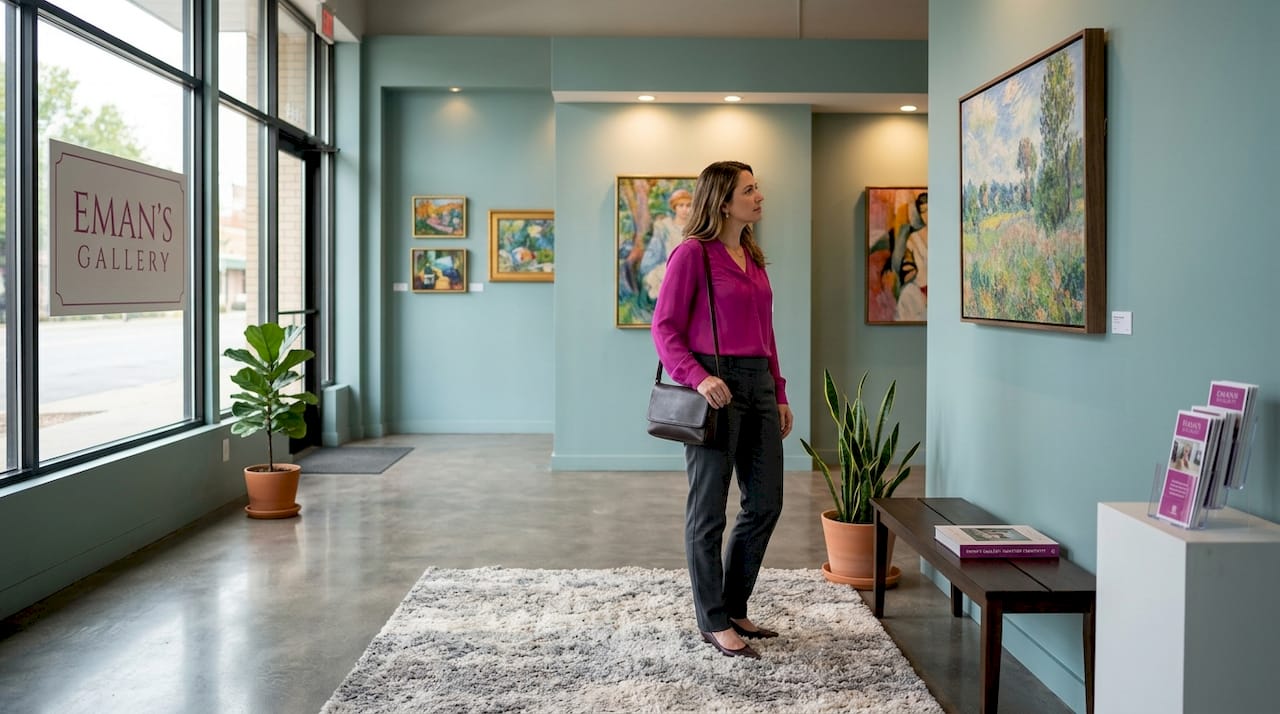
Impressionist and Modern art are the dominant styles by auction value in 2025, and the numbers confirm it decisively. Auction sales reached $4.7 billion, a 29.5% increase over 2024. That is not a modest uptick. It signals that collectors with serious capital are concentrating their purchases in proven, well-documented movements rather than chasing emerging names.
The appeal is straightforward. Works by artists like Gustav Klimt, Claude Monet, and Paul Cézanne carry deep provenance records, institutional exhibition histories, and decades of price data. For collectors treating art as a long-term store of value, that track record matters more than novelty. The 2025 market growth was concentrated in established segments where provenance and recognition outweigh trendiness. This is a market signaling caution, not exuberance.
- Impressionism: Monet, Renoir, Pissarro. Consistent auction presence and broad institutional demand.
- Modern Art (1860s–1970s): Picasso, Matisse, Klimt. Strong secondary market with global buyer pools.
- Post-Impressionism: Van Gogh, Cézanne, Gauguin. Crossover appeal between academic and private collectors.
2. Old Masters: renewed collector interest as a stable investment
Old Masters, covering works from roughly the 14th through the 17th centuries by artists like Rembrandt van Rijn, Caravaggio, and Jan van Eyck, are experiencing renewed collector interest in 2025. The category benefits from absolute scarcity. No new Old Master works will ever enter the market, which creates a supply ceiling that other categories simply cannot replicate.
Collectors treating art as a portfolio asset are returning to Old Masters precisely because the segment behaves differently from contemporary or digital art. Price movements are slower, but they are also more predictable. Major auction houses including Christie’s and Sotheby’s have reported sustained bidding depth in this category, particularly for works with clean ownership histories and museum exhibition records.
3. Ultra-contemporary art: a sharp correction worth understanding
Ultra-contemporary art, defined as works by living artists under 40, saw a market value decline of 26.5% to $229.9 million in 2025. That correction follows years of speculative buying that pushed prices for unproven artists to levels the secondary market could not sustain. The implication for collectors is direct: buying ultra-contemporary work purely on momentum is high-risk, and 2025 confirmed that risk is real.
This does not mean the category is without merit. Collectors who buy ultra-contemporary art for genuine aesthetic reasons, and who understand they may hold the work for a decade before seeing appreciation, can still find strong pieces. The problem is buying at inflated primary market prices expecting quick resale gains. That strategy failed broadly in 2025.
4. Emerging digital art styles shaping 2025 trends
Digital art and NFTs accounted for 11% of the ultra-contemporary segment in 2025, signaling growing but volatile collector interest. The category is real and expanding, but it requires a different framework for evaluation than traditional art. Liquidity depends heavily on platform health and community engagement, neither of which is guaranteed over a five-year horizon.
The key graphic design and digital art trends dominating 2025 include AI-enhanced workflows, retro-psychedelic color palettes, high-contrast typography, and 3D and motion graphics. These styles are crossing over from commercial design into fine art collecting, particularly among buyers who discovered art through screens rather than galleries. Demand in this segment is cohort-driven, fueled by younger and female collectors, and styles popular in this segment can shift quickly as digital communities evolve.
- AI-assisted art: Works created with tools like Midjourney or Adobe Firefly, often blending photographic and painterly aesthetics.
- Retro-psychedelic: Bold, saturated palettes referencing 1960s and 1970s graphic design, now applied to digital canvases.
- 3D and motion art: Still-image derivatives of motion graphics, printed on canvas or displayed on digital frames like Meural.
- High-contrast typography art: Text-based visual compositions where letterforms function as primary aesthetic elements.
Pro Tip: If you are buying digital art for investment, prioritize works with verifiable on-chain provenance and artists with consistent exhibition records outside of NFT platforms. Platform dependency is the single largest risk in this category.
5. Women artists and the demographic shift in collecting
Auction turnover for women artists increased to 45% of gallery representations in 2025, with record sales for artists including Frida Kahlo and Marlene Dumas. This is a structural shift, not a temporary trend. Institutional buyers, museum acquisition committees, and private collectors are actively correcting decades of underrepresentation, which creates price momentum for established women artists across multiple styles.
For collectors, this demographic shift has a practical implication. Works by historically undervalued women artists in Impressionist, Modern, and Contemporary categories may still carry price gaps relative to male peers with comparable exhibition records. That gap is closing, and collectors who recognize it early are positioned to benefit from the correction.
6. Comparison of traditional versus digital and experimental styles
Understanding the differences between established and emerging art styles is not just an aesthetic exercise. It directly affects acquisition strategy, resale potential, and long-term satisfaction.
| Style category | Market performance 2025 | Collector appeal | Investment risk |
|---|---|---|---|
| Impressionist and Modern | Up 29.5%, $4.7B total | Broad, institutional and private | Low to moderate |
| Old Masters | Stable, supply-constrained | Serious collectors, museums | Low |
| Ultra-Contemporary | Down 26.5%, $229.9M | Trend-driven buyers | High |
| Digital and NFT art | Volatile, 11% of ultra-contemporary | Younger, digital-native collectors | Very high |
| Decorative and print-based | Growing retail demand | Interior-focused buyers | Low (non-speculative) |
The table above reflects a market that favors familiar categories and depth of recognition over rapid trend cycles. Collectors building a portfolio for the first time should weight their acquisitions toward the lower-risk categories and treat digital or ultra-contemporary purchases as a small, discretionary allocation.
7. Decorative wall art styles popular for home and office in 2025
Wall art styles in 2025 for residential and office interiors are shaped by a distinct set of preferences that differ from the auction market. Decorative wall art favors nature-infused themes, botanical motifs, and framing styles using eco-conscious materials like metal and reclaimed wood. These choices reflect a broader interior design movement toward biophilic spaces that incorporate natural textures and organic forms.
Bold color palettes are prominent this year, particularly deep greens, terracotta, and cobalt blue. Minimalist maximalism, a style that uses a limited number of large-scale statement pieces rather than gallery walls of small prints, is the dominant approach in luxury residential interiors. Retro revivals referencing 1970s earth tones and mid-century modern geometry are also strong, particularly in office environments seeking warmth without visual clutter.
For collectors who want pieces that serve both aesthetic and potential investment purposes, the overlap between decorative appeal and collectible value is strongest in original abstract works and limited-edition prints by recognized contemporary artists. A 2025 collector’s guide to trendy wall prints outlines the specific formats and subjects driving retail demand this year.
Pro Tip: When selecting wall art for a space, choose works that are at least 24 by 36 inches for rooms with ceilings above nine feet. Undersized art on large walls is the most common decorating mistake, and it also reduces the perceived value of the work itself.
- Botanical and biophilic prints: Oversized leaf studies, pressed flower compositions, and landscape photography with natural color grading.
- Abstract expressionist originals: Large-format works in bold palettes that function as focal points rather than background decoration.
- Geometric minimalism: Clean line compositions in two or three colors, suited to modern and Scandinavian-influenced interiors.
- Retro and vintage-inspired prints: Mid-century travel posters, 1970s pattern work, and Art Deco typography reproductions.
Key takeaways
The most reliable art investments in 2025 are Impressionist and Modern works, while digital and ultra-contemporary styles carry significant volatility that collectors should price into their acquisition decisions.
| Point | Details |
|---|---|
| Impressionist and Modern dominate | Auction sales reached $4.7B in 2025, up 29.5%, confirming sustained collector demand. |
| Ultra-contemporary carries real risk | A 26.5% market decline in 2025 shows speculative buying in this segment has consequences. |
| Digital art is growing but volatile | NFTs and digital works represent 11% of ultra-contemporary sales, with community-dependent liquidity. |
| Women artists are gaining market ground | 45% gallery representation and record sales signal a structural pricing correction in progress. |
| Decorative styles favor nature and scale | Botanical themes and large-format abstract works lead residential and office wall art demand. |
What I have learned from watching these trends closely
The 2025 art market is telling collectors something that trend reports rarely say directly: familiarity is not a weakness. The surge in Impressionist and Modern sales is not nostalgia. It is risk management. Buyers with real capital are choosing depth of documentation over the excitement of discovery, and that is a rational response to several years of speculative losses in ultra-contemporary and digital segments.
What I find more interesting is the decorative market, where the gap between what sells at auction and what people actually want on their walls is widest. Botanical prints, abstract originals, and geometric compositions are driving genuine purchasing decisions for millions of buyers who will never attend a Christie’s sale. These buyers are not less serious about art. They are simply operating in a different market with different criteria, and the art world is slowly catching up to that reality.
My honest recommendation for collectors in 2025 is to stop treating the auction market as the only measure of value. A well-chosen original abstract painting by a working contemporary artist, bought directly from the studio or a reputable gallery, can deliver decades of aesthetic satisfaction and reasonable appreciation without the volatility of the speculative segments. Blend your collection. Hold Impressionist prints for stability, buy one or two original contemporary works for growth potential, and choose decorative pieces purely on the basis of what you want to live with. That approach has held up better than any trend cycle I have observed.
— Eman
Explore original art aligned with 2025 styles at Emansgallery
Emansgallery offers original handmade paintings and museum-quality canvas prints that align directly with the styles driving collector and decorator interest in 2025. Abstract expressionist originals, geometric compositions, and nature-inspired works are available as one-of-a-kind pieces and limited canvas prints, shipped worldwide from the UK, USA, Canada, Australia, and across Europe and the UAE.
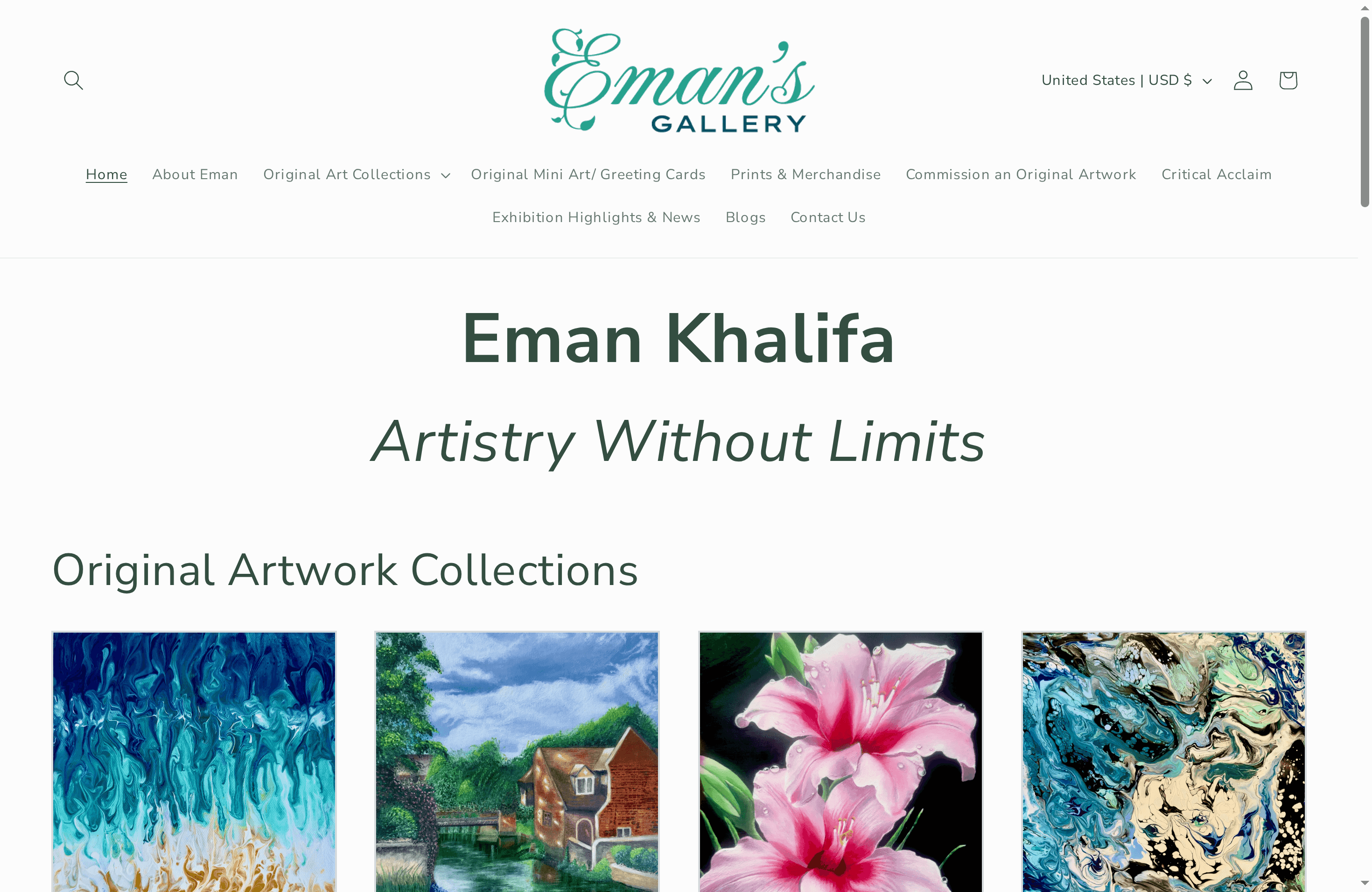
The contemporary realism collection at Emansgallery is particularly well-suited for collectors seeking original works that bridge decorative appeal and collectible value. For buyers focused on wall art, the full range of canvas and framed prints covers the botanical, abstract, and geometric styles most in demand for modern interiors this year. Every piece ships with a certificate of authenticity and is available for art-inspired home decor projects at any scale.
FAQ
What are the most popular art styles in 2025?
Impressionist and Modern art lead by auction value in 2025, with sales reaching $4.7 billion. For decorative and wall art, botanical themes, abstract expressionism, and geometric minimalism are the top styles in residential demand.
Is digital art a good investment in 2025?
Digital art and NFTs represent a growing but volatile segment, accounting for 11% of ultra-contemporary sales in 2025. Collectors should treat digital art as a high-risk, discretionary allocation rather than a core investment position.
Why did ultra-contemporary art decline in 2025?
Ultra-contemporary art fell 26.5% to $229.9 million in 2025 after years of speculative buying pushed prices beyond what the secondary market could sustain. The correction reflects a broader shift toward proven, well-documented styles.
What wall art styles are trending for home interiors in 2025?
Botanical and nature-infused prints, large-format abstract originals, and geometric minimalist compositions are the leading wall art styles for home and office interiors in 2025, often framed in eco-conscious materials like metal and reclaimed wood.
Which collector demographics are shaping art trends in 2025?
Younger collectors and women are increasingly driving demand for contemporary and digital art. Women artists now represent 45% of gallery representations, with record auction results for artists including Frida Kahlo and Marlene Dumas.
Stay Connected
- ✨ Explore Eman Khalifa's original art, fine art prints and art-inspired merchandise.
- Follow Eman Khalifa's art journey on: Instagram @emans_gallery and Facebook
- Watch Eman Khalifa creating live art on: YouTube @emans_gallery
