


What Is Framed Art Print and Why It Matters
Over 60 percent of American collectors now prefer framed art prints over unframed pieces, valuing not just aesthetic appeal but also preservation. As the art market grows, a framed print bridges artistry and practical investment, elevating even digital reproductions into tangible treasures. This guide reveals what truly sets framed art prints apart for collectors, from the intricate methods behind their creation to the qualities that make them such valued American acquisitions.
Table of Contents
- Defining Framed Art Print for Collectors
- Types of Framed Art Prints Explained
- How Framed Art Prints Are Made and Displayed
- Key Benefits Over Unframed and Canvas Art
- Cost Expectations and Common Pitfalls
Key Takeaways
| Point | Details |
|---|---|
| Framed Art Prints Enhance Aesthetics | Professionally framed prints add visual sophistication to artworks, seamlessly integrating them into various interior design styles. |
| Art Preservation is Paramount | Using archival-quality materials and proper framing techniques is essential to protect prints from environmental damage and ensure longevity. |
| Investment Considerations Matter | Framed art prints can appreciate in value; collectors should prioritize quality and proper framing to safeguard their investment. |
| Customization Enhances Appeal | The wide array of framing styles allows collectors to personalize displays, transforming artworks into statement pieces that reflect their style. |
Defining Framed Art Print for Collectors
A framed art print represents a carefully prepared artistic reproduction professionally mounted within a decorative border or frame, transforming an original digital or printed artwork into an elegant display piece for collectors and art enthusiasts. These prints go beyond simple wall decorations, serving as sophisticated methods of preserving and presenting artistic expressions with enhanced visual impact.
Framed art prints involve complex processes where high-quality reproductions of original artworks are carefully mounted within protective frames designed to complement the artwork’s aesthetic and preserve its integrity. Selecting the right frame requires understanding multiple technical and aesthetic considerations, including material compatibility, color coordination, and conservation techniques that protect the artwork from environmental damage.
Collectors appreciate framed art prints for several key reasons. First, they provide an accessible way to own professional-quality artistic representations without purchasing original paintings. Second, professionally framed prints offer museum-grade presentation that elevates the artwork’s perceived value and visual sophistication. These prints can seamlessly integrate into diverse interior design styles, from minimalist modern spaces to traditional gallery-inspired environments, making them versatile investment pieces for discerning art enthusiasts.
The technical aspects of framing involve precise measurements, archival-quality materials, and strategic mounting techniques. Professional framers use acid-free mounting boards, UV-protective glass, and carefully selected frame materials that protect the print from degradation while enhancing its visual appeal. This meticulous approach ensures that art prints maintain their color vibrancy, structural integrity, and aesthetic value over extended periods, transforming them from simple decorative items into genuine collectors’ treasures.
Types of Framed Art Prints Explained
Framed art prints encompass a diverse range of artistic reproductions, each offering unique characteristics and aesthetic qualities for collectors and art enthusiasts. Different art print styles demonstrate the versatility and complexity of these artistic representations, providing multiple options for collectors to enhance their personal spaces.
Several primary types of framed art prints dominate the contemporary art market. Giclee prints represent high-quality digital reproductions using advanced inkjet printing technologies, offering exceptional color accuracy and detail preservation. Lithograph prints, created through traditional stone or metal plate printing techniques, provide artists with intricate color layering and historical artistic authenticity. Screen prints feature bold, graphic designs with vibrant colors and sharp edges, popularized by pop art movements and contemporary graphic designers.

Collectors can choose from various framing styles that complement different print types and interior design aesthetics. Exploring art print variations reveals options like minimalist floating frames, classic wooden frames, metallic contemporary frames, and ornate vintage-inspired frames. Each framing approach transforms the artwork’s visual impact, allowing collectors to personalize their display and integrate prints seamlessly into their living or professional spaces.
The selection of art print type depends on multiple factors, including artistic intent, reproduction quality, archival preservation, and aesthetic preferences. Professional art collectors often consider paper quality, printing technique, limited edition status, and the artist’s reputation when selecting framed art prints. These considerations ensure not just aesthetic appeal but potential future value appreciation, making framed art prints sophisticated investments that combine visual beauty with potential financial significance.
How Framed Art Prints Are Made and Displayed
The creation of framed art prints involves a sophisticated process that combines artistic reproduction with precise technical craftsmanship. Selecting appropriate framing techniques requires understanding multiple intricate steps that transform digital or original artworks into museum-quality display pieces.
The manufacturing process begins with high-resolution digital scanning or professional photography of the original artwork, capturing every nuanced detail with exceptional precision. Advanced digital printing technologies like giclée enable artists and print studios to reproduce artwork using archival-grade pigment inks on premium paper substrates. Professional printers carefully calibrate color profiles to ensure maximum fidelity to the original piece, maintaining subtle gradations and intricate visual textures that define the artwork’s unique character.
Framing involves multiple strategic considerations beyond aesthetic appeal. Artwork preservation techniques dictate critical choices in materials and mounting methods. Archival-quality materials like acid-free mounting boards, UV-protective glass, and conservation-grade frames protect prints from environmental degradation. Professional framers utilize precise mounting techniques that prevent warping, minimize moisture exposure, and create visual depth through carefully selected frame profiles and matting options.
The final display of framed art prints requires careful consideration of environmental factors and placement strategies. Collectors must evaluate lighting conditions, humidity levels, and potential exposure to direct sunlight to maintain the print’s long-term visual integrity. Professional art handlers recommend rotating displayed prints periodically, using museum-grade hanging hardware, and maintaining consistent environmental conditions to preserve the artwork’s archival quality and aesthetic brilliance.
Key Benefits Over Unframed and Canvas Art
Framed art prints offer substantial advantages over traditional unframed and canvas art, providing collectors with enhanced aesthetic, protective, and functional benefits. Art print preservation techniques demonstrate how professional framing transforms artwork from simple decorative pieces into sophisticated, long-lasting investments.
Unlike unframed prints, framed art prints provide immediate visual refinement and structural protection. The frame acts as a critical protective barrier, shielding delicate artwork from environmental damage such as moisture, dust, UV radiation, and physical handling. Archival-quality frames with museum-grade glass and acid-free mounting materials prevent color degradation, paper warping, and structural compromise, ensuring the print maintains its original visual integrity for decades. Professional framers strategically select materials and mounting techniques that not only preserve the artwork but also enhance its aesthetic presentation.
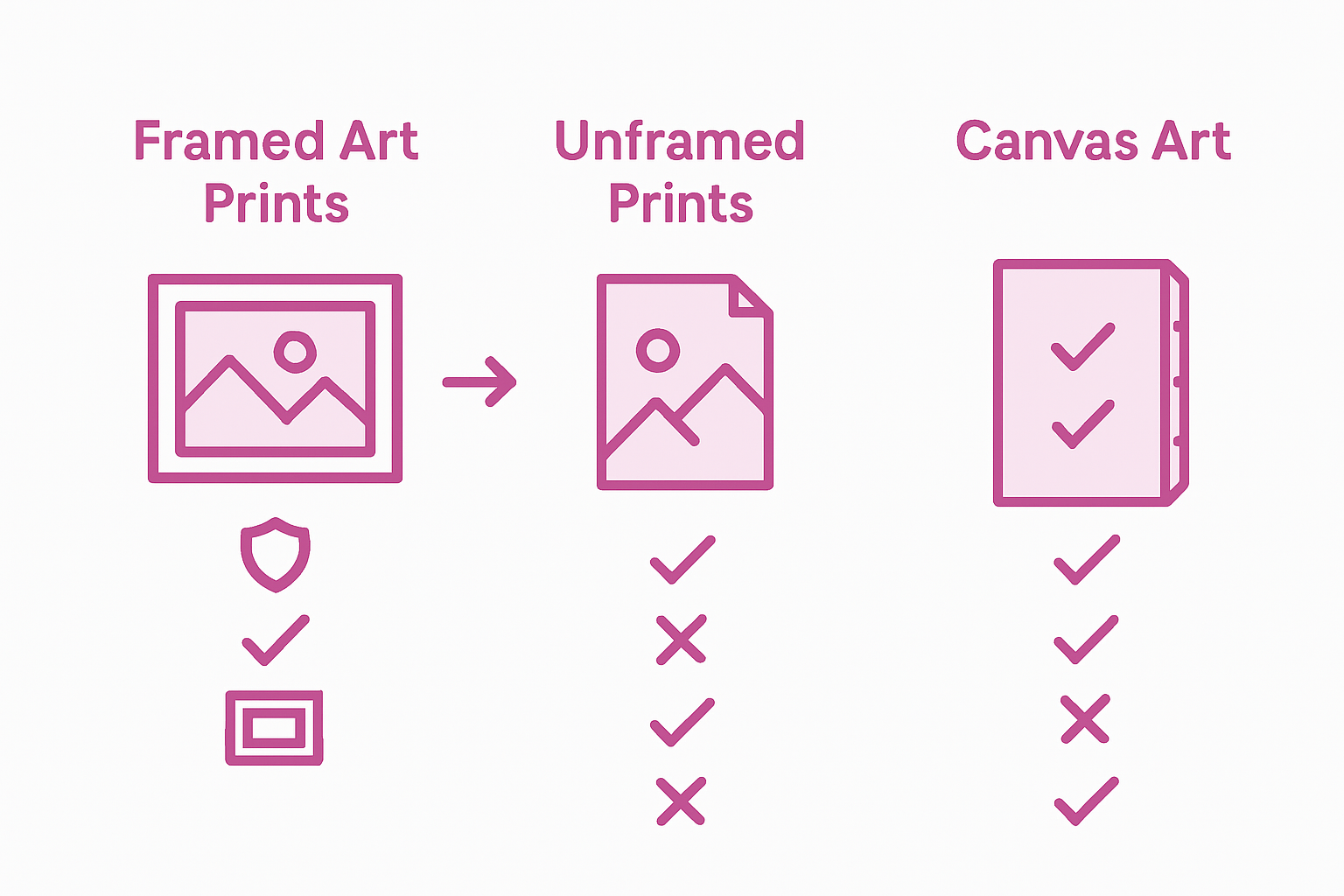
Compared to traditional canvas art, framed prints offer superior versatility and customization options. Collectors can select from an extensive range of frame styles, materials, and matting options that complement their interior design aesthetic. Wooden frames, metallic frames, minimalist floating frames, and ornate vintage-style frames provide nuanced ways to integrate artwork into diverse design contexts. This level of customization allows art enthusiasts to transform prints from simple decorative elements into statement pieces that reflect personal style and sophisticated design sensibilities.
Framed art prints also provide practical advantages over unframed and canvas alternatives. Ready-to-hang configurations eliminate the need for additional mounting hardware or complex installation processes. The precise measurements and professional mounting ensure perfect alignment and visual balance, reducing the time and effort required to display artwork effectively. Additionally, framed prints are significantly lighter and more portable than traditional canvas paintings, making them ideal for collectors who frequently rearrange their living spaces or desire flexibility in art display.
Cost Expectations and Common Pitfalls
Framed art prints represent a sophisticated investment that requires careful financial planning and strategic decision-making. Art framing cost considerations reveal the complex pricing landscape that collectors must navigate when selecting professional framing solutions.
The cost of framed art prints varies dramatically based on multiple factors, including print quality, frame material, glass type, and mounting techniques. Entry-level framed prints might range from $100 to $500, while premium archival-quality prints with museum-grade frames can easily exceed $1,000 to $5,000. Professional collectors should anticipate spending approximately 30-50% more for a fully framed print compared to an unframed version. Key cost drivers include archival-quality paper, giclée printing technologies, conservation-grade glass, custom frame designs, and professional mounting services.
Several common pitfalls can significantly impact the value and longevity of framed art prints. Collectors frequently make mistakes such as selecting inappropriate frame materials that clash with artwork aesthetics, using non-archival mounting techniques that accelerate paper degradation, or choosing budget frames that lack proper protective features. Budget-conscious collectors should prioritize fundamental preservation techniques over pure cost savings, understanding that inferior framing can permanently damage valuable artwork. Professional framers recommend investing in acid-free mounting boards, UV-protective glass, and frames constructed from stable materials that prevent moisture absorption and structural warping.
Budget-conscious strategies for acquiring high-quality framed art prints include purchasing limited edition prints, exploring emerging artist collections, and considering modular framing options that allow future customization. Collectors can also reduce costs by purchasing unframed prints and working with local professional framers who offer competitive pricing. Researching frame material durability, understanding preservation techniques, and comparing multiple framing options can help art enthusiasts make financially responsible decisions without compromising the artwork’s long-term aesthetic and archival quality.
Experience the Lasting Elegance of Framed Art Prints from Eman’s Gallery
Choosing the perfect framed art print can feel overwhelming when balancing preservation, style, and value. This article highlights common challenges like selecting archival materials, matching frame styles to your space, and ensuring long-term artwork protection. At Eman’s Gallery, we make this effortless by offering museum-quality wall art prints that combine artistic brilliance with professional framing designed to preserve your investment.
Explore our exclusive collection of Wall Art Prints | Canvas & Framed Art Prints by Eman Khalifa to discover stunning framed prints that merge luxury with archival standards. Whether you seek bold abstracts or delicate florals, our high-quality prints paired with expert framing deliver unmatched visual impact and durability. Start transforming your space with pieces that captivate and endure by visiting Eman’s Gallery today. Elevate your art collection now and enjoy worldwide shipping along with personalized support designed for discerning collectors like you.
Frequently Asked Questions
What is a framed art print?
A framed art print is a professionally mounted artistic reproduction, designed with a decorative border or frame. It serves to enhance the presentation and preservation of original artworks, making them elegant display pieces for collectors and art enthusiasts.
What are the benefits of owning framed art prints?
Framed art prints provide accessible ownership of professional-quality reproductions without the high cost of original artworks. They enhance the visual presentation, protect the artwork from environmental damage, and integrate well with various interior design styles.
How are framed art prints made?
Framed art prints are created through a process that includes high-resolution scanning or photography of original artwork, followed by advanced printing techniques such as giclée. The prints are then carefully framed using archival-quality materials that protect and enhance their visual appeal.
What should I consider when choosing a frame for my art print?
When selecting a frame for an art print, consider the frame material, color coordination with the artwork, and conservation techniques that protect against environmental damage. Proper mounting methods and the use of UV-protective glass are also important to maintain the print’s integrity over time.
Recommended
- What Is an Art Print? Complete Guide for 2025 – Eman’s Gallery
- Complete Guide to Why Collect Art Prints – Eman’s Gallery
- Complete Guide to Valuing Art Prints – Eman’s Gallery
- Complete Guide to Why Buy Art Prints – Eman’s Gallery
Stay Connected
- ✨ Explore Eman Khalifa’s original art and fine art prints
- 📸 Follow Eman Khalifa’s art journey on: Instagram @emans_gallery and Facebook Eman’s Gallery
- 📹 Watch Eman Khalifa creating live art on: YouTube @emans_gallerye
