


Decor Tips for Small Spaces That Actually Work
TL;DR:
- Effective small space decor emphasizes choosing well-scaled furniture, layering warm lighting, and maximizing vertical height to create a sense of openness. Mirrored surfaces, large rugs, and cohesive color palettes further enhance perceived room size without structural changes. Strategic art and intentional layouts transform small rooms into stylish, functional environments.
Decor tips for small spaces are proven design strategies that maximize comfort, style, and function by focusing on scale, light, and smart use of every surface. Interior design professionals define small-space decorating not as minimalism by default, but as intentional design where every object earns its place. The principles covered here, including vertical emphasis, layered lighting, and purposeful furniture scale, apply equally to a 300-square-foot studio and a compact two-bedroom apartment. Apply even three of these strategies and the difference in how your space feels is immediate.
1. Choose furniture scale over furniture size
The most common mistake in small apartment decor is filling a room with too many tiny pieces. Fewer, correctly scaled items create an intentional, airy environment far more effectively than a room crowded with miniature furniture. A single well-proportioned sofa reads as confident design. Six small chairs read as clutter.
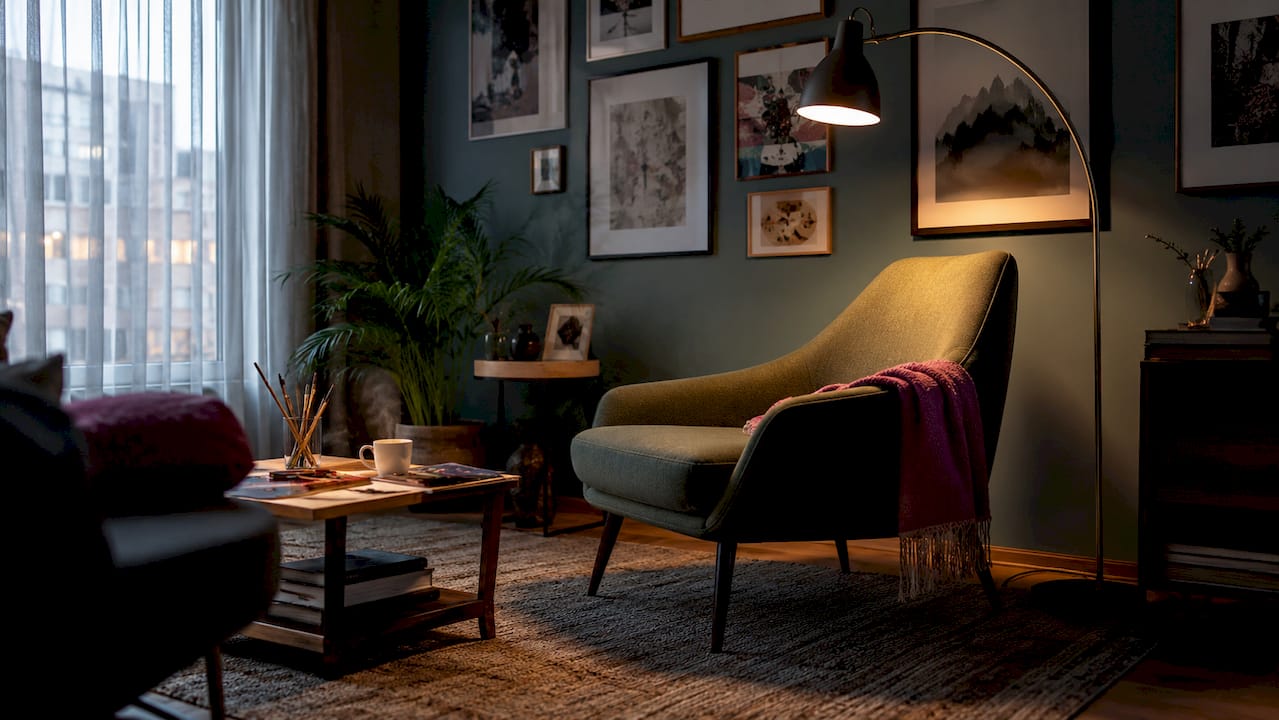
Scale means the relationship between your furniture and the room, not just the physical dimensions of each piece. A large sectional in a small living room can work if it is the dominant piece and everything else is subordinate. The room needs a visual anchor, not a collection of equally sized objects competing for attention.
Furniture with exposed legs is one of the most underused tools in compact living solutions. Leggy furniture exposes more floor area, and the eye reads that continuous floor line as a larger space. Sofas, chairs, and even beds on visible legs consistently outperform low-profile, skirted pieces in small rooms.
- Choose one statement furniture piece per zone and keep everything else secondary
- Select sofas and chairs with visible legs at least 4 to 6 inches off the floor
- Avoid matching sets of small accent tables that fragment the floor plan
- Keep traffic paths 2 to 3 feet wide and seating 8 to 10 feet apart for conversational flow
Pro Tip: Pull your sofa 6 to 18 inches away from the wall. Floating furniture creates breathing room that makes the floor plan feel designed rather than just filled.
2. Layer your lighting with three distinct sources
Layered lighting is the single most underestimated tool in small space design ideas. Three lighting sources, ambient, task, and accent, prevent the cold, cramped showroom feel that a single overhead fixture creates. A ceiling light alone flattens a room. Three sources give it depth.
Here is how to build a three-layer system in any small room:
- Ambient lighting: One central source, such as a flush-mount fixture or recessed lights, provides general illumination across the room.
- Task lighting: Focused sources like a floor lamp beside a reading chair or under-cabinet lights in a kitchen handle specific activities without spilling excess light everywhere.
- Accent lighting: Small LED strip lights behind shelving, a picture light above artwork, or a table lamp in a corner add warmth and visual dimension.
Bulb temperature matters as much as placement. Warm bulbs in the 2700 to 3000K range avoid the harsh, clinical feel that cool white bulbs produce in tight spaces. That temperature range makes walls look warmer and rooms feel more inviting.
Dimmer switches give you full control over mood without rewiring. Renters can use plug-in dimmer adapters on floor and table lamps to achieve the same effect. Maximizing natural light works alongside artificial layering: keep window treatments light and sheer, and position mirrors to bounce daylight deeper into the room.
Pro Tip: Never rely on a single overhead light after dark. Add one floor lamp and one table lamp to any room and the perceived size increases noticeably.
3. Use vertical space to make rooms feel taller
Vertical emphasis is the principle that drawing the eye upward tricks the brain into perceiving greater height and more breathing room. Most small-space decorating focuses on the floor plan. The ceiling and upper walls are almost always ignored, and that is exactly where the opportunity is.
Here are the most effective vertical design moves:
- Hang curtains at ceiling height, not at the window frame. Extending the rod to the ceiling and letting fabric pool slightly at the floor makes windows look taller and ceilings higher.
- Paint or wallpaper the ceiling in a bold color or pattern. This is counterintuitive but ceiling treatments draw the eye up and create a sense of enclosure that reads as intentional rather than cramped.
- Install floor-to-ceiling bookshelves or vertical shelving columns. Wall-mounted shelves also free up floor space while providing storage.
- Use vertical stripe patterns on walls or in textiles to elongate the room visually.
| Vertical technique | Effect on perceived space |
|---|---|
| Ceiling-height curtains | Makes windows and ceilings appear taller |
| Bold ceiling paint or wallpaper | Draws the eye upward, adds intentional drama |
| Floor-to-ceiling shelving | Maximizes storage while emphasizing height |
| Vertical wall stripes | Elongates walls and adds visual rhythm |
A gallery wall arranged in a vertical column rather than a horizontal spread reinforces the same upward movement. For small area styling tips, vertical arrangement is one of the fastest changes you can make without any renovation.
4. Place mirrors and rugs with precision
Three changes, pale walls, mirrors opposite windows, and floor-to-ceiling curtains, can make a 200-square-foot room feel 30 to 40 percent more spacious without any structural work. That figure comes from tested design practice, not theory. Mirrors do the heaviest lifting of the three.
A mirror placed directly opposite a window creates the illusion of a second window. It reflects both daylight and the outdoor view, effectively doubling the visual depth of the room. Mirrors should be at least 24 inches wide to register as a spatial element rather than a decorative accent. Floor-to-ceiling mirrors are the most powerful option for maximizing small rooms.
Rug size is where most people get it wrong. A large rug anchors seating and visually unifies the space. A small rug fragments the floor and makes the room feel chopped up. For a living room, an 8x10 rug or larger is the standard recommendation. All front legs of seating furniture should sit on the rug.
- Use mirrors at least 24 inches wide, ideally floor-to-ceiling, placed opposite the main light source
- Choose rugs that are large enough for all front furniture legs to rest on
- Avoid multiple small rugs in one room; one large rug per zone reads as cohesive design
- Lean large mirrors against walls for a casual, gallery-like effect that also avoids permanent installation
Pro Tip: Keep at least 70 percent of surfaces clear. Style the remaining 30 percent deliberately. Visual clutter shrinks a room faster than any furniture choice.
5. Build a cohesive color palette
Color palette decisions in small spaces affect perceived size more than most people expect. Warm whites and soft off-whites on walls and ceilings maximize light reflection and make rooms feel larger and more inviting. Benjamin Moore White Dove and Sherwin-Williams Alabaster are two of the most recommended options by interior designers for exactly this reason. Pure white reads as cold and clinical in small rooms.
Matching furniture and walls within the same color family creates a seamless visual flow that expands the room without any structural change. A cream sofa against a warm white wall disappears into the background, making the space feel continuous rather than broken up by contrast. This is one of the most effective small apartment decor techniques that costs nothing beyond a paint choice.
Bold color is not off-limits in small spaces. The key is using it with restraint and consistency. One bold accent wall, one deeply colored piece of furniture, or one large-scale artwork creates a focal point without overwhelming the room. The best small spaces result from confident, bold choices rather than timid neutral palettes applied without intention.
Key takeaways
The most effective decor tips for small spaces combine vertical emphasis, layered lighting, precise mirror placement, and cohesive color to create rooms that feel larger and more intentional than their square footage suggests.
| Point | Details |
|---|---|
| Scale over size | Choose fewer, well-proportioned furniture pieces rather than many small items. |
| Three-layer lighting | Use ambient, task, and accent sources with warm 2700 to 3000K bulbs. |
| Vertical emphasis | Hang curtains at ceiling height and use floor-to-ceiling shelving to draw the eye up. |
| Mirror placement | Position mirrors at least 24 inches wide opposite windows to double visual depth. |
| Cohesive color | Use warm whites like Benjamin Moore White Dove and keep 70 percent of surfaces clear. |
What I have learned from decorating small spaces
Most people approach a small room as a problem to solve. I approach it as a constraint that forces better decisions. When you cannot add more, you have to make each choice count. That shift in thinking changes everything.
The advice I see repeated most often, “use light colors and small furniture,” is only half right. Light colors help, but small furniture creates clutter. The rooms I have seen transformed most dramatically were the ones where someone removed three pieces of furniture, added one large mirror, and hung curtains at ceiling height. The room did not get bigger. It got smarter.
Art is where I see the biggest missed opportunity in small spaces. People either skip it entirely or hang something too small to register. One large-scale painting on a feature wall does more for a room’s identity than a dozen small prints scattered around. It gives the eye a destination. It makes the room feel curated rather than assembled. For displaying art in small spaces, the principle is the same as furniture: fewer, bolder, more intentional choices always win.
The restraint required in small-space decorating is not a limitation. It is the discipline that separates rooms that feel designed from rooms that feel accidental.
— Eman
How original art transforms small spaces

A single piece of original art is one of the most space-efficient design decisions you can make. It adds color, texture, personality, and a focal point without occupying any floor space. At Emansgallery, original paintings and museum-quality canvas prints are created specifically to serve as bold visual anchors in any room. The Good Tidings original painting in fluid blue and gold works as a statement piece in a compact living room, drawing the eye and adding depth without crowding the space. For a more atmospheric effect in a bedroom or reading nook, the Nocturned original painting brings a tonalist moonlit quality that makes intimate spaces feel intentional. Browse the full wall art prints collection to find the right scale and style for your space.
FAQ
What are the best decor tips for small spaces?
The most effective strategies are layered lighting with three sources, vertical design using ceiling-height curtains and tall shelving, large rugs to anchor furniture zones, and mirrors placed opposite windows. These changes improve perceived space without any structural renovation.
How do I choose the right rug size for a small room?
Use a rug large enough for all front legs of your seating furniture to rest on it. For most living rooms, an 8x10 rug is the minimum recommended size. Undersized rugs fragment the floor and make rooms feel smaller.
Does bold color work in small apartments?
Bold color works when applied with restraint. One accent wall, one large artwork, or one deeply colored furniture piece creates a focal point without overwhelming the room. Warm whites on surrounding walls keep the space feeling open.
Should furniture touch the walls in a small room?
Pulling furniture 6 to 18 inches away from walls creates visual breathing room and makes the layout feel intentional. Furniture pushed against every wall tends to make a room feel like a waiting room rather than a designed space.
What type of art works best in small spaces?
One large-scale painting or print creates a stronger focal point than multiple small pieces. Original artwork or a high-quality canvas print in a scale proportional to the wall gives the room a clear visual destination and adds depth without using floor space.
Stay Connected
- ✨ Explore Eman Khalifa's original art, fine art prints and art-inspired merchandise.
- Follow Eman Khalifa's art journey on: Instagram @emans_gallery and Facebook
- Watch Eman Khalifa creating live art on: YouTube @emans_gallery
