


How to Decorate Living Room with Art for a Luxe Look
Choosing the perfect art for your living room is not just about taste, it is about creating a refined harmony between your space and the pieces you select. For many luxury homeowners in the USA and UK, achieving a sophisticated look begins with a clear understanding of your room’s layout and design philosophy. By focusing on strategic space planning, you set the stage for art that enhances both visual appeal and your personal aesthetic.
Table of Contents
- Step 1: Assess Your Living Room’s Style And Layout
- Step 2: Select Art Pieces That Reflect Your Aesthetic
- Step 3: Plan Art Placements For Visual Harmony
- Step 4: Install Artwork For Maximum Impact
- Step 5: Review And Refine Your Living Room Décor
Quick Summary
| Key Point | Explanation |
|---|---|
| 1. Assess your living room style | Evaluate your space’s architecture, color scheme, and furniture to choose art that complements the design. |
| 2. Select personal artwork | Choose pieces that reflect your unique aesthetic and evoke emotional connections for a curated feel. |
| 3. Plan for art placements | Arrange artwork with balance, considering size, spacing, and spatial relationships for visual harmony. |
| 4. Install art strategically | Hang pieces at eye level and ensure proper lighting and spacing for a professional-looking display. |
| 5. Continuously refine your decor | Regularly review and adjust your art arrangement to maintain freshness and alignment with your style. |
Step 1: Assess your living room’s style and layout
Deciding how to incorporate art into your living room begins with a strategic evaluation of your existing space and design aesthetic. Understanding your room’s current style and layout is crucial for selecting artwork that enhances rather than competes with your interior design.
Start by analyzing your living room’s architectural features, furniture arrangement, and overall design philosophy. Strategic space planning involves carefully examining elements like room dimensions, natural light sources, color palette, and existing decor themes. This assessment helps you identify the perfect locations and styles of art pieces that will complement your space.
To determine your design style, consider these key characteristics:
- Furniture silhouettes and materials
- Color scheme and existing artwork
- Architectural details (modern, traditional, minimalist)
- Texture and pattern preferences
- Lighting conditions and room flow
Your artwork should harmonize with these existing design elements, creating a cohesive and sophisticated visual narrative. Thoughtful art selection transforms a simple room into a luxurious, personalized environment.
Here’s a quick reference for matching art styles to different living room design themes:
| Design Theme | Ideal Art Style | Recommended Colors | Key Impact |
|---|---|---|---|
| Modern | Abstract or geometric | Neutrals, bold accents | Adds sophistication |
| Traditional | Classic paintings | Warm earth tones | Invokes timeless comfort |
| Minimalist | Monochromatic, line art | Black, white, gray | Creates serene focus |
| Eclectic | Mixed media, pop art | Vibrant, varied shades | Expresses individuality |
Artwork is not just decoration - it’s a strategic design element that communicates your aesthetic vision and enhances the room’s overall ambiance.
Pro tip: Take photos of your living room from multiple angles to help visualize potential art placements and ensure a balanced, harmonious design approach.
Step 2: Select art pieces that reflect your aesthetic
Choosing artwork that genuinely represents your personal style transforms your living room from a simple space into a curated reflection of your personality. The goal is to select pieces that not only complement your existing decor but also communicate your unique aesthetic vision.
When selecting art, focus on understanding art’s fundamental elements such as color, line, shape, form, and texture. These foundational components help you identify pieces that resonate with your personal taste. Consider the following strategies for finding art that truly speaks to your style:
- Explore color palettes that align with your room’s existing scheme
- Identify art styles that match your interior design philosophy
- Select pieces that evoke emotional responses or memories
- Mix different mediums to create visual depth and interest
- Consider the scale and proportion of artwork relative to your space
Emotional connection is key when selecting art. The most impactful pieces are those that spark joy, provoke thought, or create a sense of comfort in your living environment.
Art is not just a decorative element - it’s a powerful form of personal expression that transforms living spaces into storytelling canvases.
Pro tip: Create a digital mood board or gallery wall layout using photography apps to visualize how different art pieces will interact with your existing decor before making a final selection.
Step 3: Plan art placements for visual harmony
Creating a visually harmonious art display requires strategic planning and an understanding of spatial relationships. Your goal is to transform your living room walls into a curated gallery that feels intentional and sophisticated.
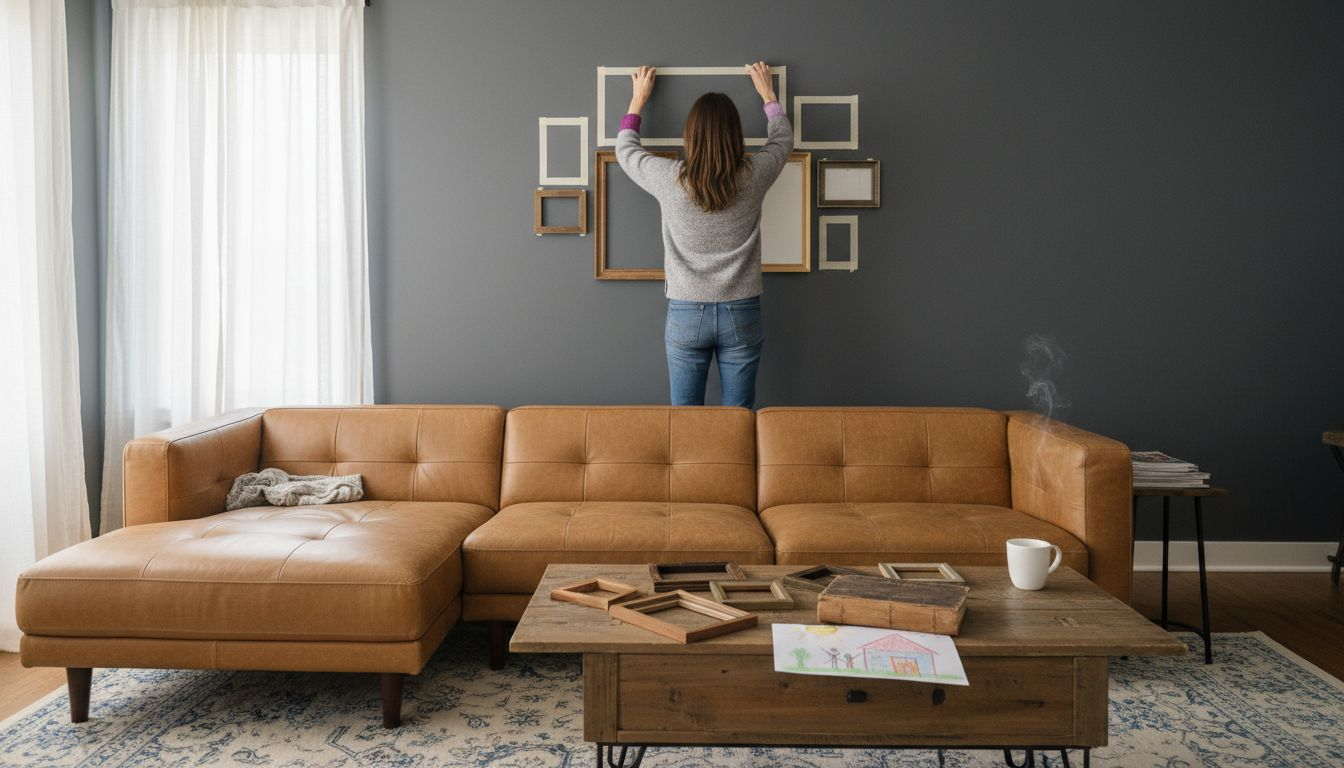
Principles of composition guide the placement of artwork, ensuring a balanced and engaging visual experience. By applying techniques like the Rule of Thirds and considering spatial dynamics, you can create an arrangement that feels both intentional and effortless.
Consider these key strategies for achieving visual harmony:
- Establish a focal point with a larger statement piece
- Maintain consistent spacing between artworks
- Balance visual weight across different areas of the wall
- Create vertical and horizontal alignment
- Mix artwork sizes and orientations for dynamic interest
Spatial awareness is critical when arranging art. Pay attention to the relationship between your artwork, furniture, and architectural features to create a cohesive look.
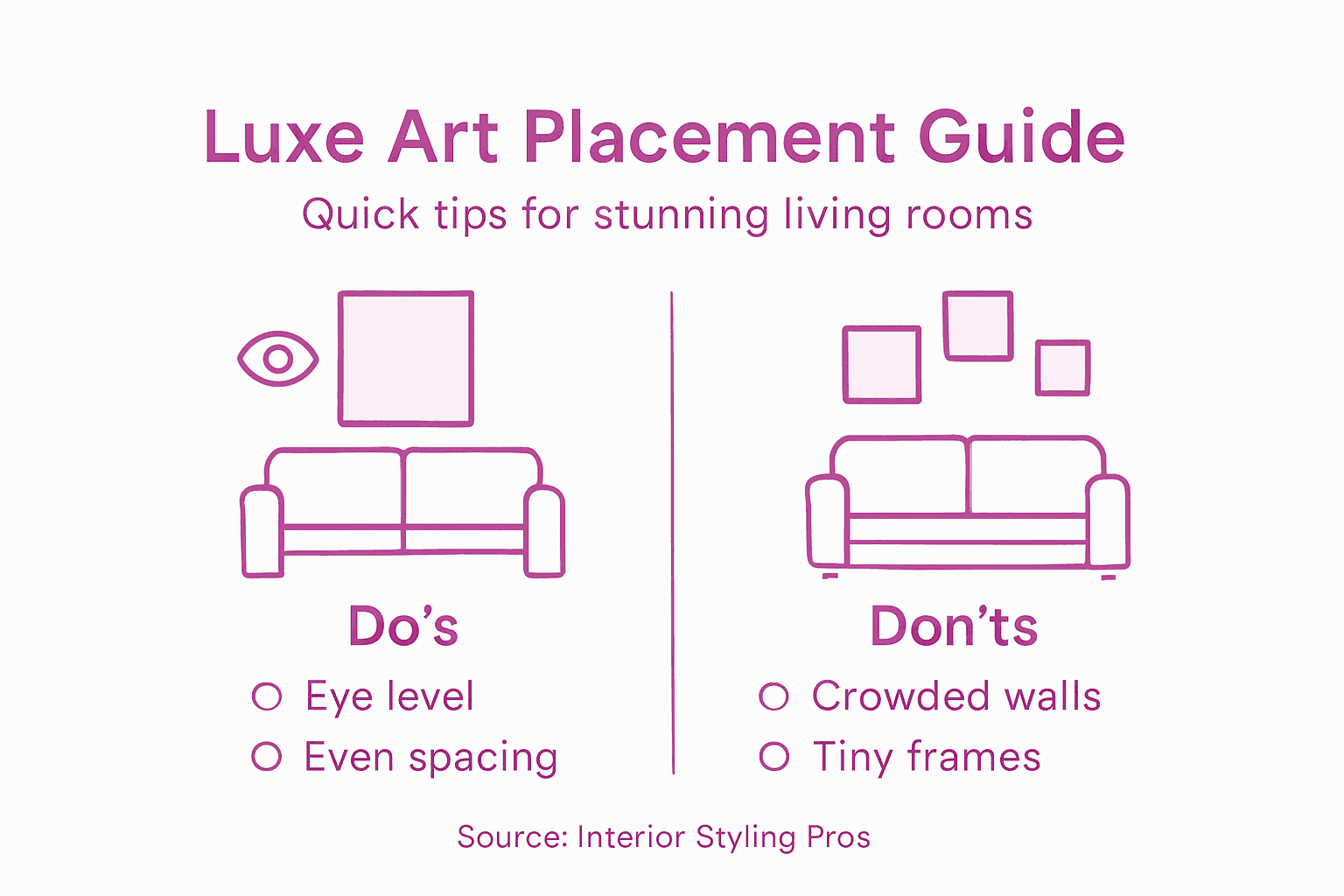
Compare two popular approaches to arranging living room artwork:
| Arrangement Method | Visual Effect | Flexibility | Best For |
|---|---|---|---|
| Symmetrical | Balanced, orderly look | Low (fixed layout) | Formal, traditional rooms |
| Asymmetrical | Dynamic, creative energy | High (adjustable) | Modern, artistic spaces |
Visual harmony is not about perfection, but about creating a balanced composition that feels intentional and personal.
Pro tip: Use painter’s tape to map out potential art arrangements on your wall before hanging, allowing you to experiment with layouts without making permanent marks.
Step 4: Install artwork for maximum impact
Transforming your living room with perfectly installed artwork requires precision, strategy, and an understanding of visual dynamics. The goal is to create a professional-looking display that elevates your space from ordinary to extraordinary.
Careful artwork installation involves more than simply hanging a frame on the wall. It requires thoughtful consideration of height, scale, lighting, and the surrounding environment to ensure maximum visual impact.
Follow these critical installation guidelines:
- Hang artwork at eye level (approximately 57-60 inches from the floor)
- Use appropriate wall anchors and hardware for artwork weight
- Create balanced spacing between multiple pieces
- Align artwork with furniture or architectural features
- Utilize proper lighting to enhance artwork details
Precision matters when installing art. Small adjustments can dramatically transform the visual narrative of your living room.
The art of installation is about creating a conversation between your artwork, space, and personal style.
Pro tip: Invest in a laser level and stud finder to ensure perfectly straight and securely mounted artwork that looks professionally installed.
Step 5: Review and refine your living room décor
Perfecting your living room’s art display is an ongoing process of observation, assessment, and strategic refinement. Your goal is to create a dynamic, sophisticated space that continues to evolve with your personal style.
Design evaluation techniques provide a systematic approach to assessing your living room’s aesthetic and functional qualities. By implementing a critical review process, you can ensure your art installation remains fresh, impactful, and aligned with your design vision.
Consider these key refinement strategies:
- Step back and view your space from multiple angles
- Assess the emotional impact of your art arrangement
- Check for visual balance and symmetry
- Evaluate lighting and its interaction with artwork
- Note how art pieces complement furniture and architectural elements
Visual continuity is essential when refining your décor. Small adjustments can significantly enhance the overall aesthetic experience.
A luxurious living room is not about perfection, but about creating a space that tells your unique design story.
Pro tip: Take periodic photographs of your living room from different perspectives to objectively analyze your art placement and overall design composition.
Elevate Your Living Room with Curated Original Art
Decorating your living room for a luxe, cohesive look requires artworks that harmonize with your unique style and space layout. If you have struggled with selecting pieces that truly reflect your personality or fitting art into your existing design scheme with visual harmony, you are not alone. At Eman’s Gallery, we understand the importance of thoughtful art selection and precise installation to create that sophisticated ambience the article highlighted.
Discover our exclusive Floral Original Art - Embrace Nature’s Beauty in a Stunning Collection and Geometric Original Art Collection - Unique Geometric Wall Decor that pair beautifully with many living room styles. Each piece is handmade by artist Eman Khalifa to add emotional depth, texture, and color balance—key elements discussed for impactful living room décor.
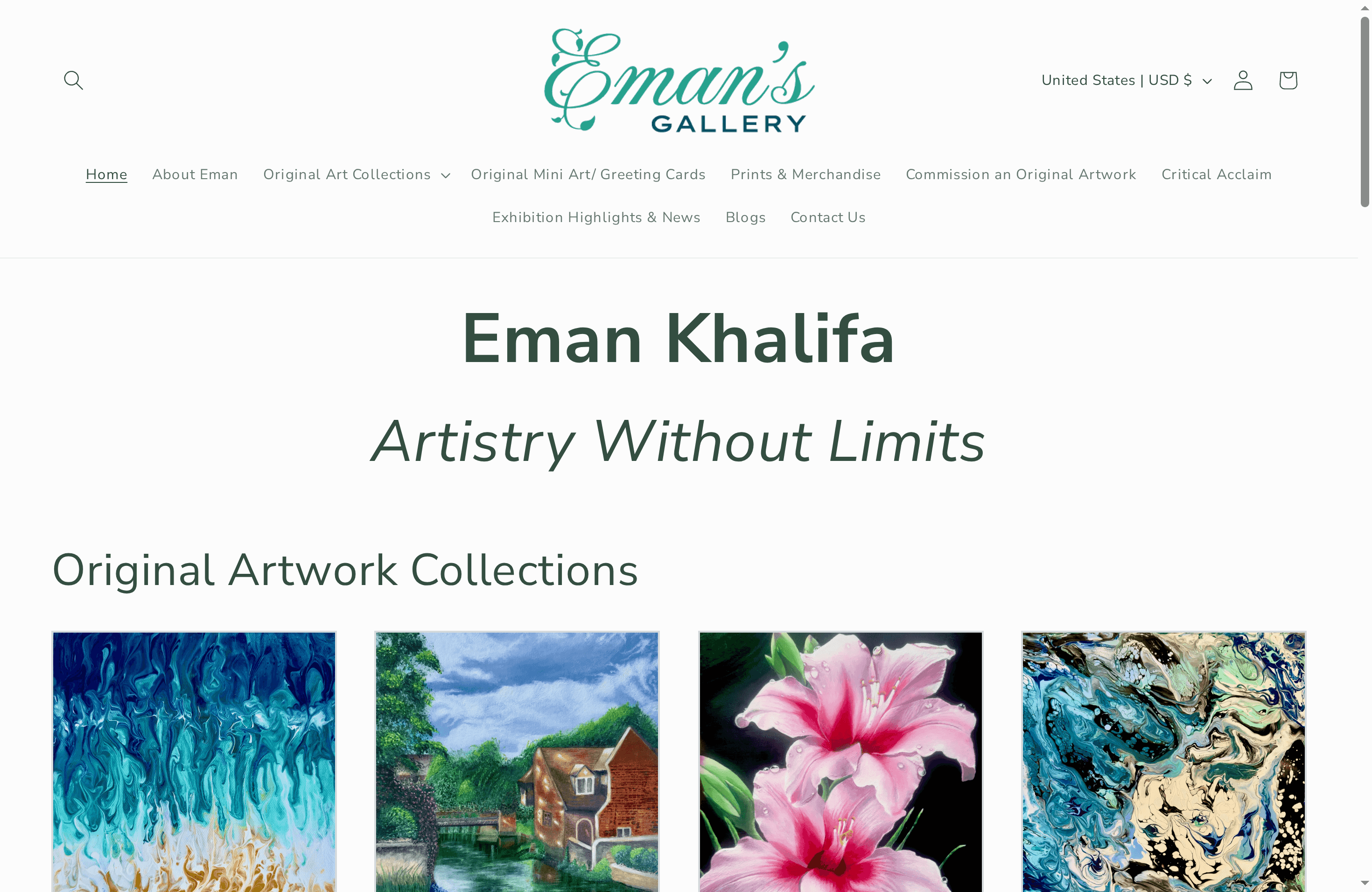
Transform your space today by browsing these carefully crafted collections and more at Eman’s Gallery. Take the next confident step toward a living room that not only impresses but tells your personal design story. Shop now to secure unique original artworks that will turn walls into captivating focal points.
Frequently Asked Questions
How can I assess my living room’s style and layout before selecting art?
To assess your living room’s style and layout, analyze architectural features, furniture arrangements, and your overall design philosophy. Start by taking note of elements like room dimensions, color palette, and existing decor, then determine key areas for artwork placement that will enhance your space.
What types of art reflect a luxurious look in a living room?
Art that reflects a luxurious look often includes classic paintings, abstract pieces, or mixed media that resonate with your personal style. Choose artwork that complements your color scheme and evoks emotional responses to create a curated and sophisticated environment.
How should I plan the placement of art in my living room?
Plan the placement of art by establishing a focal point and ensuring consistent spacing between pieces. Use principles like the Rule of Thirds and balance visual weight across your display to create a visually harmonious arrangement that enhances your living space.
What are the best practices for installing artwork effectively?
To install artwork effectively, hang pieces at eye level (approximately 57-60 inches from the floor) and use appropriate wall anchors for support. Ensure balanced spacing between artworks and align them with furniture or architectural features for maximum impact in your living room.
How can I refine my living room decor after installing the art?
Refine your living room decor by periodically reviewing your space from different angles to assess visual impact and emotional resonance. Make small adjustments to art placements, check for visual balance, and consider how lighting interacts with your artwork, keeping the space dynamic and aligned with your aesthetic vision.
Recommended
- Art Showcasing Techniques for Luxurious Interiors
- Art Styles Explained: Shaping Luxury Interiors
- 7 Expert Wall Art Color Tips for Luxury Interiors
- Role of Art Prints in Interior Design Luxury Spaces
Stay Connected
- ✨ Explore Eman Khalifa’s original art and fine art prints
- 📸 Follow Eman Khalifa’s art journey on: Instagram @emans_gallery and Facebook Eman’s Gallery
- 📹 Watch Eman Khalifa creating live art on: YouTube @emans_gallery
