


Art Print Sizes Explained: Choosing the Perfect Fit
Over 60 percent of contemporary art collectors discover that choosing the wrong print size can diminish a room’s entire atmosphere. Navigating the world of art prints is especially tricky when American and British standards don’t always align, leaving collectors and interior designers torn between aesthetics and practicality. This guide clarifies print terminology, standard dimensions, and critical size selection strategies, helping you achieve gallery-worthy visual balance for every modern space.
Table of Contents
- Core Definitions And Art Print Basics
- Types Of Art Print Sizes And Ratios
- How To Select The Ideal Size For Decor
- Impact Of Size On Artwork And Space
- Avoiding Common Art Print Sizing Mistakes
Key Takeaways
| Point | Details |
|---|---|
| Understanding Art Prints | Art prints are reproduced artworks created through various techniques, affecting their quality and artistic value. Familiarize yourself with terms like edition size and printing methods. |
| Choosing the Right Size | Select art print sizes based on room dimensions and furniture to ensure visual balance. Consider standard sizes for flexibility in framing and customization. |
| Avoiding Sizing Mistakes | Measure wall space accurately and create templates to prevent selecting prints that overwhelm or underwhelm the area. |
| Provenance is Key | Always request a certificate of authenticity for limited edition prints to verify quality and enhance long-term value. |
Core Definitions and Art Print Basics
Art prints represent reproduced artworks created through various printing techniques that transform original artwork into accessible, shareable visual experiences. Understanding the fundamental characteristics of art prints helps collectors and designers make informed selections. Art print terminologies encompass multiple technical aspects that define their quality, reproduction method, and artistic value.
At its core, an art print involves transferring an artist’s original image onto another surface using specialized printing processes. These processes range from traditional techniques like lithography and screenprinting to contemporary digital methods. Professional artists and printmakers carefully control factors such as paper quality, ink type, color accuracy, and reproduction resolution to ensure the print maintains the original artwork’s aesthetic integrity.
The key characteristics that define art prints include their reproduction method, edition size, and printing technique. Limited edition prints, which are produced in restricted quantities and often individually numbered, carry higher artistic and collector value compared to open edition prints. Digital prints offer precise color reproduction, while techniques like giclée printing provide museum-quality results with exceptional detail and color fidelity.
Here’s a quick comparison of common art print reproduction methods and their unique qualities:
| Printing Method | Visual Characteristics | Best Use Cases |
|---|---|---|
| Lithography | Rich tones, subtle gradations | Classic art reproductions |
| Screenprinting | Bold colors, strong contrast | Graphic and modern designs |
| Giclée | High detail, archival quality | Museum-quality fine art |
| Digital Printing | Precise colors, scalable sizing | Contemporary custom prints |
Pro Tip: Always request a certificate of authenticity when purchasing limited edition art prints to verify the print’s provenance and enhance its long-term value.
Types of Art Print Sizes and Ratios
Art print sizes and ratios are fundamental to understanding how artwork will appear in different spaces. Standard aspect ratios play a crucial role in determining the visual composition and framing potential of art prints. Common print sizes range from small 8x10 inch formats perfect for intimate spaces to large 24x36 inch statement pieces designed to anchor entire room designs.
Traditional print sizes typically follow established photographic and artistic conventions. The most prevalent aspect ratios include 3:2, 4:3, and 16:9, which correspond to different visual proportions and frame compatibility. Rectangular formats like 11x14 inches and square formats such as 12x12 inches offer versatile options for collectors seeking to create balanced wall arrangements. Photo print dimensions vary internationally, with American and European standards presenting subtle but important differences in standard sizing.
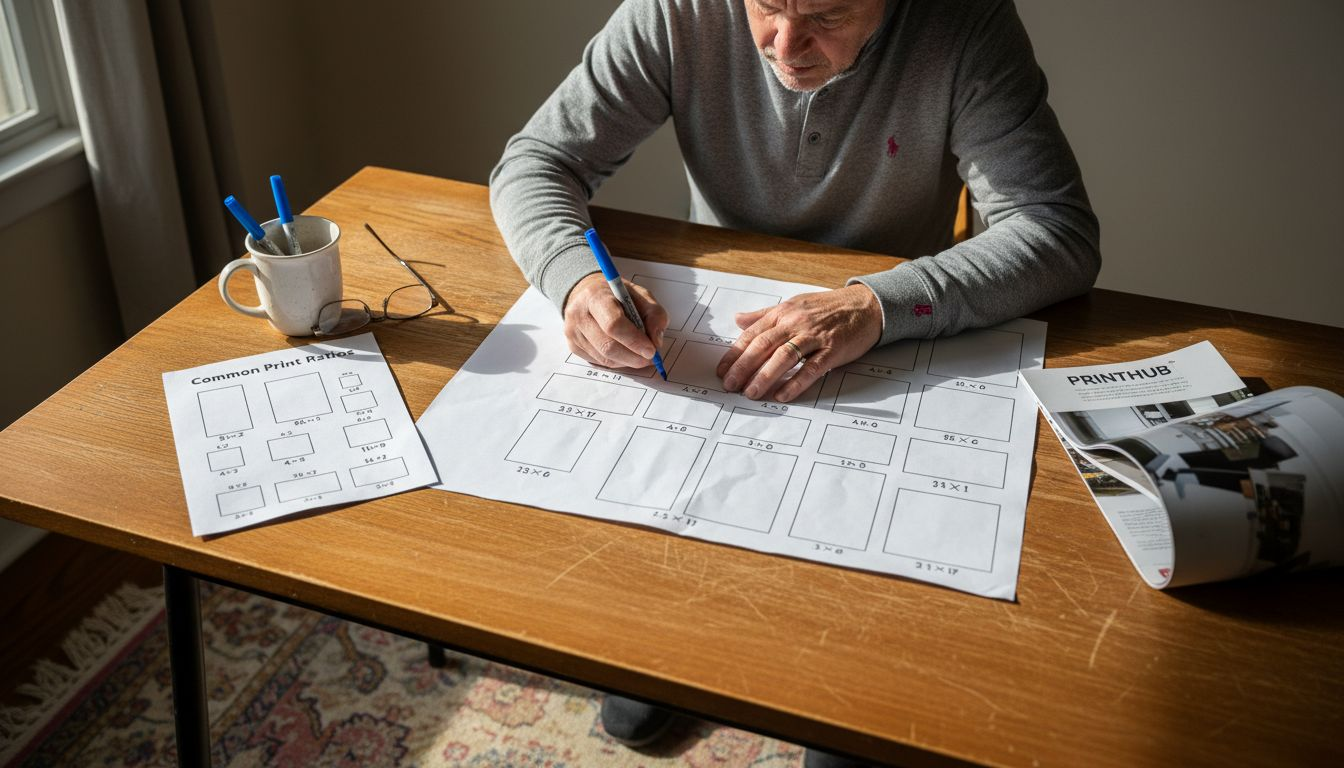
Professional artists and interior designers often recommend selecting print sizes based on wall space, furniture placement, and overall room aesthetic. Standard sizes like 16x20, 18x24, and 24x36 inches provide flexibility for standard frames and mounting options. Digital prints and contemporary art techniques have expanded sizing possibilities, allowing for custom dimensions that break traditional constraints and offer more personalized art presentation approaches.
Pro Tip: Measure your wall space and existing furniture before selecting an art print size to ensure perfect visual proportion and aesthetic harmony.
How to Select the Ideal Size for Decor
Selecting the perfect art print size involves strategic consideration of room dimensions, furniture placement, and visual balance. Print size scaling requires careful evaluation to ensure the artwork complements rather than overwhelms the space. Professional interior designers recommend following the rule of thirds, where art prints occupy approximately 50-75% of the available wall space above furniture pieces like sofas, consoles, or headboards.
Room-specific sizing strategies differ based on the area’s purpose and architectural characteristics. In living rooms, larger statement pieces between 24x36 and 36x48 inches create dramatic focal points, while bedrooms and home offices benefit from more intimate 16x20 or 18x24 inch prints. Photo print dimensions vary internationally, so measuring actual wall space becomes crucial for achieving optimal visual harmony. Consider ceiling height, furniture scale, and existing decor when determining the most appropriate print size.
Multiple print arrangements offer additional flexibility for challenging spaces. Gallery walls combining smaller prints can transform empty walls, while symmetrical grid layouts provide structured visual interest. Oversized prints work exceptionally well in minimalist spaces with clean lines, creating bold visual statements that draw the eye and enhance architectural elements. Digital technology now allows for unprecedented customization, enabling art collectors to order precisely scaled prints tailored to specific interior design requirements.
The table below summarizes standard art print dimensions and recommended uses for each size:
| Print Size (inches) | Typical Placement | Visual Impact |
|---|---|---|
| 8x10 | Small nooks, shelves | Personal and intimate |
| 16x20 | Bedrooms, home offices | Balanced, versatile |
| 18x24 | Entryways, dining rooms | Noticeable, proportioned |
| 24x36 | Living room focal wall | Bold, statement piece |
| 36x48+ | Large open spaces | Dramatic, eye-catching |
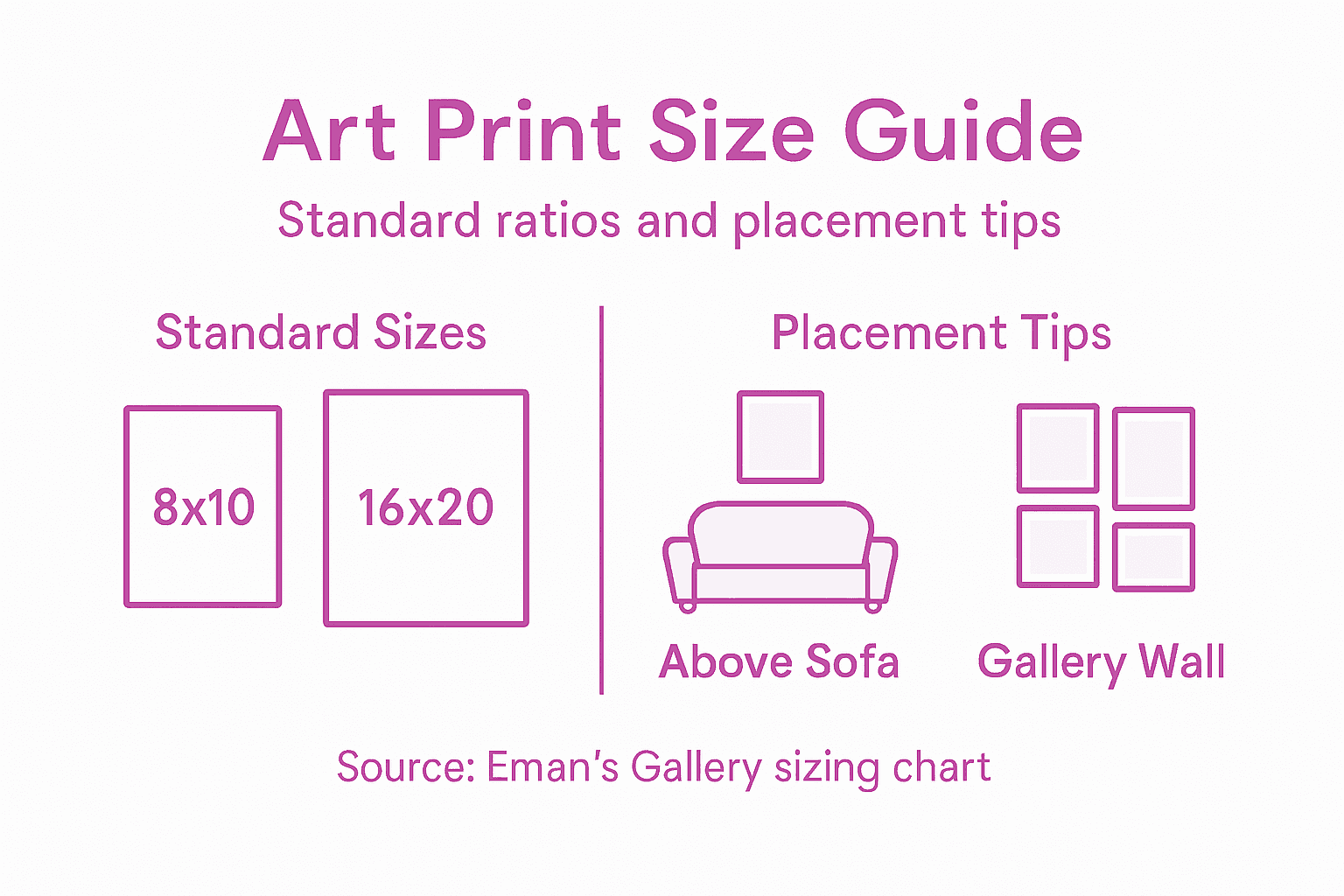
Pro Tip: Use painter’s tape to create paper templates matching potential art print sizes, allowing you to visualize placement and proportion before making a final purchase.
Impact of Size on Artwork and Space
The relationship between art print size and spatial dynamics is complex and nuanced, profoundly influencing psychological perception and room aesthetics. Spatial relationships in art reveal how dimensions create emotional responses and visual narratives within interior environments. Smaller prints can create intimacy and detail, while larger artworks generate dramatic statements that transform architectural spaces, directing viewer attention and establishing visual hierarchies.
Size fundamentally alters artwork’s interaction with surrounding architectural elements. In minimalist spaces, oversized prints can serve as transformative focal points, while in more complex environments, carefully scaled pieces maintain visual balance. Fourth dimension in artistic representation demonstrates how scale manipulates perception, creating depth, movement, and emotional resonance beyond two-dimensional limitations. Prints ranging from 16x20 inches to expansive 48x72 inch installations communicate different spatial energies, engaging viewers through strategic dimensional choices.
Professional interior designers understand that art print size is not merely about physical dimensions but about creating visual conversations within spaces. Contextual considerations like ceiling height, furniture scale, and room geometry determine optimal artwork sizing. Smaller rooms benefit from vertical orientation prints that elongate perceived space, while larger rooms can accommodate horizontal compositions that emphasize width and breadth. Digital printing technologies now enable unprecedented customization, allowing art collectors to precisely match prints to unique spatial requirements.
Pro Tip: Experiment with art print sizes by creating cardboard cutouts that match potential dimensions, helping you visualize spatial impact before making a final selection.
Avoiding Common Art Print Sizing Mistakes
Art print selection requires strategic planning to prevent visual disharmony and potential display errors. Print sizing considerations reveal several critical mistakes that can compromise artwork presentation. Collectors frequently misjudge scale by selecting prints that are disproportionate to their wall space, either overwhelming the area with oversized pieces or diminishing visual impact with prints too small for the intended location.
Common sizing errors include ignoring architectural context, misunderstanding aspect ratios, and failing to account for furniture placement. Interior design professionals recommend maintaining proportional relationships between artwork and surrounding elements. A print that appears perfect in a gallery or online might look dramatically different when placed in a specific room. Paper sizing preservation techniques underscore the importance of precise measurements and understanding how different room geometries interact with art print dimensions.
Technical considerations extend beyond simple measurement. Aspect ratio mismatches can lead to awkward cropping or unnecessary framing that detracts from the artwork’s original composition. Digital printing technologies offer unprecedented customization, but this flexibility requires careful consideration. Professional art collectors approach sizing by creating visual mock-ups, using painter’s tape or digital visualization tools to preview artwork placement and ensure optimal aesthetic integration within their specific interior environment.
Pro Tip: Always measure your wall space and create a paper template matching the exact print dimensions before purchasing to avoid costly sizing mistakes.
Find the Perfect Art Print Size for Your Space with Eman’s Gallery
Choosing the right art print size can be challenging. Whether you struggle to find the ideal balance between bold statement pieces and intimate accents or wonder how to match print dimensions with your room layout, Eman’s Gallery offers expert solutions tailored to your needs. Our premium collection of Canvas Art Prints by Eman Khalifa | Premium Giclée Wall Art – Eman’s Gallery allows you to select museum-quality pieces available in a variety of sizes to perfectly complement your space.
Explore our extensive range of Wall Art Prints | Canvas & Framed Art Prints by Eman Khalifa – Eman’s Gallery designed to fit any room from cozy nooks to expansive living areas. Act now to find that flawless art print size that enhances your home’s aesthetic and brings your walls to life. Visit Eman’s Gallery today to discover unique artworks made for your perfect fit.
Frequently Asked Questions
What are the common art print sizes available?
Common art print sizes range from small formats like 8x10 inches, ideal for intimate spaces, to large sizes like 24x36 inches, suitable for statement pieces in living rooms.
How do I choose the right size art print for my space?
Consider factors such as wall dimensions, furniture placement, and the overall room aesthetic. Aim for prints that occupy 50-75% of the available wall space above furniture for optimal visual balance.
What is the difference between limited edition and open edition art prints?
Limited edition prints are produced in restricted quantities and often carry higher artistic value, while open edition prints can be reproduced indefinitely, generally offering lower value for collectors.
How can I avoid common mistakes when selecting art print sizes?
To avoid sizing mistakes, measure your wall space accurately and create mock-ups using painter’s tape or cardboard cutouts to visualize potential print placement and ensure proportionate dimensions.
Recommended
- Top Art Print Merchandise – Expert Comparison 2026
- Selecting Art Prints Guide: Find Your Perfect Art Print – Eman’s Gallery
- Art Print Mediums Explained: Key Types and Uses – Eman’s Gallery
- Complete Guide to Why Buy Art Prints – Eman’s Gallery
Stay Connected
- ✨ Explore Eman Khalifa’s original art and fine art prints
- 📸 Follow Eman Khalifa’s art journey on: Instagram @emans_gallery and Facebook Eman’s Gallery
- 📹 Watch Eman Khalifa creating live art on: YouTube @emans_gallery
