


What Is Printmaking? Techniques, Types, and History
TL;DR:
- Printmaking creates original artworks by transferring images from a matrix onto paper or other materials. Each impression is part of a limited edition, signed and numbered by the artist. The four main techniques produce distinct visual qualities that cannot be replicated by reproductions.
Printmaking is defined as the artistic process of transferring an image from a prepared surface, called a matrix, onto paper or another material to create original editions. The matrix can be a carved woodblock, an etched metal plate, a flat stone, or a stretched screen. Each impression pulled from that matrix is an original artwork, not a copy. This distinction matters deeply to collectors, art students, and anyone building a serious relationship with visual art. Understanding printmaking means understanding how technique, material, and intention combine to produce something genuinely irreplaceable.
What is printmaking and how does it work?
Printmaking is the process of creating artworks by transferring images from a prepared matrix onto a receiving surface, most often paper. The matrix holds the image, and ink carries it to the paper through pressure, chemical reaction, or direct contact. Every print pulled from that matrix belongs to a limited edition, a controlled number of impressions made before the matrix is retired or destroyed.
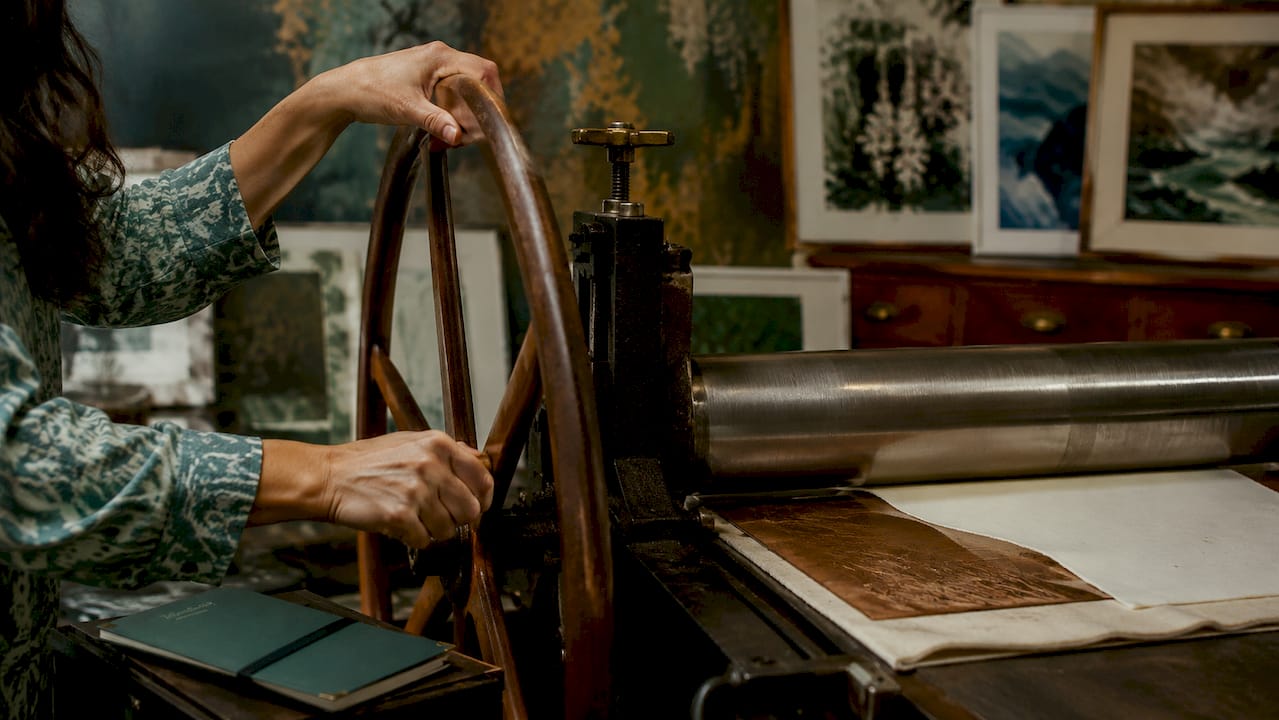
The concept of the edition is central to printmaking’s identity. Artists number each print (for example, 3/25 means the third print from an edition of 25) and sign it by hand. This practice preserves value and confirms authenticity. Once the edition is complete, no additional prints are made from that matrix.
The matrix choice shapes everything. An artist working with a metal plate and acid will produce fine, precise lines. An artist carving a woodblock will produce bold, graphic contrasts. Matrix selection is a deliberate creative decision, not a technical afterthought. It defines the visual language of the finished work.
What are the main types of printmaking techniques?
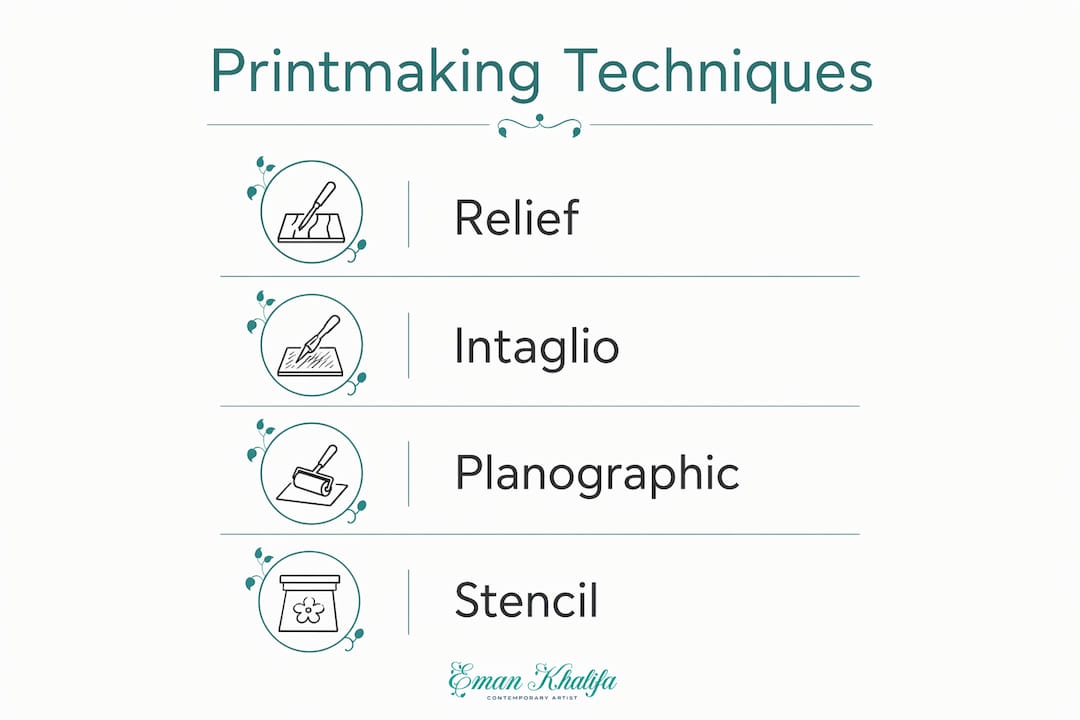
Printmaking techniques divide into four fundamental categories: relief, intaglio, planographic, and stencil. Each category uses a different physical principle to transfer ink to paper.
- Relief printing removes material from the matrix surface. Ink sits on the raised areas and transfers to paper under pressure. Woodcut and linocut are the most common examples. The result is bold, graphic, and high contrast.
- Intaglio printing works in reverse. The artist incises lines into a metal plate, ink fills those grooves, and pressure forces the paper into the recesses to pick up the ink. Etching, engraving, and aquatint fall into this category. Intaglio produces fine detail and rich tonal range.
- Planographic printing uses a flat surface where image and non-image areas repel each other chemically. Lithography is the defining example. The artist draws on a stone or plate with a greasy medium, then water and ink are applied. Ink sticks only to the drawn areas.
- Stencil printing forces ink through a prepared screen or cut template. Screen printing (also called serigraphy) is the most widely practiced stencil method. It produces flat, saturated color and works on fabric, paper, and many other surfaces.
| Technique | Method | Common examples | Visual character |
|---|---|---|---|
| Relief | Ink on raised surface | Woodcut, linocut | Bold, graphic |
| Intaglio | Ink in incised grooves | Etching, engraving | Fine lines, tonal depth |
| Planographic | Chemical repulsion on flat surface | Lithography | Painterly, subtle gradients |
| Stencil | Ink forced through screen or template | Screen printing | Flat, saturated color |
Pro Tip: If you are new to printmaking, linocut is the most accessible starting point. Linoleum cuts easily, requires no press, and produces clean results with basic tools.
For a deeper look at each method, the complete technique guide at Emansgallery covers the full range of approaches with practical detail.
How has printmaking evolved through history?
Printmaking began in ancient China during the Han dynasty, where woodblock printing transferred images and text onto silk and paper. The technology spread along trade routes and reached Europe by the 14th century.
European artists in the 15th century advanced the craft significantly. Metal engraving allowed finer detail than woodcut, and artists like Albrecht Dürer used the medium to produce works of extraordinary precision. Etching followed, giving artists more freedom because acid did the cutting rather than the artist’s hand. These developments made printmaking the primary means of distributing images across Europe before photography existed.
Printmaking shifted from a tool of mass communication to a fine art medium when artists began treating the print as an end in itself, not a reproduction of a painting or drawing. That shift defined the modern print edition.
The 20th century brought screen printing into fine art practice. Artists used it to produce work in bold, flat color at a scale that earlier techniques could not match. The medium became closely associated with pop art and graphic design.
Contemporary practice has expanded further. Post-digital printmaking integrates CNC routing and laser cutting with traditional hand processes. An artist might use a computer to cut a precise relief matrix, then ink and print it by hand. This hybrid approach creates visual results that neither digital nor traditional methods could achieve alone.
Key moments in the history of printmaking:
- Han dynasty China: woodblock printing on silk and paper
- 15th century Europe: metal engraving and etching develop
- 19th century: lithography enables mass illustration
- 20th century: screen printing enters fine art
- 21st century: post-digital hybrid techniques emerge
What distinguishes original printmaking editions from reproductions?
An original print is not a reproduction of another artwork. It is a work conceived and executed for the print medium itself. Originality in printmaking means the matrix is the primary creative act, not a copy of a painting or drawing.
Reproductions and posters are photomechanical copies of existing works. They carry no edition number, no artist signature on the matrix, and no limit on quantity. A poster of a famous painting is a reproduction. A signed, numbered etching pulled from a plate the artist incised is an original print. The difference is fundamental to how collectors and institutions value the work.
Here is how to identify a genuine original print edition:
- Edition number: The print shows a fraction (e.g., 7/30) indicating its place in a limited run.
- Artist signature: The artist signs the print by hand, usually in pencil below the image.
- Matrix integrity: The artist either destroys the matrix after the edition or marks it as cancelled to prevent further printing.
- Medium notation: The print is labeled with its technique (etching, lithography, woodcut, etc.).
- Certificate of authenticity: Reputable editions include documentation confirming the edition size and printing date.
Pro Tip: When buying a print, ask whether the matrix has been cancelled or destroyed. That single fact confirms the edition is genuinely limited.
The article on original art vs prints at Emansgallery explains this distinction in full for collectors making purchasing decisions. For collectors specifically, the limited edition prints guide covers valuation and authentication in detail.
What practical steps and materials are essential in the printmaking process?
The printmaking process follows a consistent sequence regardless of technique. Understanding each step prevents the most common beginner mistakes.
- Choose your matrix material. Linoleum suits beginners. Metal plates suit intaglio. Limestone or aluminum plates suit lithography. The matrix material determines which technique is possible and what visual results are achievable.
- Prepare the surface. Relief matrices require carving or cutting. Intaglio plates require incising or acid etching. Planographic surfaces require drawing with the correct medium. Each preparation method demands different tools and safety precautions.
- Apply ink correctly. Ink type must match the technique. Oil-based inks suit relief and intaglio. Water-based inks work for screen printing. Applying too much ink fills fine lines; too little produces faint impressions.
- Use the right paper. Cotton-rag paper/07%3A_Printmaking/7.01%3A_Printmaking) absorbs ink correctly and resists tearing under press pressure. Standard printer paper fails in most printmaking applications. Heavier, more absorbent papers produce cleaner, more durable prints.
- Master registration for multi-color work. Multi-plate printing requires precise alignment of each color layer. Misregistration by even a millimeter produces blurred or doubled edges. Registration guides, tabs, or marks on the press bed solve this problem.
- Access a press or use hand transfer. Etching and lithography require a press to generate sufficient pressure. Relief and screen printing can be done by hand with a baren or squeegee. Shared studio access gives beginners the equipment and community they need without the cost of a private press.
Letterpress printing/07%3A_Printmaking/7.01%3A_Printmaking) creates a physical indentation in the paper surface. That tactile impression is a quality marker that no digital reproduction can replicate. It is one reason collectors and designers continue to prize hand-printed work.
Key Takeaways
Printmaking produces original, limited-edition artworks by transferring images from a matrix onto paper, and the four core techniques (relief, intaglio, planographic, and stencil) each create distinct visual results that no reproduction can replicate.
| Point | Details |
|---|---|
| Printmaking definition | Image transfer from a matrix to paper creates original, limited editions. |
| Four core techniques | Relief, intaglio, planographic, and stencil each produce distinct visual results. |
| Edition vs. reproduction | Numbered, signed, matrix-limited prints are originals; posters and photomechanical copies are not. |
| Material choices matter | Matrix type and paper quality directly determine the visual and tactile outcome of a print. |
| Community and access | Shared studios give beginners press access, technical guidance, and creative community. |
Why printmaking still surprises me
Most people assume printmaking is a historical craft, something practiced before photography made image reproduction easy. That assumption misses the point entirely. Printmaking is not about reproduction. It is about the specific visual and tactile qualities that only this process can produce.
I have worked with artists across multiple disciplines, and the ones who come to printmaking from painting or drawing consistently report the same thing: the process forces decisions they would otherwise avoid. You cannot erase a carved line. You cannot undo an etched groove. That constraint produces a directness and confidence in the work that is hard to achieve any other way.
The collaborative dimension also surprises people. Printmaking studios are genuinely communal spaces. Artists share presses, trade techniques, and critique each other’s proofs in ways that isolated studio practice rarely allows. That exchange accelerates skill development faster than any formal course.
The printmaking techniques available today span from centuries-old woodcut to post-digital hybrid methods. The range is wider than it has ever been. Anyone who thinks printmaking is a niche or declining art form has not visited a working print studio recently.
— Eman
Original art from Emansgallery for printmaking enthusiasts
Printmaking celebrates the handmade, the limited, and the original. Emansgallery shares that commitment through every work Eman Khalifa produces.
Emansgallery offers original paintings and museum-quality canvas prints that carry the same values printmaking collectors prize: one-of-a-kind creation, deliberate technique, and works made to last. The Good Tidings original painting is a fluid abstract seascape in blue and gold, available as a single original work. For collectors drawn to the depth and texture that fine art printing achieves, the Fragments of Memory canvas print captures abstract ink work at museum quality. Emansgallery ships worldwide from the UK, USA, Canada, Australia, and across Europe and the UAE.
FAQ
What is printmaking in simple terms?
Printmaking is the process of creating original artworks by transferring an image from a prepared surface called a matrix onto paper or another material. Each impression is part of a limited edition, making it an original work rather than a copy.
What are the four main types of printmaking?
The four main types are relief, intaglio, planographic, and stencil. Each uses a different method to transfer ink, producing distinct visual results from bold woodcut contrasts to fine etching lines.
How is an original print different from a poster?
An original print is numbered, signed by the artist, and produced in a limited edition from a matrix the artist created. A poster is a photomechanical reproduction with no edition limit and no direct connection to the artist’s hand.
What materials do beginners need to start printmaking?
Beginners need a matrix material (linoleum is the most accessible), carving tools, water-based or oil-based ink suited to the technique, and heavyweight absorbent paper such as cotton-rag stock. Access to a shared print studio provides press equipment and guidance.
What is post-digital printmaking?
Post-digital printmaking combines CNC or laser-cutting technology with traditional hand-printing processes. The result is a hybrid print with visual qualities that neither purely digital nor purely traditional methods can produce alone.
Stay Connected
- ✨ Explore Eman Khalifa's original art, fine art prints and art-inspired merchandise.
- Follow Eman Khalifa's art journey on: Instagram @emans_gallery and Facebook
- Watch Eman Khalifa creating live art on: YouTube @emans_gallery
