


What Is Print on Canvas: A Complete Art Guide
TL;DR:
- Print on canvas involves high-resolution images printed directly onto woven fabric and stretched over a wooden frame. It offers textured, gallery-style artwork with deeper visual appeal than paper prints. Most buyers underestimate how canvas texture and finish enhance the overall art experience.
Print on canvas is defined as a high-resolution image printed directly onto canvas fabric, then stretched over a wooden frame to create textured, gallery-style wall art. The technique is the industry standard for reproducing fine art, personal photography, and digital artwork at a quality level that paper prints simply cannot match. Canvas printing gives any image a painterly depth and surface texture that makes it feel like a genuine artwork rather than a flat photograph. For anyone exploring home decor or artistic expression, understanding this process is the first step to making a confident purchase.
What is print on canvas and how does it work?
Print on canvas is the process of using large-format inkjet printers to apply pigment-based or latex inks directly onto woven canvas fabric. The printed canvas is then mounted on a rigid wooden frame, called a stretcher frame, to create a finished piece ready to hang. The result is a wall-ready artwork with visible fabric texture, rich color depth, and a profile that stands away from the wall, unlike a flat paper print. This combination of texture, color, and structure is what gives canvas prints their distinctive fine art appearance.
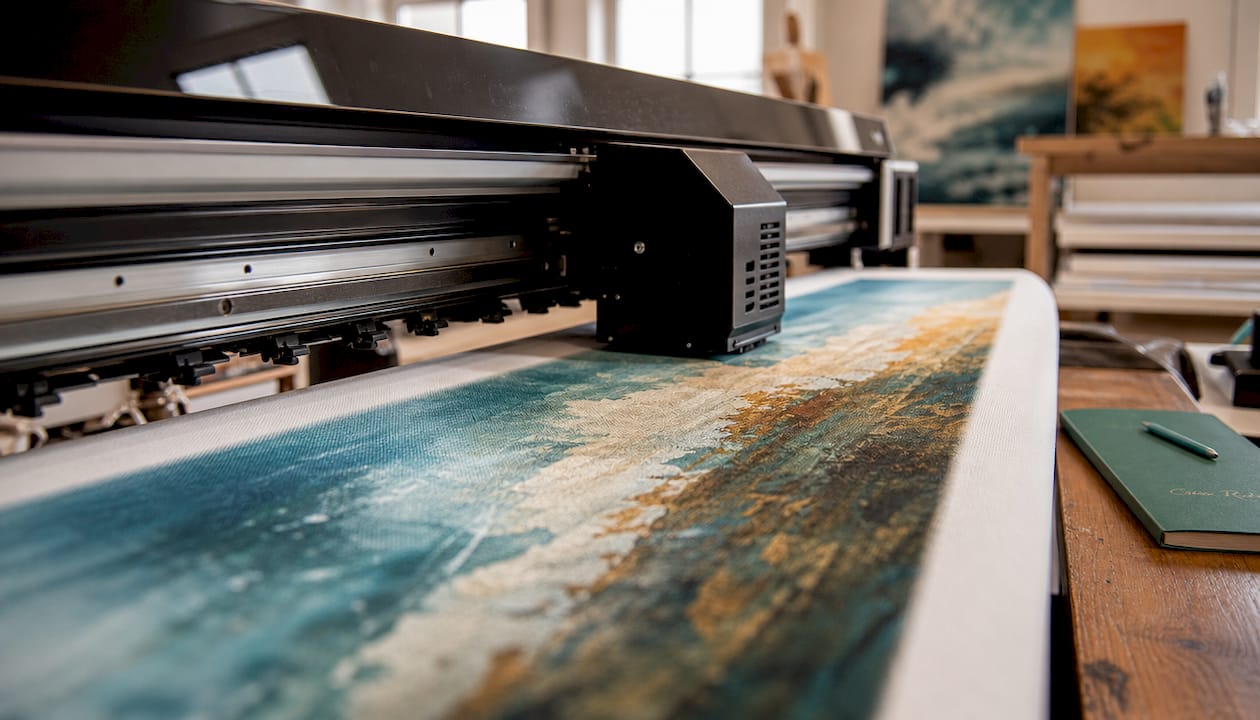
The canvas fabric itself plays a major role in the final look. Cotton and poly-cotton blends are the most common materials used today, offering durability and a surface texture that closely resembles traditional painting canvases. These modern fabrics replaced earlier materials like hemp because they are lighter, stronger, and more consistent in weave. The texture of the fabric catches light differently across the surface, which adds visual depth that flat paper cannot replicate.
The inks used in canvas printing are engineered for longevity. Latex inks are fade-resistant and produce vibrant colors that hold up for years without yellowing or fading. They are also hypoallergenic and non-toxic, which makes them a practical choice for home environments. Archival pigment inks are another option, favored for museum-quality reproductions where color accuracy over decades is the priority.
Image resolution is a critical factor in canvas printing quality. A resolution of 150–300 DPI is the standard threshold for large-format canvas prints to appear sharp and detailed. Images below this threshold will look blurry or soft when enlarged to typical wall art sizes. This is why professional canvas printers always request the highest-resolution file available before printing.
Pro Tip: Before ordering a large canvas print, check your image file size. A photo taken on a modern smartphone at full resolution is usually sufficient for prints up to 20 x 30 inches. For anything larger, request a high-resolution export from your photographer or designer.
The finishing step adds a protective coating to the printed surface. A satin finish reduces glare while enhancing color vibrancy, making the print look good under both natural and artificial lighting. This finish also simulates the painterly texture that glossy paper prints cannot achieve. Some producers offer matte or gloss finishes as alternatives, but satin is the most widely used for its balanced performance.
How is a canvas print assembled and displayed?
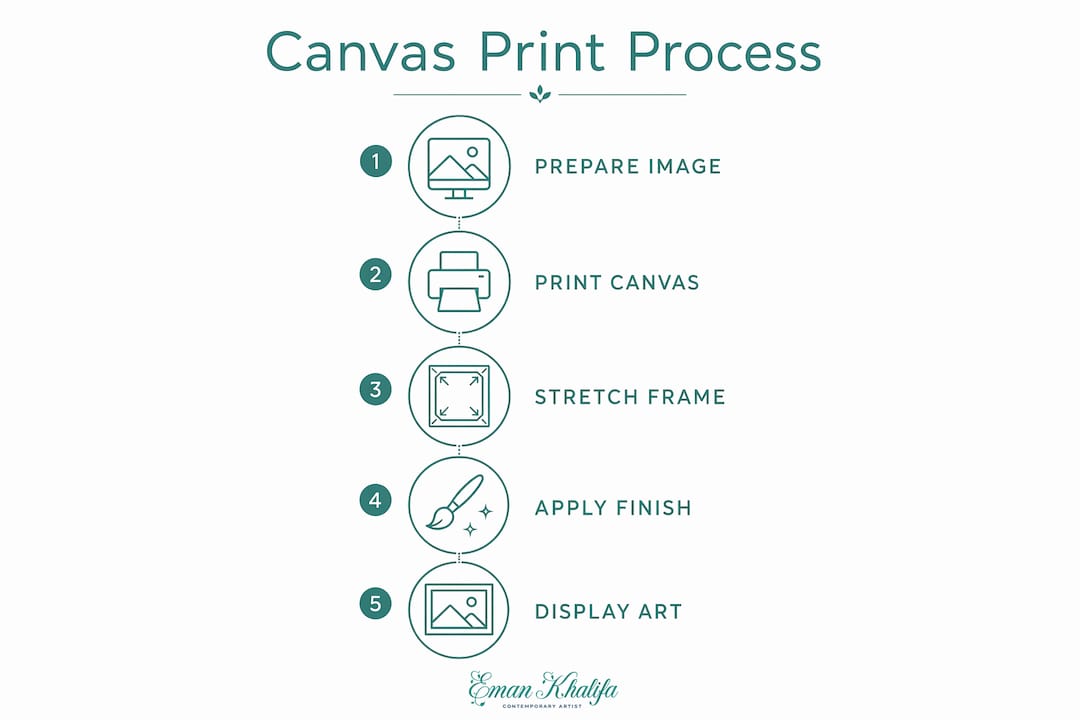
The assembly process transforms a flat printed sheet into a three-dimensional artwork. Here is how a standard canvas print is built from print to wall:
- Printing. The image is printed onto raw canvas fabric using a large-format inkjet printer. The print extends slightly beyond the final image area to allow for wrapping around the frame edges.
- Cutting. The printed canvas is cut to the correct dimensions, including the extra border needed for the wrap.
- Stretching. The canvas is pulled tightly over a wooden stretcher frame and stapled to the back. Tight stretching prevents wrinkles or sagging and keeps the surface flat over time.
- Gallery wrapping. The image or a mirrored edge continues around the sides of the frame, so no raw wood or white border is visible from any angle. This is called the gallery wrap technique.
- Finishing. A protective coating is applied, and hanging hardware is attached to the back of the frame.
The thickness of the stretcher bars determines the overall look of the finished piece. Stretcher bars typically range from 0.75 to 1.5 inches thick. Thicker bars create a bold, sculptural profile that looks strong on a wall without any additional framing. Thinner bars sit closer to the wall and work well when you want to add an external decorative frame around the canvas.
Gallery-wrapped canvas prints are designed to hang without glass, which is one of their most practical advantages. Glass adds weight, reflects light, and can shatter. A canvas print needs none of it. The fabric surface is durable enough to hang exposed, and the satin coating protects it from dust and minor moisture.
Pro Tip: For a modern, frameless look, choose a 1.5-inch deep stretcher bar. For a more traditional or formal setting, a 0.75-inch bar with an added wood or metal frame gives you more styling flexibility. Check out these canvas print display tips for upscale interiors.
How do canvas prints differ from paintings and paper prints?
Canvas prints and original paintings share the same surface material but are fundamentally different objects. A canvas print is a reproduction made with inks, while an original painting is a one-of-a-kind work created by hand with applied paints. A painting can never be exactly duplicated. A canvas print can be reprinted from the same digital file as many times as needed. This distinction matters for collectors who value originality and rarity.
The difference between canvas prints and paper photo prints is equally significant. Canvas prints have texture, depth, and a three-dimensional mounted profile. Paper prints are flat, typically framed behind glass, and lack the tactile surface quality that canvas provides. Canvas prints add texture and depth that paper prints simply cannot replicate, which is why they are the preferred format for decorating homes with a fine art aesthetic.
Here is a direct comparison of the three formats:
| Feature | Canvas print | Original painting | Paper photo print |
|---|---|---|---|
| Surface material | Woven canvas fabric | Canvas, board, or paper | Photographic paper |
| Created by | Inkjet printer | Artist by hand | Inkjet or chemical process |
| Texture | Yes, fabric weave visible | Yes, brushstrokes visible | No, flat surface |
| Uniqueness | Reproducible | One of a kind | Reproducible |
| Displayed with glass | No | Rarely | Usually yes |
| Price range | Moderate | High to very high | Low to moderate |
A common misconception is that canvas prints are “fake” art. Canvas prints provide affordable access to fine art aesthetics without the cost of original paintings. They are a legitimate and widely accepted format for home decor, art reproduction, and personal photography. The key is understanding what you are buying. For a deeper look at the distinctions, the canvas prints vs. paintings comparison at Emansgallery covers the topic thoroughly.
Many buyers also find that oil paintings inspire print collections by introducing them to styles and compositions they then want to live with in a more affordable format. Canvas printing makes that possible at a fraction of the cost of acquiring originals.
What are popular uses and design ideas for canvas prints?
Canvas prints work across a wide range of personal and decorative applications. The format is flexible enough to suit a minimalist modern interior and a warm, layered traditional room equally well. Here are the most popular uses:
- Personal photography. Wedding portraits, family photos, travel images, and milestone moments printed on canvas become permanent, gallery-quality displays rather than files stored on a phone.
- Fine art reproductions. Classic paintings by artists like Monet or Klimt, as well as contemporary digital artwork, are widely reproduced on canvas for home display.
- Custom text and quotes. Typographic prints with meaningful quotes, names, or dates printed on canvas are a popular gift format for birthdays, anniversaries, and housewarmings.
- Abstract and geometric art. Bold abstract compositions and geometric patterns printed on large-format canvas make strong focal points in living rooms, offices, and hotel lobbies.
- Children’s rooms and nurseries. Soft illustrated prints on canvas are durable, lightweight, and safe for children’s spaces because they hang without glass.
Canvas prints enhance any space with texture and visual weight that paper prints cannot provide. For luxury and modern interiors, oversized canvas prints in a single large format create a cleaner, more dramatic effect than a grid of smaller framed prints. For casual or eclectic spaces, a mix of canvas sizes at varying heights adds energy and personality to a wall. The canvas art print home decor guide at Emansgallery offers specific layout ideas for different room types.
Pro Tip: When choosing what to print on canvas, prioritize images with strong contrast and clear focal points. Busy, low-contrast images tend to lose definition on textured canvas surfaces, especially at smaller sizes.
Key Takeaways
Canvas printing is the most accessible way to display fine art quality imagery at home, combining durable materials, fade-resistant inks, and gallery-wrap construction into a finished piece that requires no glass and no frame.
| Point | Details |
|---|---|
| Core definition | Canvas prints are high-resolution images printed on woven fabric and mounted on wooden stretcher frames. |
| Ink and durability | Latex and archival pigment inks resist fading for years, making canvas prints a long-term investment. |
| Resolution standard | Images need 150–300 DPI to print sharply at large canvas sizes without visible pixelation. |
| Canvas vs. painting | Canvas prints are reproducible ink-based reproductions; original paintings are unique hand-created works. |
| Best display format | Gallery-wrapped prints on 1.5-inch bars hang without glass, giving a clean, modern wall presence. |
Why I think most buyers underestimate canvas quality
Most people shopping for wall art focus almost entirely on the image and almost not at all on the substrate. That is a mistake I see repeatedly. The same photograph printed on cheap canvas with dye-based inks and a thin 0.75-inch frame looks completely different from the same image on a quality poly-cotton blend with archival pigment inks and a 1.5-inch gallery wrap. The image is identical. The experience of looking at it is not.
The texture of the canvas fabric is doing more work than most buyers realize. It scatters light across the surface in a way that makes colors appear richer and more three-dimensional. A flat paper print under glass reflects light uniformly, which flattens the image. Canvas absorbs and diffuses light, which is exactly what a hand-painted canvas does. That is why canvas prints feel more like art and less like decoration.
The other thing buyers consistently overlook is the satin coating. A good satin finish is not just protective. It actively improves how the print looks under different lighting conditions, reducing hot spots from ceiling lights and windows while keeping colors saturated. A print without a quality coating will look washed out under direct light and dull under ambient light.
My honest recommendation: treat the canvas material and finish as seriously as you treat the image itself. A great image on a poor substrate is a wasted opportunity. A great image on quality canvas with the right finish is something you will want to look at every day.
— Eman
Museum-quality canvas prints at Emansgallery
Emansgallery produces museum-quality canvas prints from original artworks by artist Eman Khalifa, covering abstract, geometric, floral, seascape, and landscape styles. Every print uses archival-grade inks on premium canvas with a satin finish, gallery-wrapped on deep stretcher bars and ready to hang.
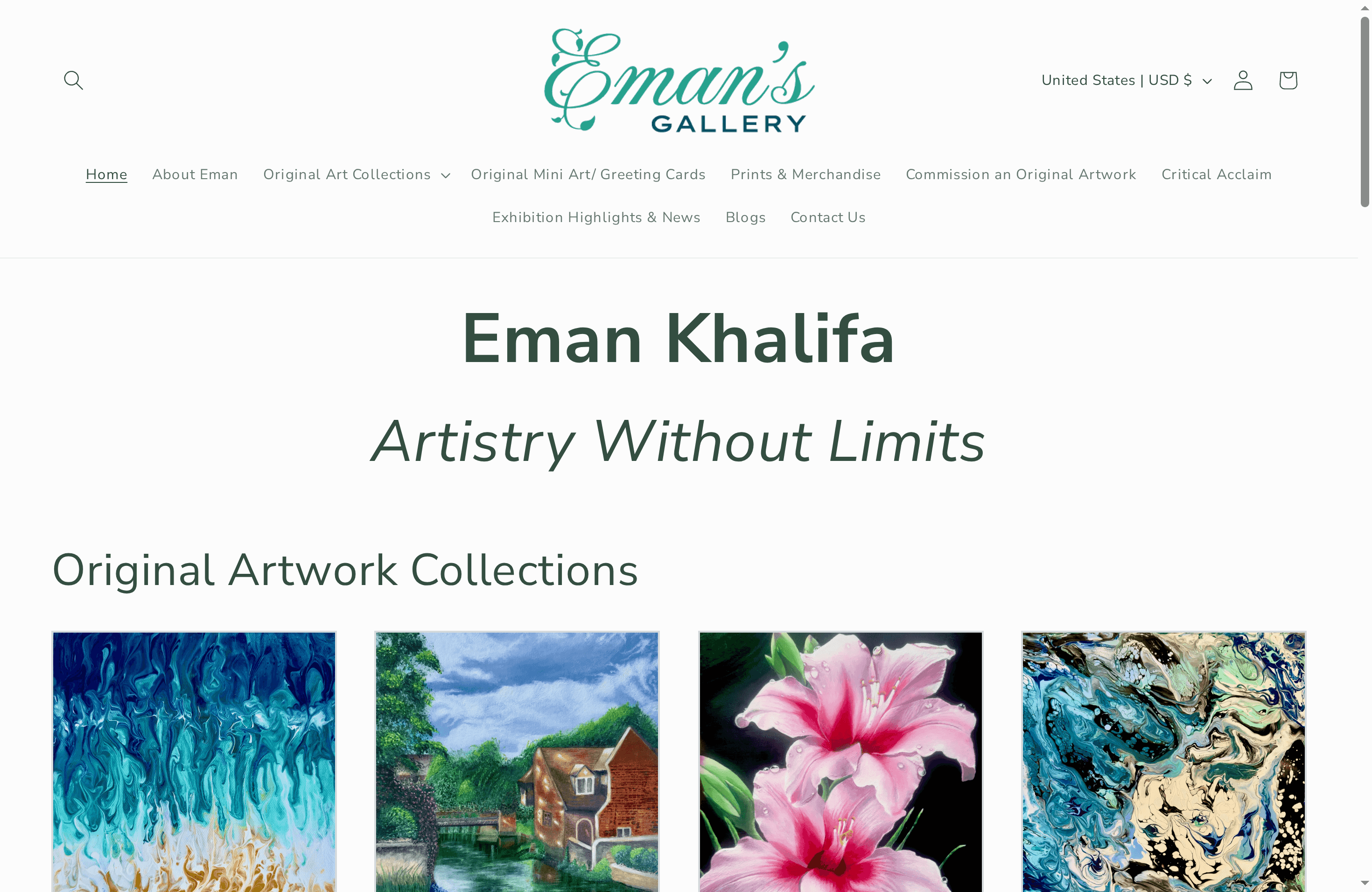
The collection includes bold conceptual works like the Private Eye canvas print, abstract ink compositions like Fragments of Memory, and the geometric urban piece City in Grids. Original paintings are also available for collectors who want a one-of-a-kind work, including the fluid ocean painting Good Tidings. Emansgallery ships worldwide from the UK, USA, Canada, Australia, and across Europe and the UAE.
FAQ
What is the print on canvas meaning in simple terms?
Print on canvas is a high-resolution image printed onto woven canvas fabric and mounted on a wooden frame. The result is a textured, gallery-style wall artwork that hangs without glass.
How are canvas prints made step by step?
A large-format inkjet printer applies fade-resistant inks onto canvas fabric, which is then stretched tightly over wooden stretcher bars and stapled at the back. A protective satin coating is applied before the piece is ready to hang.
Are canvas prints durable?
Canvas prints are highly durable when made with latex or archival pigment inks and a protective satin coating. Proper stretching and quality inks allow canvas prints to maintain their appearance for many years without fading or sagging.
What is the difference between a canvas print and a canvas painting?
A canvas print is a reproducible ink-based image; a canvas painting is a unique, hand-created original. The same canvas print can be produced multiple times from one digital file, while an original painting exists as a single work.
What resolution do I need for a sharp canvas print?
A resolution of 150–300 DPI is the standard for large-format canvas prints. Images below this threshold will appear blurry or soft when enlarged to typical wall art dimensions.
Stay Connected
- ✨ Explore Eman Khalifa's original art, fine art prints and art-inspired merchandise.
- Follow Eman Khalifa's art journey on: Instagram @emans_gallery and Facebook
- Watch Eman Khalifa creating live art on: YouTube @emans_gallery
