


What Is a Canvas Poster? Definition, Types, and Uses
What is a canvas poster?
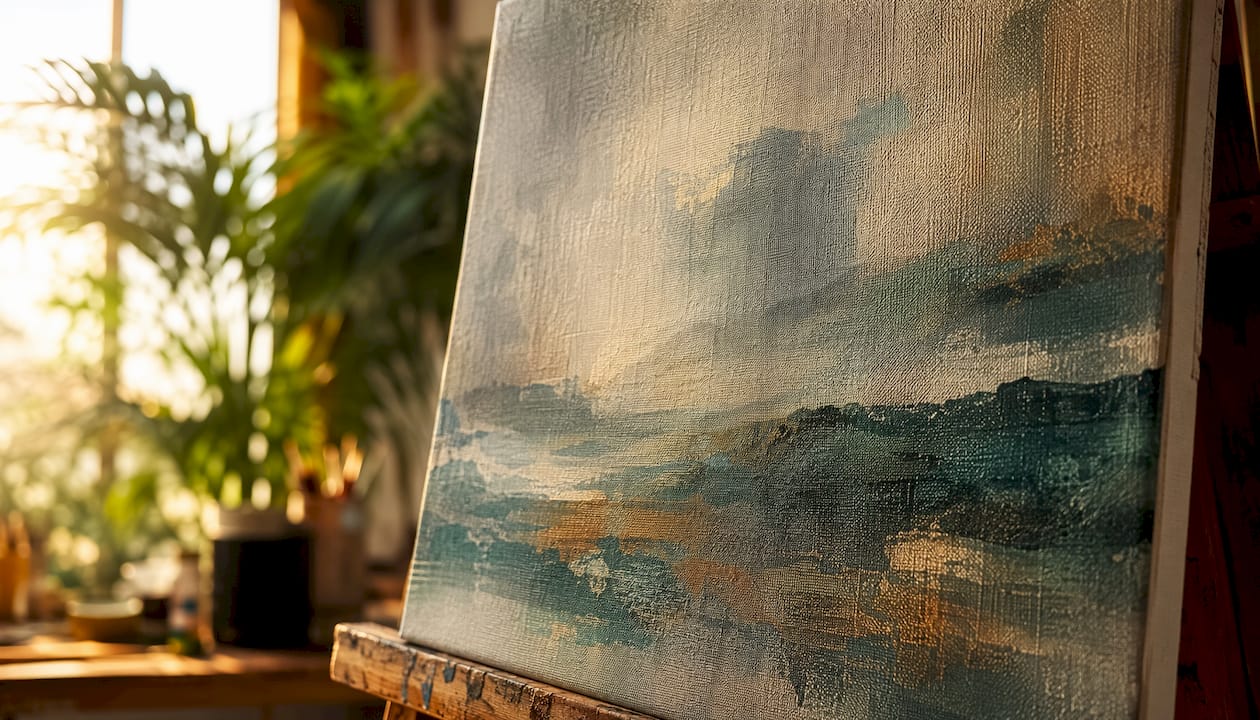
A canvas poster is a high-resolution image or artwork printed onto canvas fabric, then stretched over a wooden frame and displayed directly on a wall. Unlike a paper poster, it has physical depth and a textured surface you can see and feel.
Key characteristics at a glance:
- Material: Cotton or polyester-blend canvas fabric
- Structure: Stretched taut over pine stretcher bars, typically with a sturdy depth suitable to resist warping
- Finish: Matte, glare-free surface with visible texture
- Display: Ready to hang with no frame or glass required
- Durability: Resistant to tearing, moisture, and fading over time
The industry term for this format is a canvas print. “Canvas poster” is a widely used consumer phrase for the same product, though professionals typically say canvas print when referring to gallery-quality reproductions.
How canvas posters differ from paper posters
The gap between a canvas print and a paper poster goes well beyond material. It affects how the piece looks, how long it lasts, and where it fits in a room.
| Feature | Canvas poster | Paper poster |
|---|---|---|
| Material | Woven cotton or poly-blend fabric | Thin paper, sometimes coated |
| Finish | Matte, textured, glare-free | Glossy or semi-gloss, reflective |
| Display | Stretched on frame, no glass needed | Flat, requires frame and glazing |
| Durability | Resilient; resists tearing and warping | Prone to curling, tearing, fading |
| Longevity | Designed to last significantly longer than paper posters with proper care | Fades faster, especially in sunlight |
| Price | Higher upfront cost | Lower cost, easier to replace |
Paper posters carry lower ink saturation and lack the tactile depth of woven fabric. Canvas prints, by contrast, provide visual depth and a perceived quality that reads as fine art rather than a flat reproduction. For a deeper look at how these formats compare, see fine art prints vs posters.
How canvas posters are printed and what they are made of
The canvas printing process determines color accuracy, texture, and how long the piece holds up on a wall.
- Inkjet and giclée printing: High-resolution inkjet processes deposit microscopic ink droplets onto canvas, producing sharp detail and accurate color. Giclée is the fine-art standard for reproductions.
- Canvas fabric types: Cotton canvas offers a natural, slightly rough texture. Polyester blends are smoother and more moisture-resistant. Most canvas prints use cotton or poly-blend fabric as the base.
- Inks: Latex and archival inks are the preferred choice. They balance color vibrancy, longevity, and low VOC emissions, outperforming older solvent-based formulas.
- Stretcher frames: Pine stretcher bars, often FSC-approved, hold the canvas taut. Deeper bars resist warping better than thinner alternatives.
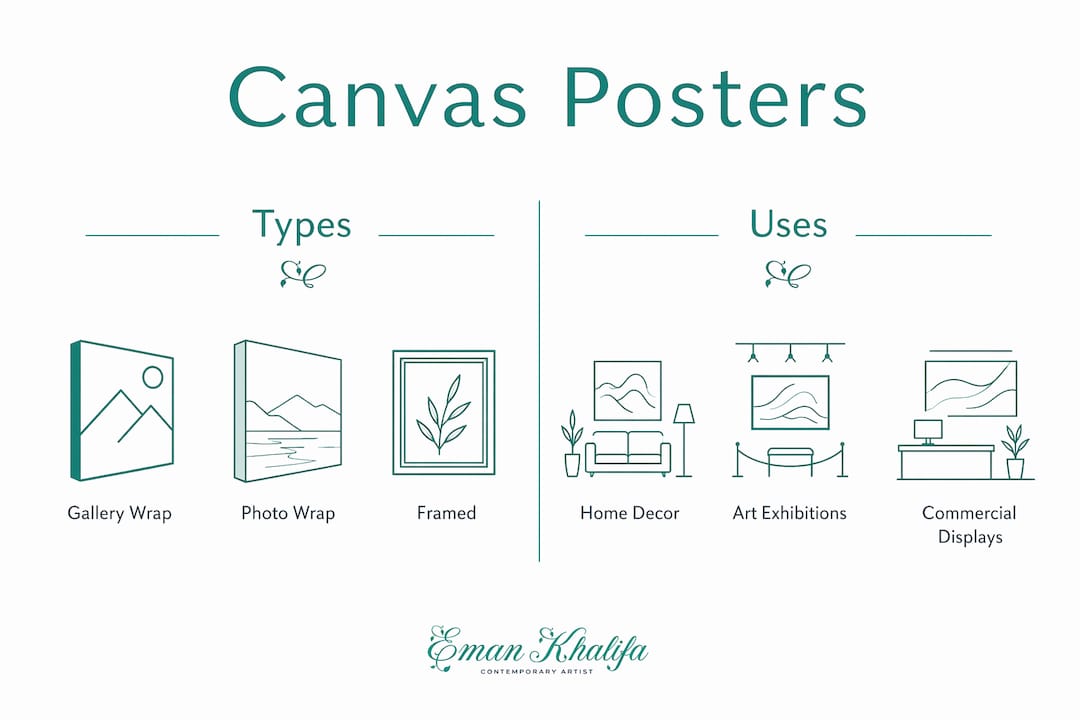
- Gallery wrap: Full-bleed printing wraps the image around the edges of the frame, eliminating white borders and creating a seamless, frameless look.
Pro Tip: When ordering a canvas print, ask for a gallery wrap with at least 1.5-inch deep stretcher bars. Thinner bars are more likely to bow over time, especially on larger prints.
Where and how canvas posters are used
Canvas wall art fits a wide range of settings, from private homes to commercial interiors.
- Living rooms and bedrooms: Canvas prints create a permanent, upscale atmosphere. Interior designers recommend them for spaces where the decor is meant to last. For practical guidance, see canvas print tips for upscale interiors.
- Offices and commercial spaces: Hotels, restaurants, and corporate lobbies use canvas prints to establish a polished visual identity. Canvas art for hospitality interiors is a recognized design category in its own right.
- Galleries and exhibitions: Canvas prints serve as final output for fine art pieces or as reproductions of paintings and photographs.
- Care: Keep canvas away from direct sunlight and moisture. Dust lightly with a dry cloth. Avoid glass cleaner or water directly on the surface.
Paper posters suit temporary or frequently changed displays. Canvas is the choice when the goal is a lasting, considered installation.
Expert perspective on canvas prints as art
Eman Khalifa, whose museum-quality canvas prints are produced to gallery standards, approaches each reproduction as an extension of the original work. Archival materials and precise color calibration are not optional details; they determine whether a print remains vivid in ten years or fades into the background. For anyone weighing a canvas print against an original painting, the canvas prints vs paintings comparison covers the key distinctions in material, value, and display.
Key Takeaways
Canvas posters are durable, textured prints on woven fabric stretched over wooden frames, built to last decades longer than paper alternatives.
| Point | Details |
|---|---|
| Core definition | A canvas poster is a print on woven fabric stretched over a wooden frame. |
| Longevity advantage | With proper care, canvas prints can maintain color and texture for many decades. |
| Printing standard | Giclée and inkjet processes with archival inks produce the most accurate, lasting color. |
| Display benefit | Gallery-wrapped canvas hangs without a frame or glass, reducing glare from any angle. |
| Best use case | Canvas suits permanent, upscale installations; paper posters suit temporary or budget displays. |
FAQ
What is the difference between a canvas poster and a paper poster?
A canvas poster is printed on woven fabric stretched over a wooden frame, giving it texture, depth, and durability. A paper poster is a flat print that fades faster, requires framing, and lacks the tactile surface of canvas.
Is a canvas poster better than a fabric print?
Canvas is itself a fabric, so the terms often overlap. The key variable is the printing method and frame construction. A gallery-wrapped canvas print with archival inks will typically outlast and outperform a loosely mounted fabric print.
What does a canvas poster feel like?
The surface has a visible woven texture, similar to a painter’s canvas. It is firm to the touch because the fabric is stretched taut over a wooden frame, and the matte finish means no reflective glare.
How long does a canvas print last?
Quality canvas prints can maintain their color and texture for many decades when kept away from direct sunlight and moisture. Paper posters degrade significantly faster under the same conditions.
Stay Connected
- ✨ Explore Eman Khalifa's original art, fine art prints and art-inspired merchandise.
- Follow Eman Khalifa's art journey on: Instagram @emans_gallery and Facebook
- Watch Eman Khalifa creating live art on: YouTube @emans_gallery
