


What Is an Art Poster? Definition, Types, and Decor Tips
TL;DR:
- Art posters are decorative printed images designed to enhance interior spaces through visual appeal. They are distinct from promotional posters and fine art prints, mainly differing in purpose, materials, and longevity. Using art posters as focal points and choosing appropriate sizes and framing can significantly improve home and office decor.
An art poster is a printed image created primarily for decorative display, combining visual appeal with large-format accessibility. Unlike promotional posters designed to advertise events or products, an art poster exists to enhance a space aesthetically. The term covers everything from museum reproductions and abstract prints to original photographic compositions. Understanding the definition of art poster helps you make smarter choices when selecting pieces for your home or office. Standard retail sizes range from 8x10 inches to 24x36 inches, making art posters easy to frame and display in almost any room.
What is an art poster, exactly?
An art poster is a printed decorative artwork designed to communicate visually at a glance, blending imagery, color, and sometimes typography into a single cohesive piece. The key distinction is intent. A promotional poster sells something. An art poster exists to be seen and appreciated on its own terms.
Art posters are produced on paper or similar flat surfaces and are meant for wall display. They range from mass-produced prints sold in home goods stores to limited-edition works printed on premium materials. The format bridges public art and private decor, making artistic expression accessible to anyone with wall space and a frame.
Standard poster sizes follow international A-series dimensions, including A3 (297x420mm), A2, A1, and A0, alongside common commercial dimensions like 30x40cm and 50x70cm. That standardization matters because it makes framing straightforward and affordable. You can buy a frame off the shelf and have a finished piece on your wall the same day.
How do art posters differ from fine art prints and promotional posters?
The three categories overlap in format but differ sharply in materials, purpose, and longevity. Knowing the difference helps you buy with confidence.
Promotional posters are designed for short-term use. They advertise concerts, films, or events and are typically printed on lightweight paper with standard inks. Once the event passes, the poster’s purpose is gone.
Fine art prints sit at the opposite end of the spectrum. They use archival-grade inks and premium paper stocks, and they are produced in limited editions with certificates of authenticity. Collectors buy fine art prints as investments.
Art posters occupy the middle ground. Paper stocks range from 135 to 250 gsm silk or gloss finish, which is heavier than a promotional flyer but lighter than archival fine art paper. That weight affects how the print feels, how colors render, and how long the piece holds up on your wall.
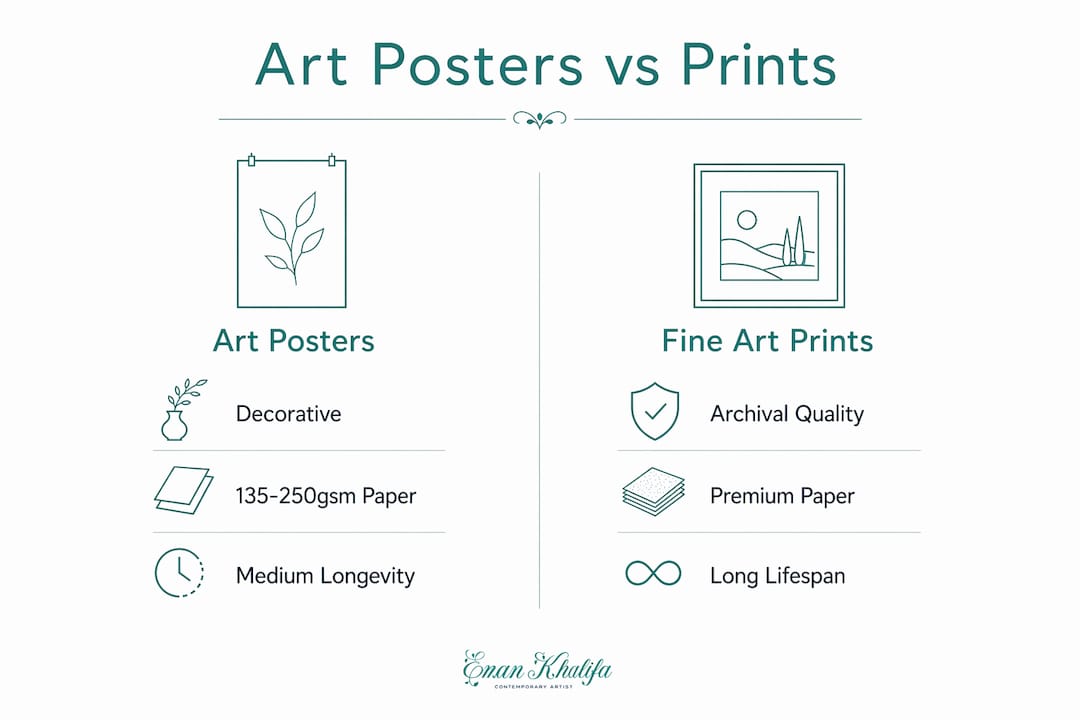
| Category | Primary purpose | Paper/material | Longevity |
|---|---|---|---|
| Promotional poster | Advertising | Lightweight, standard inks | Short-term |
| Art poster | Decoration | 135–250 gsm silk or gloss | Medium-term |
| Fine art print | Collecting and display | Archival ink and premium paper | Long-term |
A common misconception is that art posters are inferior to fine art prints. They are simply different products for different needs. An art poster gives you visual impact at an accessible price. A fine art print gives you archival permanence and collectible value.
How did art posters evolve into a recognized art form?
Posters began as public notices. Early printed posters in the 15th and 16th centuries were text-heavy announcements pasted to walls in European cities. They were functional, not artistic.
The shift toward art happened in the late 19th century. Poster art gained a new identity through artists like Henri de Toulouse-Lautrec, who used the format to create bold, expressive images for Parisian cabarets. His work treated the poster as a canvas. The Art Nouveau movement followed, bringing flowing lines, organic forms, and rich color to public walls across Europe.
Key developments in poster art history include:
- 1890s: Toulouse-Lautrec and Alphonse Mucha establish the poster as a fine art medium in France.
- Early 1900s: Art Nouveau spreads across Europe, merging decorative design with commercial printing.
- 1960s–1970s: Psychedelic and political poster movements in the United States push the format into counterculture expression.
- Late 20th century: Museum gift shops begin selling high-quality reproductions, bringing art posters into mainstream home decor.
The modern art poster bridges public advertising and private art collecting. That evolution democratized art appreciation. You no longer need to visit a gallery to live with great imagery. You can hang it in your living room.
What are the main types of art posters?
Common types of art posters include photographic prints, vintage reproductions, abstract art, typographic designs, and illustrative images. Each type suits different spaces and personal tastes.
- Abstract art posters use color, shape, and form without representing recognizable objects. They work well in modern and minimalist interiors where the goal is visual energy rather than narrative.
- Photographic prints capture real-world subjects, from landscapes to urban scenes. They add depth and realism to a room and pair well with natural materials like wood and linen.
- Vintage reproductions recreate classic works or retro design styles. They bring historical character to a space and are popular in eclectic and mid-century modern interiors.
- Typographic posters lead with words, using font, layout, and color as the primary visual elements. They suit offices and study spaces where a motivational or conceptual message adds meaning.
- Illustrative posters feature hand-drawn or digitally created imagery. They range from botanical prints to geometric patterns and work across almost every decor style.
Thematic categories matter as much as style. Nature-themed posters add calm to bedrooms. Urban and architectural prints energize home offices. Minimalist designs with limited color palettes work in any room without competing with existing decor.
Pro Tip: When choosing an art poster for a specific room, pull one color from the poster and repeat it in a small accent piece nearby, such as a cushion or vase. That single connection makes the poster feel intentional rather than random.
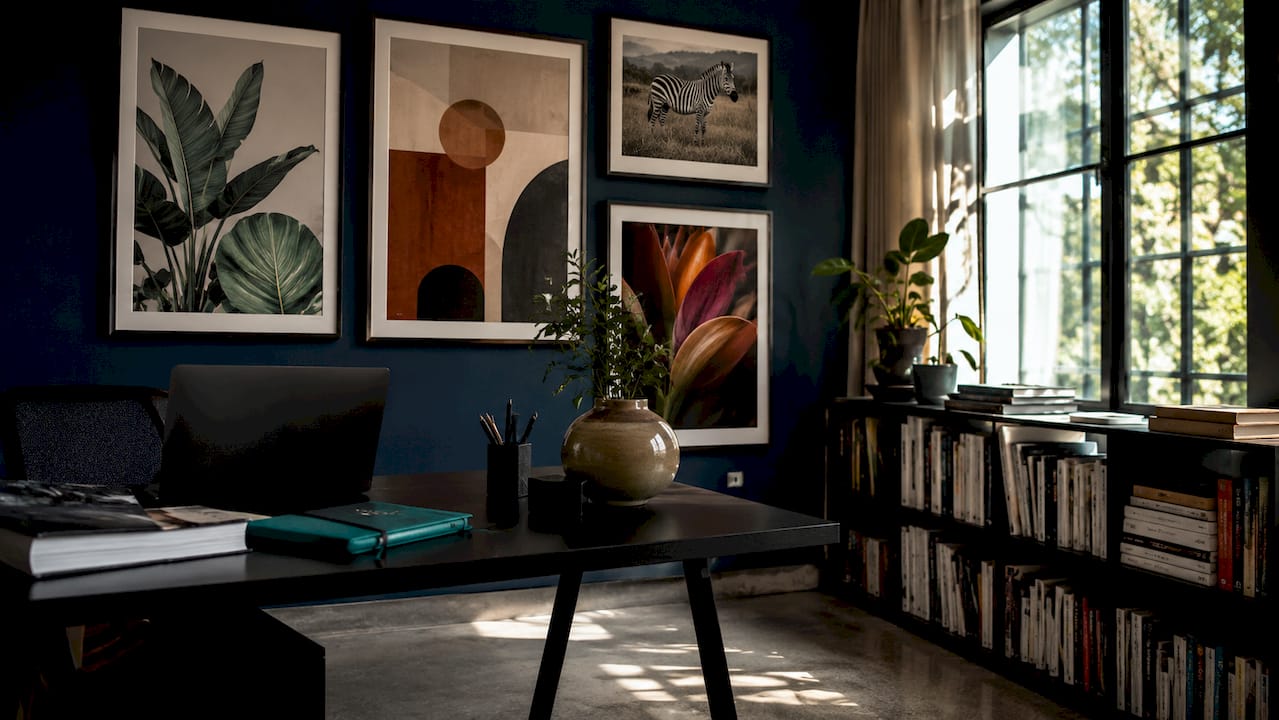
Size also shapes the experience. A 50x70cm print reads as a statement piece above a sofa. A set of three A3 prints arranged in a row creates a gallery wall effect that fills a large wall without overwhelming it.
How to use art posters effectively in home and office decor
Treating an art poster as a focal point in room design is the single most effective way to elevate its impact. A focal point anchors the eye and gives the room a clear visual center.
Follow these steps to place art posters with intention:
- Choose the right wall. The wall you see first when entering a room is the strongest position for a statement poster. Secondary walls work well for smaller prints or grouped arrangements.
- Match scale to wall size. A small poster on a large wall looks lost. A 24x36 inch print or larger fills a standard living room wall confidently. For smaller walls, a cluster of three to five smaller prints creates equivalent visual weight.
- Hang at eye level. The center of the poster should sit roughly 57–60 inches from the floor. That measurement reflects the average human eye level and is the standard used in most galleries.
- Consider lighting. Natural light from the side brings out color and texture. Direct overhead lighting can cause glare on glossy paper. A small picture light mounted above the frame adds warmth and draws attention to the piece after dark.
- Select a frame that supports the work. A thin black or white frame suits modern and minimalist posters. A natural wood frame complements botanical and photographic prints. A wide, ornate frame works with vintage reproductions.
Pro Tip: Before committing to a frame, tape a paper cutout of the poster to the wall and live with it for a day. Scale looks different in person than it does in planning.
Framing and mounting choices include foam board mounting, canvas printing, and standard glass or acrylic frames. Foam board gives a clean, flat finish. Canvas printing removes the need for a frame entirely and suits casual, contemporary spaces. Glass frames protect the paper but add reflection. Acrylic frames are lighter and shatter-resistant, making them practical for high-traffic areas.
The most common decorating mistake is hanging art too high. Posters mounted near the ceiling disconnect from the furniture below and feel like an afterthought. Keep the visual relationship between the poster and the furniture beneath it tight. A gap of 6–8 inches between the top of a sofa and the bottom of a frame is the standard recommendation from interior designers.
For selecting art prints that work across different room types, consider the color temperature of the space first. Warm-toned rooms benefit from posters with earthy or golden palettes. Cool, neutral spaces open up with blues, grays, and greens.
Key Takeaways
An art poster is a decorative printed artwork that sits between a promotional poster and a fine art print, defined by its focus on visual appeal, accessible sizing, and display-ready formats.
| Point | Details |
|---|---|
| Definition is specific | An art poster is decorative by intent, not promotional or collectible by default. |
| Materials determine quality | Paper weight (135–250 gsm) and ink type directly affect color, feel, and longevity. |
| History shapes value | Poster art gained legitimacy through Art Nouveau and artists like Toulouse-Lautrec in the 1890s. |
| Style guides placement | Match poster type (abstract, photographic, typographic) to room function and existing decor. |
| Scale and framing matter | Hang at 57–60 inches center height and choose frame style to complement, not compete with, the image. |
Why art posters deserve more credit than they get
Most people treat art posters as a budget substitute for real art. I disagree with that framing entirely. The poster format has produced some of the most visually powerful images in art history. Toulouse-Lautrec was not making compromises when he worked in poster format. He was choosing it.
What I have observed working with art and collectors is that the pieces people live with daily matter more than the pieces they own for prestige. A well-chosen art poster, properly framed and placed, changes how a room feels. It gives the eye somewhere to land. It reflects something about the person who chose it.
The shift I see in 2026 is that buyers are moving away from generic mass-market prints toward works with a genuine artistic voice. They want something that looks considered, not decorative filler. That is exactly where poster art’s role in contemporary interiors is heading. The format is not lesser. It is just more accessible.
My practical advice: buy the piece that stops you, not the piece that matches your sofa. Color coordination is easy to fix with cushions. Finding art that genuinely holds your attention is harder, and it is worth the effort.
— Eman
Original art and prints from Emansgallery
Emansgallery offers original handmade paintings and museum-quality canvas prints by artist Eman Khalifa, spanning abstract, geometric, floral, landscape, and seascape styles.
Each piece ships worldwide from the UK, USA, Canada, Australia, and across Europe. Whether you want a one-of-a-kind original or a canvas print for a specific wall, the collection covers a wide range of scales and palettes. The Good Tidings original painting is a strong example of fluid abstract ocean art that works as a room-defining focal piece. For practical guidance on arranging prints in your space, the art prints decor guide at Emansgallery covers placement, framing, and scale in detail.
FAQ
What is the definition of an art poster?
An art poster is a printed image created for decorative display rather than advertising or collecting. It combines visual design with accessible sizing and is intended to enhance a living or working space.
How is an art poster different from a fine art print?
An art poster is typically mass-produced on 135–250 gsm paper with standard inks, while a fine art print uses archival materials and is produced in limited editions for collectors.
What sizes do art posters come in?
Standard art poster sizes follow A-series dimensions (A3, A2, A1, A0) and common commercial formats like 30x40cm, 50x70cm, and 24x36 inches, all designed for easy framing.
What types of art posters work best for home decor?
Abstract, photographic, and illustrative posters are the most versatile for home decor. Match the style to the room’s function: calm imagery for bedrooms, bold abstract prints for living rooms, and typographic designs for offices.
Where should I hang an art poster?
Hang the center of the poster at 57–60 inches from the floor, which aligns with average eye level. Place it on the first wall you see when entering a room for maximum visual impact.
Stay Connected
- ✨ Explore Eman Khalifa's original art, fine art prints and art-inspired merchandise.
- Follow Eman Khalifa's art journey on: Instagram @emans_gallery and Facebook
- Watch Eman Khalifa creating live art on: YouTube @emans_gallery
