


What Are the 4 Types of Abstract Art? A Clear Guide
TL;DR:
- Abstract art is non-representational and organized through distinct styles like geometric abstraction, lyrical abstraction, abstract expressionism, and color field painting. Recognizing edge treatment and process helps identify each style, which can blend in contemporary works during creative practice. Exploring these categories enhances visual literacy and appreciation for abstract art’s diversity and emotional impact.
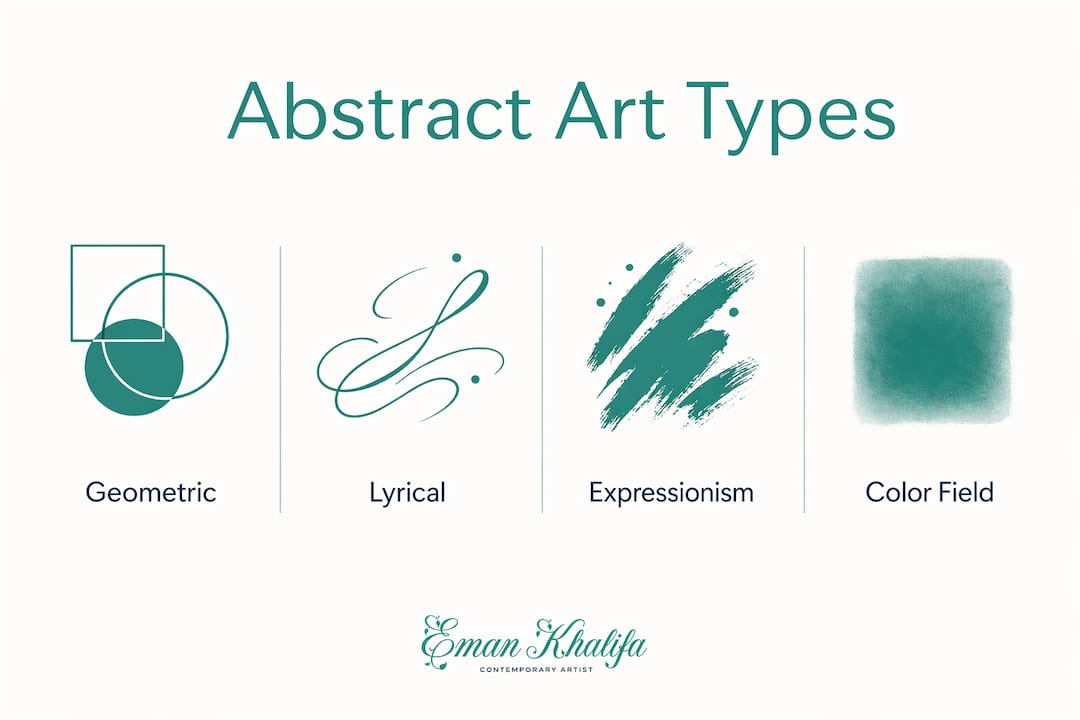
Abstract art is defined as non-representational art that uses shapes, colors, lines, and forms to create compositions independent of visual reality. The four main types of abstract art are geometric abstraction, lyrical (organic) abstraction, abstract expressionism, and color field painting. Each type is distinguished by its approach to form, edge treatment, and technique. Understanding these four categories of abstract art gives you a reliable framework for reading any abstract work you encounter, whether in a gallery, a museum, or a private collection.
What are the 4 types of abstract art?
The four main types commonly recognized by art educators and critics are geometric abstraction, lyrical abstraction, abstract expressionism, and color field painting. Some experts simplify this to three core categories, but color field painting is distinct enough in technique and intent to stand on its own. Each type operates as a visual system, organizing the viewer’s attention through hierarchy, edge behavior, and color relationships rather than through recognizable subject matter. Knowing these four types gives you a concrete vocabulary for discussing and collecting abstract art.
Why edge behavior is the fastest classification tool
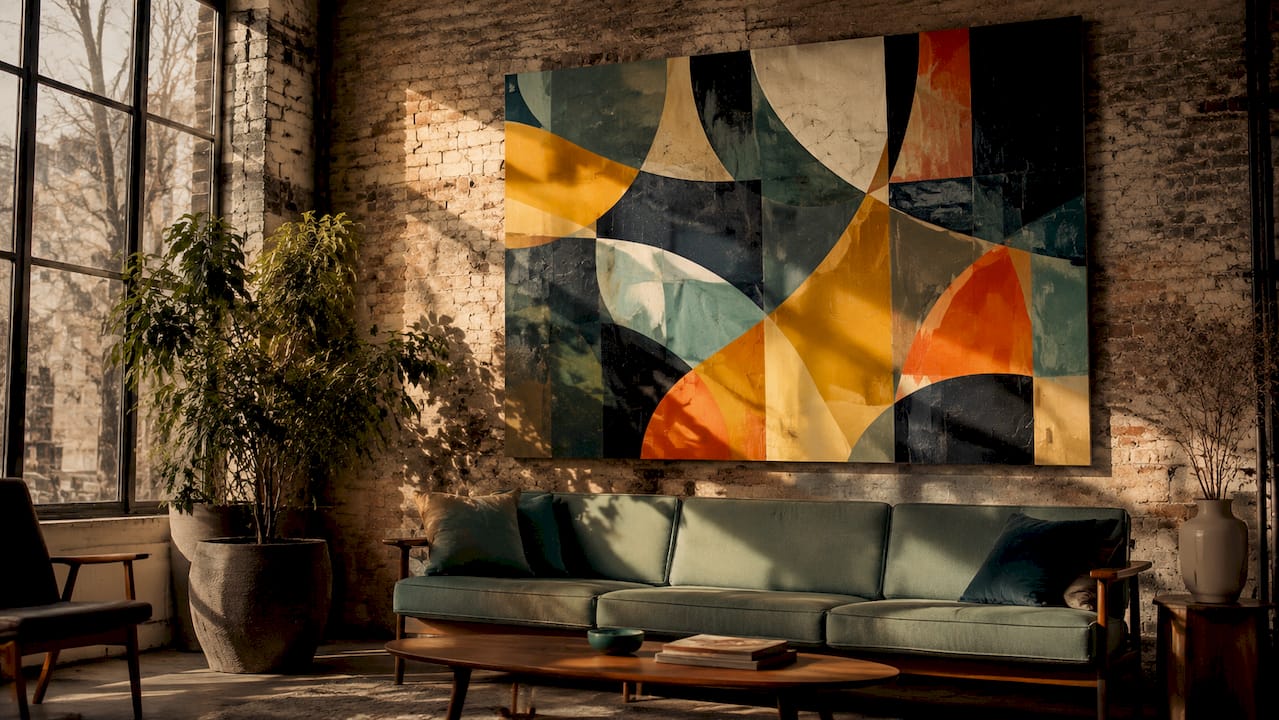
Edge treatment is one of the fastest ways to classify any abstract work. Sharp, masked edges point to geometric abstraction. Blurred, energetic, or irregular edges point to gestural or lyrical work. This single observation cuts through confusion faster than searching for hidden objects or symbols. Train your eye on edges first, and the category often reveals itself within seconds.
What is geometric abstraction and how do you recognize it?
Geometric abstraction is defined by sharp, intentional edges and simple two-dimensional shapes arranged in balance or symmetry. The visual traits that identify this style include:
- Hard, clean edges created with masking tape or ruling tools
- Simple forms: squares, circles, triangles, and grids
- Flat, unmodulated areas of color within each shape
- Symmetrical or deliberately balanced compositions
- Minimal texture on the painted surface
Artists working in this style plan their compositions carefully before applying paint. The process is deliberate and controlled, with little room for accident. Pioneers like Piet Mondrian and Kazimir Malevich built entire visual philosophies around the power of pure geometric form. Their influence runs directly into contemporary geometric abstraction, including works like Emansgallery’s City in Grids canvas print, which uses a structured urban grid to create visual rhythm.
Pro Tip: When studying a geometric abstract work, look at where two shapes meet. If the edge is razor-sharp and perfectly straight, the artist almost certainly used masking tape. That level of precision is a signature of the geometric tradition.
How does lyrical or organic abstraction contrast with geometric styles?
Lyrical abstraction, also called organic abstraction, is the direct opposite of geometric precision. It emphasizes spontaneous, flowing shapes and textures that suggest natural forms without depicting them literally. The compositions feel alive because they mimic the irregular rhythms found in nature: water, roots, clouds, and cellular structures.
The techniques used in lyrical abstraction include:
- Layering with brushes, palette knives, and unconventional tools like rags or credit cards
- Scraping wet paint to reveal underlayers
- Pouring and tilting the canvas to guide fluid movement
- Building texture through multiple passes of mixed media
The artist’s process matters as much as the final image. Planning gives way to response. Each mark reacts to the previous one, creating a record of decisions made in real time. This is why lyrical abstract works often feel more emotionally immediate than geometric ones. The viewer senses the artist’s presence in the work.
Pro Tip: Look at the edges of shapes in a lyrical abstract painting. If they bleed, blur, or dissolve into neighboring areas, you are looking at organic abstraction. The absence of a controlled boundary is itself a deliberate choice.
What defines abstract expressionism and its role in art history?
Abstract expressionism is the most physically intense of the four types. It centers on energetic brushwork, drips, and visible gesture, treating the act of painting as an expression of the artist’s emotional state. The movement emerged in New York in the 1940s and 1950s and permanently changed how Western art understood the relationship between process and product.
The key identifying features of abstract expressionism, in order of visual impact:
- Scale. Works are often very large, designed to surround the viewer rather than hang at a comfortable distance.
- Gesture. Brushstrokes are wide, fast, and directional. They record the speed and pressure of the artist’s arm.
- Drips and splatters. Action painters like Jackson Pollock used gravity and momentum as tools, letting paint fall and fling across the canvas.
- Rhythm. The composition has a pulse. Your eye moves across the surface at varying speeds, accelerating through open areas and pausing at dense passages.
- Emotional intensity. The work does not illustrate an emotion. It performs one.
Abstract expressionism splits into two subtypes: action painting, which prioritizes physical gesture, and color field painting, which prioritizes the psychological effect of color. This is where the four types begin to overlap, and why color field painting deserves its own category rather than being absorbed into abstract expressionism.
How does color field painting differ from the other three types?
Color field painting uses large, flat areas of unmodulated color to create an immersive emotional experience. Where abstract expressionism is loud and gestural, color field painting is quiet and enveloping. Mark Rothko is its most recognized practitioner. His stacked rectangles of luminous color are designed to be experienced at close range, where the edges soften and the color seems to breathe.
| Feature | Color field painting |
|---|---|
| Brushwork | Minimal or invisible |
| Color application | Large, flat, unmodulated areas |
| Emotional intent | Contemplative, immersive |
| Scale | Typically large format |
| Key technique | Staining, washing, or flat layering |
The defining characteristic is the absence of gesture. There are no drips, no visible brushstrokes, and no dynamic marks. The color itself carries all the meaning. This restraint is what separates color field work from abstract expressionism, even though both emerged from the same New York art scene in the mid-20th century.
How do these four types relate and overlap in contemporary art?
The boundaries between abstract art types are fluid in contemporary practice. Many artists work across two or more categories within a single painting. A composition might use a geometric grid as its underlying structure while filling each cell with lyrical, organic brushwork. Another work might combine the flat color of color field painting with the gestural energy of abstract expressionism.
Understanding this overlap is more useful than forcing every work into a single box. Abstract art functions as a visual system, and the most interesting contemporary works often derive their power from the tension between competing systems. A sharp geometric edge placed next to a fluid organic form creates visual contrast that neither element could generate alone.
Practitioners differentiate styles more by artistic process than by visual features alone. A geometric abstract painter plans every mark before touching the canvas. A lyrical abstract painter responds to each mark as it appears. An abstract expressionist treats the canvas as a performance space. A color field painter builds toward a single, unified chromatic experience. Knowing the process behind a work deepens your reading of the final image.
Pro Tip: When you cannot classify a work immediately, ask yourself: does this painting feel planned or discovered? That single question points you toward the right category faster than analyzing individual marks.
For a broader view of how these styles fit into the larger history of modern art, the modern art styles guide at Emansgallery provides useful context for collectors and students alike.
Key Takeaways
The four types of abstract art are geometric abstraction, lyrical abstraction, abstract expressionism, and color field painting, each defined by a distinct approach to edge, gesture, and color.
| Point | Details |
|---|---|
| Edge behavior classifies quickly | Sharp edges indicate geometric abstraction; blurred or energetic edges indicate gestural or lyrical work. |
| Process reveals intent | Planned compositions point to geometric styles; spontaneous mark-making points to lyrical or expressionist work. |
| Color field is its own category | Flat, immersive color with no visible gesture separates color field painting from abstract expressionism. |
| Boundaries are fluid | Contemporary artists frequently combine two or more abstract styles within a single work. |
| Visual hierarchy guides the eye | Tracking where your eye moves and rests reveals the underlying structure of any abstract composition. |
What I have learned from working across all four types
Most people approach abstract art by asking, “What does it represent?” That question leads nowhere useful. The better question is, “How does this painting organize my attention?”
Every abstract work, regardless of type, operates as a visual system. Geometric abstraction uses structure and symmetry to create order. Lyrical abstraction uses organic rhythm to create flow. Abstract expressionism uses gesture and scale to create intensity. Color field painting uses chromatic relationships to create atmosphere. Once you stop looking for hidden objects and start tracking how your eye moves across the surface, abstract art becomes genuinely readable.
The mistake I see most often among students is treating these four categories as rigid boxes. They are not. They are tendencies. A painting can lean geometric while still carrying lyrical energy in its color choices. A color field work can contain gestural passages that anchor the composition. The categories exist to sharpen your perception, not to limit it.
My practical advice: spend time with one type at a time before trying to compare them. Sit with a geometric abstract work until you feel the logic of its structure. Then sit with a lyrical work and notice how differently your eye behaves. That direct comparison, experienced rather than read about, builds the kind of visual literacy that no article can fully replace. If you want to go deeper, art collecting for beginners is a solid next step for building a collection that spans these four traditions.
— Eman
Original abstract art from Emansgallery
Emansgallery offers original handmade paintings by artist Eman Khalifa that span all four abstract traditions. The collection includes geometric works with structured precision, organic fluid paintings, and expressionist pieces that carry visible gesture and energy.
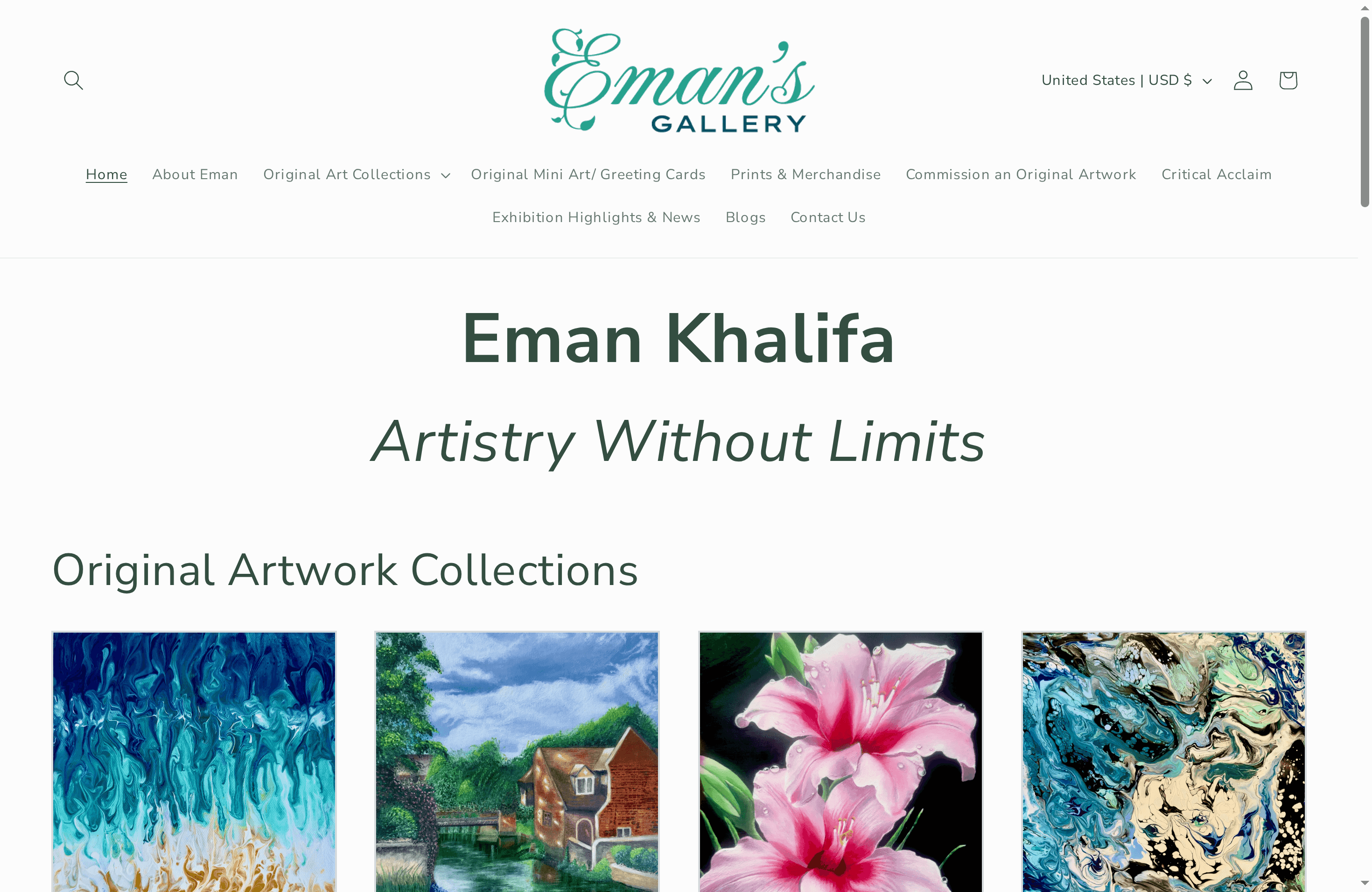
The Good Tidings original painting is a strong example of fluid organic abstraction, with layered blues and gold that move across the canvas without a single hard edge. For students and collectors who want to study these styles through original works rather than reproductions, Emansgallery ships worldwide from the UK, USA, Canada, Australia, and across Europe and the UAE. Museum-quality canvas prints and wall art are also available for those building a first collection on a measured budget.
FAQ
What are the 4 types of abstract art?
The four main types are geometric abstraction, lyrical (organic) abstraction, abstract expressionism, and color field painting. Each type is defined by its approach to edge treatment, gesture, and color application.
How do you identify abstract art styles quickly?
Edge behavior is the fastest identification tool. Sharp, clean edges indicate geometric abstraction, while blurred or energetic edges point to gestural or lyrical styles.
What is the difference between abstract expressionism and color field painting?
Abstract expressionism emphasizes visible gesture, drips, and physical energy, while color field painting uses large, flat areas of unmodulated color with minimal or no visible brushwork.
What paint is best for beginners trying abstract art techniques?
Acrylic paint is recommended for beginners because it dries quickly, layers well, and does not require solvents, making it easier to correct and build upon.
Can abstract art belong to more than one type at once?
Yes. Contemporary abstract works frequently combine elements from multiple types, such as geometric structure with organic color application, and the boundaries between categories are intentionally fluid.
Stay Connected
- ✨ Explore Eman Khalifa's original art, fine art prints and art-inspired merchandise.
- Follow Eman Khalifa's art journey on: Instagram @emans_gallery and Facebook
- Watch Eman Khalifa creating live art on: YouTube @emans_gallery
