


What Are Canvas Photo Prints? A Clear 2026 Guide
TL;DR:
- Canvas photo prints are durable wall art created by printing high-resolution images onto woven poly-cotton fabric and hand-stretching them over wooden frames. They offer long-lasting color, textured surfaces, and easy hanging without frames or glass. Customizable in size, depth, and edge finish, they outperform posters and framed photos in resilience and visual quality.
Canvas photo prints are high-resolution images printed onto woven poly-cotton fabric and hand-stretched over a wooden frame to produce textured, non-reflective wall art. The industry term is “canvas print,” and it refers to a finished, frameless piece ready to hang. What is canvas photo prints as a concept comes down to three things: the fabric substrate, the archival inks, and the gallery-wrap mounting. Archival-grade materials allow prints to last over 100 years with preserved color and texture. That longevity makes canvas prints a serious alternative to posters, framed photos, and mass-produced wall decor.
What is canvas photo printing and how does it work?
Canvas photo printing is a five-step production process that turns a digital image into a finished wall piece. Understanding each step helps you order with confidence and avoid common mistakes.
-
Image upload and file check. You upload a digital photo to the provider’s website. Most providers run an automatic resolution check at this stage. Enlarging low-quality images causes pixelation and blur regardless of printer technology, so catching problems early saves you a reprint.
-
High-resolution inkjet printing. The image prints directly onto poly-cotton canvas fabric using a large-format inkjet printer. Professional studios use latex or archival inks, which bond to the canvas fibers rather than sitting on top of them. That bond is what gives the print its color depth and resistance to fading.
-
Coating application. After printing, a protective coating goes over the surface. Satin finish is the most common choice because it reduces glare while keeping colors vivid. Matte coatings absorb more light and suit high-contrast black-and-white images. Glossy coatings intensify color but show fingerprints easily.
-
Hand-stretching over wooden stretcher bars. A technician pulls the printed canvas tightly over a wooden frame and staples it to the back. The frame depth typically runs 0.75 to 2 inches. Deeper frames give the piece a more sculptural, gallery-style presence on the wall.
-
Quality check and dispatch. Production typically takes 1–3 business days, with most orders delivering within 5–7 business days from the order date. The finished canvas arrives ready to hang, with no additional framing required.
Pro Tip: Request a digital proof before your order goes to print. Most providers offer a preview that shows exactly how the image will look after the gallery wrap folds the edges around the frame.
What are the common customization options for canvas photo prints?
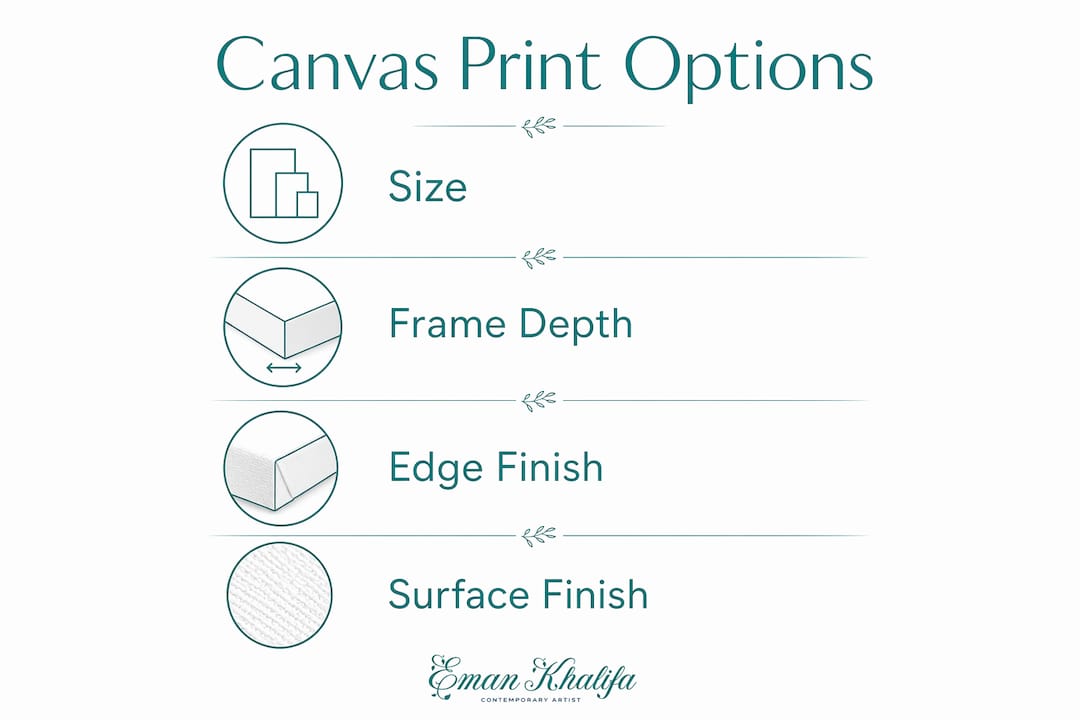
Canvas print customization options are broader than most buyers expect. Size, frame depth, edge finish, and surface coating all affect the final look, and each choice interacts with the others.
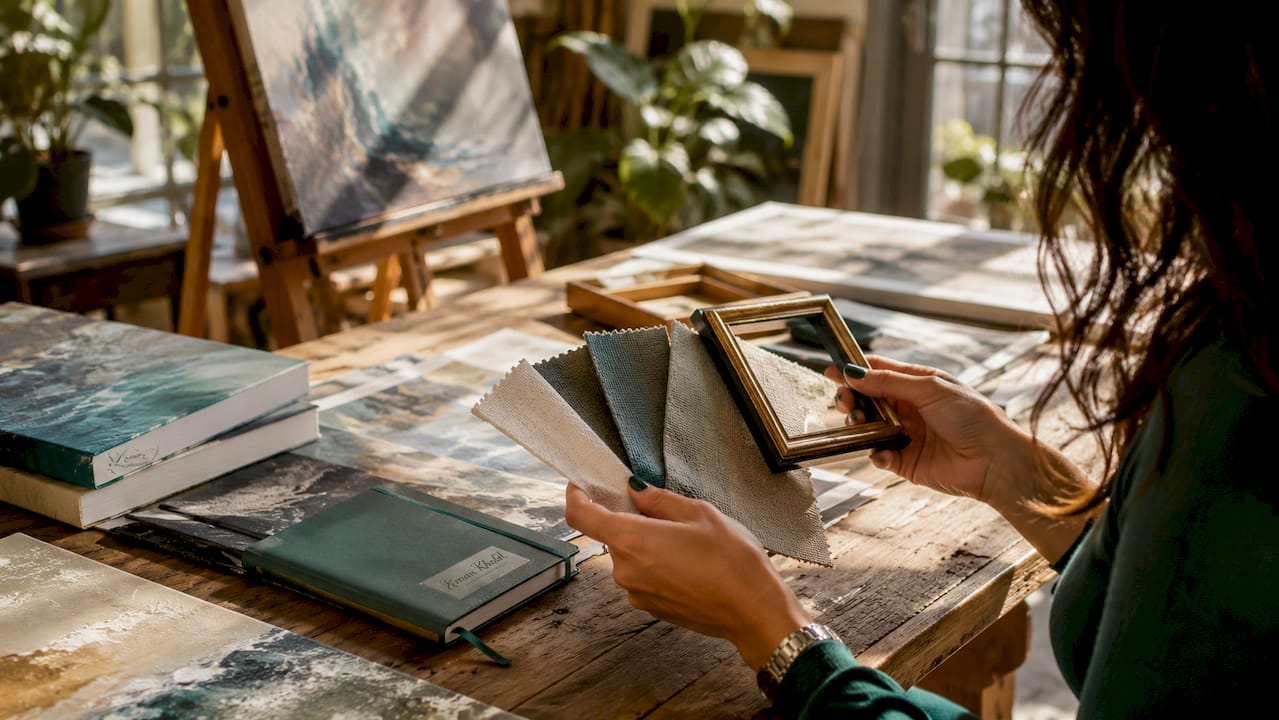
Size
Canvas print sizes range from small 8-inch squares to large formats up to 72 inches, with many studios offering over 175 standard and custom sizes. Small prints work well as desk accents or grouped in a gallery wall arrangement. Large formats above 40 inches become focal points in living rooms, hallways, and open-plan spaces. Custom sizing down to the millimeter is available from most professional studios, which matters when you are filling a specific wall space.
Frame depth
Frame depth changes how the piece reads in a room. A 0.75-inch depth looks flat and suits minimalist interiors. A 1.5-inch or 2-inch depth adds visual weight and makes the canvas feel more like an original painting. Interior designers working with 2026 home decor trends consistently favor deeper frames for statement walls.
Edge finish styles
The gallery wrap edge is the strip of image that folds around the frame sides. Three standard options exist:
- Mirrored wrap. The edge of the image reflects inward, creating a symmetrical border. This works well when the subject is centered and the background is simple.
- Image wrap. The full image continues around the sides. This is the most common choice and suits landscapes, abstracts, and any image where the edges are not critical.
- White or black border. A solid color fills the sides. This option protects important details near the image edges from being hidden by the wrap.
Gallery wrap edges consume 1.5 to 3 inches of the image on each side. That is a meaningful amount of your photo. Always use the provider’s preview tool to check what gets folded before you confirm the order.
Surface finish
Satin is the default for most photographic images. Matte suits fine art reproductions and black-and-white photography. Glossy works for bold graphic images where color saturation is the priority. For guidance on personalizing canvas prints for specific rooms or as gifts, matching the finish to the image subject makes a clear visual difference.
Pro Tip: If your photo has important details near the edges, such as faces or text, choose a white border wrap instead of an image wrap. It keeps every part of your photo visible from the front.
What are the main benefits of canvas prints over other formats?
Canvas prints offer a specific set of advantages that framed photo prints and posters cannot match. The benefits of canvas prints are most visible in three areas: surface quality, practical handling, and long-term durability.
Surface and visual quality
Canvas provides a textured, matte surface that reduces glare and reflects light like a painting rather than a photograph. You can view a canvas print from any angle in a room without catching a reflection. That quality makes canvas the preferred choice for bright rooms, rooms with multiple light sources, and spaces where people move around, such as hallways and living areas.
Practical handling
Canvas prints are lightweight and frameless. A large 40-inch canvas typically weighs far less than an equivalent glass-framed print. That weight difference matters for renters, for households with children, and for anyone hanging art on drywall without heavy-duty anchors. The absence of glass also removes the risk of breakage during hanging or if the piece falls.
Durability
Professional canvas materials are acid-free and gesso-primed to prevent yellowing and degradation over decades. Cheaper polyester canvases can yellow under UV exposure within a few years. Archival-rated poly-cotton canvas with UV-resistant inks resists fading, warping, and cracking for decades. That is a meaningful difference if you are buying art for a permanent home rather than a temporary rental.
Canvas vs. framed photo prints
| Feature | Canvas print | Framed photo print |
|---|---|---|
| Surface texture | Textured, painterly | Flat, smooth |
| Glare | Non-reflective | Reflective glass |
| Weight | Lightweight | Heavier with frame and glass |
| Best image type | Landscapes, abstracts, lifestyle | Portraits, fine detail images |
| Longevity | Decades with archival materials | Dependent on glass and mat quality |
Portraits benefit from the sharper surface of framed prints, while landscapes and lifestyle photos gain from canvas’s artistic depth. Matching the format to the image type is the single most effective decision you can make before ordering. For a deeper look at how canvas compares to paper prints in different room settings, the format choice becomes even clearer.
What should you know before ordering canvas photo prints?
Ordering a canvas print is straightforward, but a few practical details separate a great result from a disappointing one.
- Check your image resolution first. A photo that looks sharp on a phone screen may print blurry at 24 inches or larger. Most professional studios recommend a minimum of 150 DPI at the final print size. If your image is from a recent smartphone camera, it is likely sufficient for prints up to 30 inches.
- Use the preview tool. Every reputable provider offers a digital preview showing the final wrap. Do not skip this step. It is the only way to confirm that faces, text, and key details are not hidden on the sides.
- Match the finish to the subject. Satin works for most photos. Matte suits black-and-white and fine art images. Glossy suits bold graphic designs.
- Account for the bleed area. Gallery wrap printing requires 1.5 to 3 inches of image bleed that folds around the frame. If your photo has a tight crop, choose a border wrap style instead.
- Consider display conditions. Direct sunlight accelerates fading even on archival prints. Hang canvas prints away from south-facing windows or use UV-filtering window film in bright rooms.
- Plan for production time. Most orders take 1–3 business days to produce and 5–7 business days to arrive. Order gifts at least two weeks before the occasion to allow for any reprints.
For tips on selecting and displaying canvas prints in upscale interiors, expert canvas print guidance covers placement, lighting, and grouping strategies in detail.
Key Takeaways
Canvas photo prints are a durable, non-reflective wall art format that suits most home interiors, with archival materials and gallery-wrap mounting setting professional prints apart from budget alternatives.
| Point | Details |
|---|---|
| Canvas print definition | An image printed on poly-cotton fabric and hand-stretched over a wooden frame for frameless wall display. |
| Archival longevity | Acid-free, gesso-primed canvas with UV-resistant inks can preserve color and texture for over 100 years. |
| Customization range | Sizes from 8 inches to 72 inches, frame depths from 0.75 to 2 inches, and three edge wrap styles give buyers precise control. |
| Image resolution matters | Low-resolution photos produce blurry prints at large sizes; always verify DPI before ordering. |
| Format matching | Landscapes and abstracts suit canvas; portraits with fine detail suit flat framed prints. |
Why canvas prints remain my first recommendation for home decor
I have worked with canvas prints across dozens of interior projects, and the format consistently outperforms expectations for one reason: it removes friction from the wall. No frame to source, no glass to clean, no glare to manage. You hang it and it looks finished immediately.
The quality gap between archival and budget canvas is wider than most buyers realize. I have seen polyester prints from low-cost providers yellow within three years in a south-facing room. Acid-free poly-cotton canvas with proper UV coating does not do that. The material specification is the first thing I check when evaluating any provider.
My honest advice on image selection: do not force a portrait onto canvas just because the format is popular. The texture softens fine detail, and a sharp face deserves a flat, smooth surface. Save canvas for images where that painterly quality adds something. Landscapes, seascapes, abstract compositions, and lifestyle shots all gain from the texture. Portraits generally do not.
For gifts, canvas prints work particularly well because they feel considered rather than generic. A photo printed on canvas reads as art, not as a photo. That distinction matters to the person receiving it.
— Eman
Emansgallery canvas prints: original art for your walls
Emansgallery offers a collection of museum-quality canvas prints featuring original artwork by artist Eman Khalifa, printed on archival poly-cotton canvas and hand-stretched over solid wooden frames.
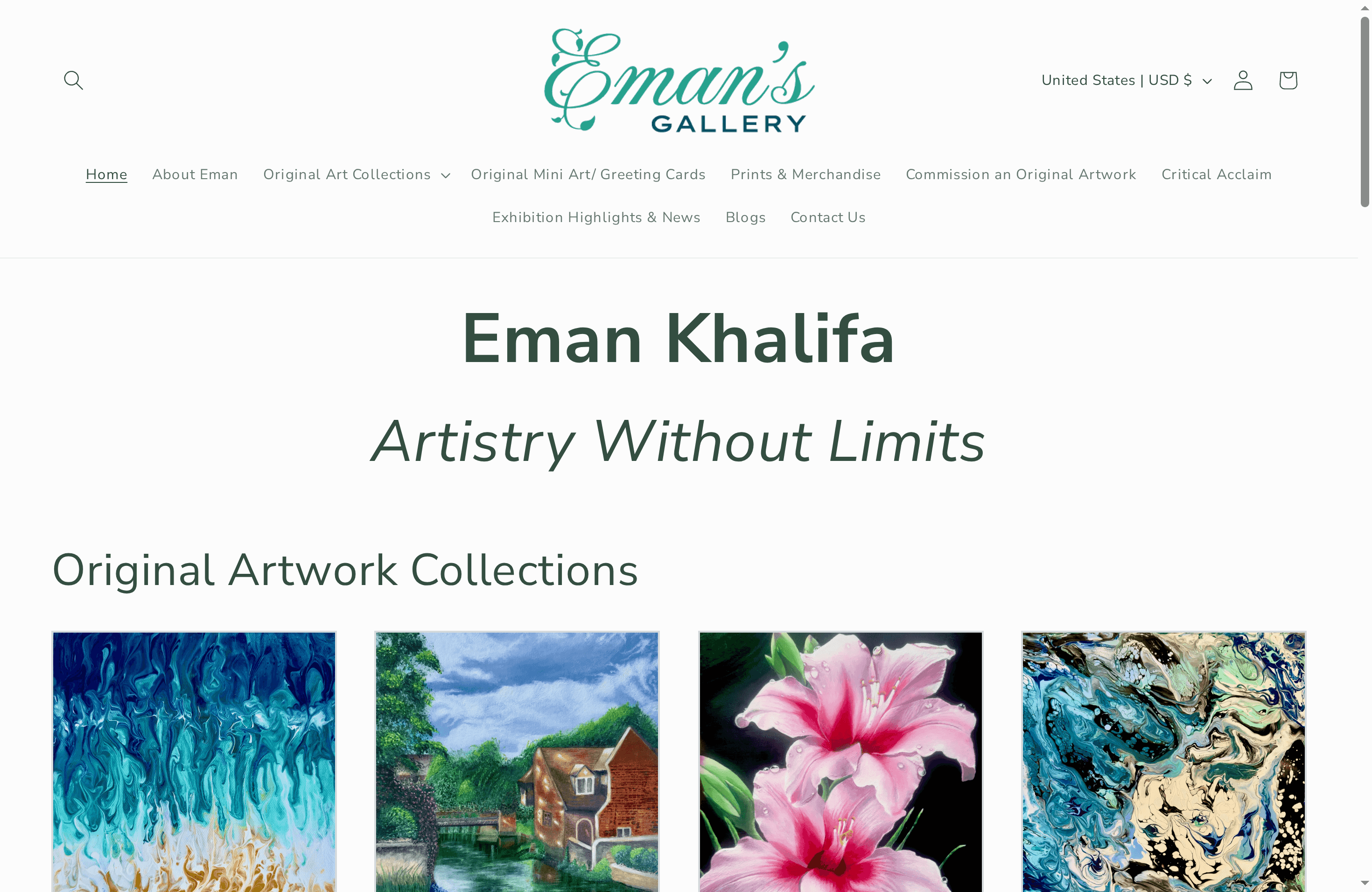
Each piece ships worldwide from fulfillment centers in the UK, USA, Canada, Australia, and across Europe. The collection spans abstract, geometric, seascape, and expressionist styles, with pieces suited to both residential and commercial interiors. The Private Eye canvas print is a standout for collectors drawn to conceptual expressionism, while the Fragments of Memory canvas print brings abstract ink-splash energy to any wall. For those who prefer geometric abstraction, the City in Grids canvas print delivers a bold urban aesthetic. Every print arrives ready to hang.
FAQ
What is a canvas photo print, exactly?
A canvas photo print is a digital image printed onto woven poly-cotton fabric using archival inkjet technology, then hand-stretched over a wooden frame to create frameless, gallery-style wall art.
How long do canvas photo prints last?
Archival-grade canvas prints with UV-resistant inks can last over 100 years with preserved color and texture when kept away from direct sunlight.
What image resolution do I need for a canvas print?
Most professional studios recommend a minimum of 150 DPI at the final print size. Photos from recent smartphones are typically sufficient for prints up to 30 inches.
What is the difference between a gallery wrap and a border wrap?
A gallery wrap folds the image around the frame sides, consuming 1.5 to 3 inches of the image. A border wrap fills the sides with a solid color, keeping the full image visible from the front.
Are canvas prints better than framed photo prints?
Canvas suits landscapes, abstracts, and lifestyle images because the texture adds artistic depth. Framed prints suit portraits and images with fine detail that benefit from a flat, sharp surface.
Stay Connected
- ✨ Explore Eman Khalifa's original art, fine art prints and art-inspired merchandise.
- Follow Eman Khalifa's art journey on: Instagram @emans_gallery and Facebook
- Watch Eman Khalifa creating live art on: YouTube @emans_gallery
