


Wall Art Guide: How to Choose, Buy, and Display Art
TL;DR:
- A good wall art guide helps select, position, and purchase artwork to create visual identity in a space. Proper scale, style harmony, and placement are essential for a balanced and intentional display. Large, confidently scaled pieces and art that matches room tone improve room ambiance and longevity.
A wall art guide is a practical resource for selecting, positioning, and purchasing artwork that transforms any home or office into a space with genuine visual identity. The right piece does more than fill a blank wall. It anchors a room, sets a mood, and reflects the personality of the people who live or work there. This guide covers everything from sizing and style selection to expert hanging techniques and budget-conscious buying, drawing on standards used by interior designers and art professionals in 2026.
What does a good wall art guide cover?
The core of any wall art guide is proportion, style harmony, and placement. Get these three right, and even an affordable print reads as intentional and considered. Get them wrong, and an expensive original can look awkward and out of place.
Art selection is also called wall decor curation in interior design circles. Both terms describe the same process: matching artwork to a space through scale, color, texture, and function. Understanding both terms helps when researching advice from designers like Studio McGee or Emily Henderson, whose guidance appears throughout this article.
How to choose wall art that fits your space and style
Scale is the single most important factor when choosing wall art. Art width above furniture should be approximately 60–75% of the furniture’s width for visual balance. A sofa that is 84 inches wide calls for artwork or a gallery grouping that spans roughly 50–63 inches. Ignoring this ratio is the most common mistake buyers make.
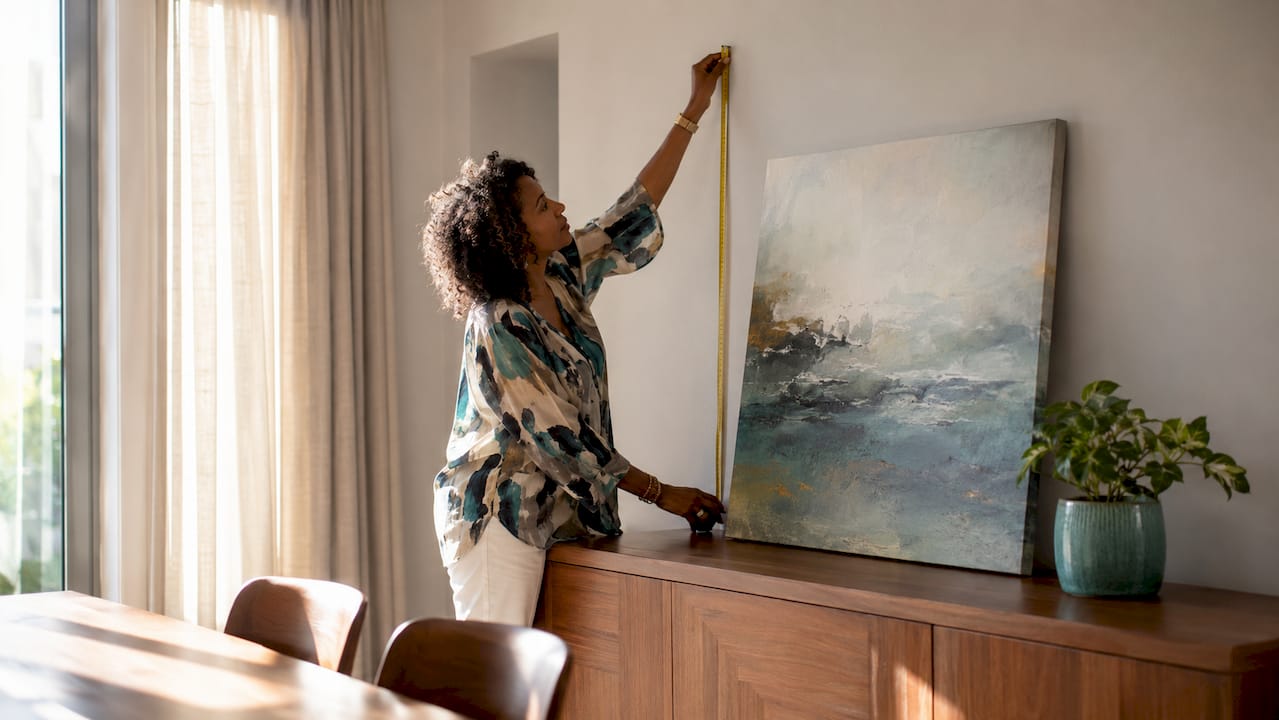
Art that is too small often feels lost and unanchored in a room. Larger, confidently scaled pieces make spaces feel more intentional and complete. Fear of going big leads most buyers to undersize their selections, which diminishes the impact of even a beautiful piece.
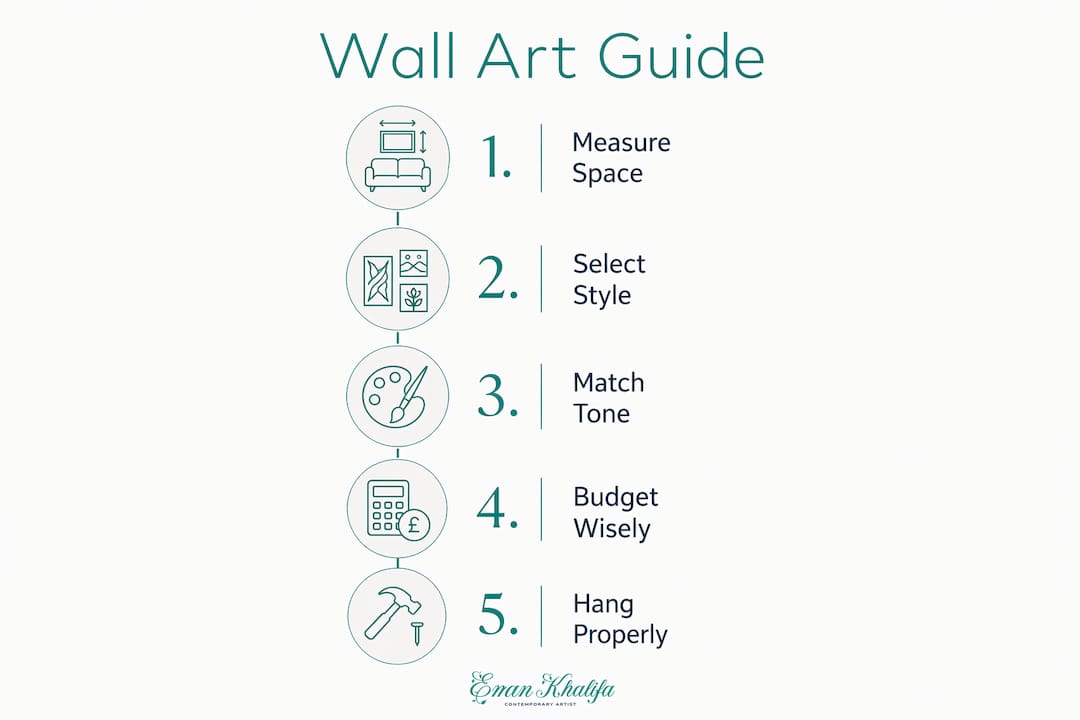
Match art to room tone, not exact colors
Art should connect to a room through shared textures or subtle accent colors rather than matching decor exactly. A painting that picks up the amber in a throw pillow or the gray in a stone fireplace creates cohesion without looking staged. Matching art too precisely to furniture makes a room feel flat and overly coordinated.
Consider the room’s function when choosing a style. A living room can support bold abstract work or large-scale landscapes. A bedroom benefits from calmer tones and softer compositions. A home office responds well to geometric or graphic work that stimulates focus without distraction. For art in small spaces, one strong focal piece outperforms a cluster of small prints every time.
Common art types and their impact
- Original paintings carry the highest visual weight and price. They are one of a kind and tend to anchor a room definitively.
- Canvas prints offer museum-quality reproduction at a fraction of the cost. They work well in high-traffic areas or rooms with changing decor.
- Photography prints add a documentary or editorial quality. Black-and-white photography in particular suits modern and minimalist interiors.
- Works on paper (watercolor, ink, pastel) are delicate and require careful placement. UV-protective glass is necessary to prevent fading from sunlight exposure.
Pro Tip: Place delicate works on paper away from south-facing windows. Direct sunlight degrades pigment quickly, even through standard glass. UV-protective framing glass or acrylic is the only reliable solution.
Where and how to buy wall art within your budget
Buying wall art involves more than the sticker price. Hidden costs like sales tax, shipping, framing, and auction fees can add 30–50% to the final amount. Ask for a framing quote before you commit to a purchase, and factor that number into your total budget from the start.
Online platforms now offer affordable wall art options ranging from prints at $24 to original works exceeding $3,000. Pricing scales with artist stature, medium, and size. That range means there is a real market for every budget, from a first apartment to a luxury home office.
Here is a practical buying process that professionals follow:
- Set a total budget that includes the piece, shipping, framing, and any applicable taxes. Never budget for the art price alone.
- Identify your wall dimensions before browsing. Know the maximum width and height the space can accommodate.
- Decide between original and print. Originals are one of a kind and appreciate in value. Prints offer flexibility and lower cost with comparable visual impact at a distance.
- Order framing at purchase. Framing after delivery delays display and often costs more when done separately. Many online galleries offer framing at checkout.
- Buy with a long-term view. Choose art you want to live with for years, not just art that matches your current sofa. Rooms change; strong art stays relevant.
Emansgallery ships original paintings and canvas prints worldwide from the UK, USA, Canada, Australia, Germany, France, Italy, Spain, Portugal, Greece, UAE, and the Netherlands. That global fulfillment network removes the shipping uncertainty that often complicates international art purchases.
Expert tips on hanging and placing wall art for best visual impact
The industry standard for hanging art is centering the artwork at 57–60 inches from the floor. This places the visual center of the piece at average eye level. Galleries and museums use this standard universally because it works across most room configurations.
Furniture changes the calculation. When art hangs above a sofa, console, or bed, maintain a 4–6 inch gap between the top of the furniture and the bottom of the frame. This gap creates visual connection between the art and the furniture without making them feel like one merged unit.
Adjusting for ceiling height and room layout
Rooms with low ceilings call for lower hanging heights. Placing art lower in the wall’s vertical space, specifically in the lower third of the wall, can look more intentional than forcing the 60-inch standard in a compact room. High ceilings allow art to hang slightly above the standard height without looking disconnected.
When no furniture anchors a piece, the lower third of the wall often reads as more grounded and deliberate than dead center. This is a detail most buyers overlook and one that separates a considered display from a random placement. For a full breakdown of hanging adjustments by room type, the expert hanging tips at Emansgallery cover each scenario in detail.
Gallery walls: spacing, framing, and balance
| Element | Standard |
|---|---|
| Spacing between frames | 2–3 inches |
| Gallery grouping center height | 60 inches from floor |
| Frame unification | Consistent color or material |
| Thematic curation | Shared subject, palette, or style |
Gallery walls require 2–3 inch spacing between frames and benefit from unified framing or a consistent theme. Mixing black frames with natural wood or gold creates visual noise. Sticking to one frame finish ties the grouping together and makes it read as a collection rather than a random assortment.
Negative space is as important as the art itself. A balanced display uses surrounding wall space to let each piece breathe. Cramming art near architectural features like windows, doors, or built-in shelving creates competition for the eye rather than a clear focal point.
Pro Tip: Before drilling a single hole, lay all pieces on the floor in the arrangement you plan to hang them. Photograph the layout from above. This lets you adjust spacing and composition without any wall damage.
What are the best wall art styles for different rooms?
The best wall art styles in 2026 include abstract expressionism, geometric abstraction, contemporary landscape, seascape, and documentary photography. Each style carries a distinct emotional register that shapes how a room feels.
- Abstract expressionism suits living rooms and open-plan spaces. Bold color fields and gestural marks create energy and conversation.
- Geometric abstraction works well in home offices and modern dining rooms. Clean lines and structured compositions suggest order and focus.
- Landscape and seascape painting brings calm to bedrooms and reading rooms. Horizon lines and natural tones lower visual tension in a space.
- Floral and botanical art adds warmth to kitchens, hallways, and transitional spaces. It reads as approachable and personal without being casual.
- Monochrome and graphic work suits minimalist interiors. A single strong image in black and white can define an entire room’s character.
For wall art color tips that connect style choices to specific room palettes, Emansgallery’s editorial covers luxury interior applications in depth. The principle applies at every budget level: color in art should respond to the room’s existing tones, not compete with them.
Key takeaways
Choosing, buying, and displaying wall art correctly requires matching scale to furniture, centering pieces at 57–60 inches from the floor, and selecting styles that respond to each room’s function and existing color palette.
| Point | Details |
|---|---|
| Scale over style | Art width should be 60–75% of the furniture it hangs above for visual balance. |
| Eye-level hanging | Center artwork at 57–60 inches from the floor, adjusted for furniture and ceiling height. |
| Budget for total cost | Factor in shipping, framing, and taxes before committing to any purchase. |
| Style by room function | Match art style to room purpose: abstract for living spaces, calm landscapes for bedrooms. |
| Negative space matters | Leave breathing room around each piece to prevent displays from feeling cluttered. |
Why I stopped playing it safe with wall art
Most people treat wall art as the last decision in a room, something to fill space after the furniture is in place. That approach consistently produces underwhelming results. The rooms I find most memorable are the ones where the art was chosen first and the furniture arranged around it.
Art that sustains long-term engagement reveals new layers over time. A piece that looked purely decorative in year one starts to feel like a record of who you were when you bought it. That depth is what separates art from decoration.
The mistake I see most often is buyers choosing pieces that are too small because they are afraid of committing to something large. A large canvas on a generous wall is almost always the right call. The fear of scale is the enemy of a strong display. One confident piece beats five timid ones every time.
I also think people underestimate how much a gallery wall rewards patience. The best ones I have seen were built over years, adding pieces that genuinely meant something rather than filling slots in a grid. Start with one strong anchor piece. Add to it slowly. The result will feel personal in a way that a fully planned grid never does.
— Eman
Original paintings and prints for your walls, from Emansgallery
Emansgallery offers original handmade paintings and museum-quality canvas prints across abstract, geometric, floral, landscape, and seascape styles. Every piece is created by artist Eman Khalifa and ships worldwide.

For buyers looking for a statement piece, the fluid abstract ocean original and the moonlit tonalism painting are two strong options that anchor living rooms and dining spaces with confidence. For canvas prints, the Private Eye expressionism print delivers high visual impact at a more accessible price point. Browse the full wall art prints collection to find pieces sized and styled for your specific space.
FAQ
What is the standard height for hanging wall art?
The industry standard is centering artwork at 57–60 inches from the floor. Adjust lower when hanging above furniture or in rooms with low ceilings.
How wide should wall art be above a sofa?
Art or a gallery grouping above a sofa should span approximately 60–75% of the sofa’s width. A standard 84-inch sofa calls for art roughly 50–63 inches wide.
What are affordable wall art options for a tight budget?
Online galleries offer quality prints starting around $24. Canvas prints from artists like Eman Khalifa provide museum-quality imagery at a fraction of original painting prices.
How do I choose wall art for a home office?
Geometric abstraction and graphic monochrome work suit home offices. These styles create visual structure and focus without the emotional intensity of bold abstract expressionism.
How much spacing should a gallery wall have between frames?
Gallery walls look best with 2–3 inches of spacing between frames. Unify the grouping with a consistent frame finish or a shared color palette across the pieces.
Stay Connected
- ✨ Explore Eman Khalifa's original art, fine art prints and art-inspired merchandise.
- Follow Eman Khalifa's art journey on: Instagram @emans_gallery and Facebook
- Watch Eman Khalifa creating live art on: YouTube @emans_gallery
