


72 inch Metal Wall Art for Luxury Living Rooms, Gallery Direct
For most luxury living rooms, an original painting outperforms every other large-scale option, with a museum-quality giclée print as the practical second choice when budget or timeline is tight. Decide in this order: scale first, format second, room function third. Eman Khalifa and Eman’s Gallery offer both originals and archival prints, so you don’t have to compromise on either.
TL;DR:
- An original painting is far more impactful for a large living room wall, especially when size exceeds six feet in width.
- Museum-quality prints can deliver a similar visual effect at normal viewing distances if produced with archival standards and proper stretching.
- Proper sizing depends on wall and furniture measurements, with artwork spanning about two-thirds of the furniture’s width for optimal balance.
- Lighting and hanging hardware are critical; use UV-protective glazing, professional installation, and appropriate fixtures to preserve and display large art safely.
- Budget should prioritize the room’s focal wall for originals, while prints are suitable for secondary walls or multiple spaces to maximize visual impact and cost-efficiency.
Table of Contents
- Choosing Large-Scale Art for a Living Room: A Decision Framework
- Original Paintings vs Museum-Quality Prints at Large Scale
- How to Size, Place, and Light Large Wall Art Correctly
- Materials and Quality Checklist Before You Buy
- Buying or Commissioning Through a Gallery: What to Expect
- Style and Aesthetic Selection for a Luxury Living Room
- Budget Considerations and Price Ranges for Large-Scale Art
- Materials, Finishes, and Surface Options to Discuss With Your Seller
- Caring for Large-Format Paintings and Prints Over Time
- Commissioning a Custom Large-Scale Piece: Options and Timelines
- Installing Heavy Wall Art Safely in a Living Room
- An Artist’s Note on Scale and Presence in a Living Room
- Where to Buy: Large Originals and Museum-Quality Prints From Eman’s Gallery
- Sources
- FAQ
Choosing Large-Scale Art for a Living Room: A Decision Framework
Most people shop for living room art backward. They fall for a piece online, buy it, then discover it reads as a postage stamp above their sofa or clashes with a room it was never built for. Work the decision in this order instead.
- Define the wall’s job. Is this a focal wall the eye lands on when entering the room, or a secondary surface behind seating? Focal walls justify a statement piece; secondary walls can carry something quieter or a multi-panel set.
- Choose single statement piece versus a grouped set. One large painting creates a strong anchor point. A triptych or gallery wall of three to five smaller works gives more flexibility for awkward wall shapes but rarely reads with the same authority.
- Match scale to furniture, not just wall size. A piece hung above a sofa should span roughly two thirds of the furniture’s width. This keeps the composition anchored rather than floating.
- Set your budget bracket and decide originals versus prints. This determines your shortlist before you fall in love with anything.
- Run the pre-purchase checklist below before you commit.
Before paying for anything, confirm these details with the seller or artist:
- Exact wall measurements, including ceiling height and any obstructions
- Material specifications (canvas type, stretcher bars, inks used)
- Shipping method, insurance, and estimated delivery window
- Return or exchange policy for oversized work
- Whether framing or installation support is included
Pro Tip: Request a scaled visualization of the artwork on a photo of your actual wall before buying. Many galleries can produce this, and it removes almost all guesswork around proportion.
One more consideration worth a passing mention: dual-function acoustic paintings exist for open-plan rooms with sound issues, but they’re a niche solve, not a starting point for most buyers.
Original Paintings vs Museum-Quality Prints at Large Scale
Size changes everything about how a format performs. A small print and a small original can look nearly identical from across a room. At six feet wide, the differences become impossible to ignore.
An original carries brushstroke texture, layered pigment, and a surface that shifts with the light throughout the day. It’s one of a kind, which matters enormously in a room meant to feel personal rather than staged. A museum-quality giclée print, by contrast, uses archival pigment inks on fine art paper or canvas, delivering strong color accuracy and genuine longevity when produced correctly.
- Choose an original when: the wall is the room’s defining feature, you want a piece no one else will own, or you’re building a serious collection.
- Choose a print when: you need a large format on a tighter budget, you’re outfitting multiple rooms or a rental, or you want to test a composition before committing to an original.
- A print can match an original’s visual impact at normal viewing distance if the printing house uses true archival standards and proper canvas stretching.
- Only an original delivers the tactile surface and singular presence that collectors and interior designers often want as the room’s centerpiece.
How to Size, Place, and Light Large Wall Art Correctly
Getting the numbers right is what separates art that anchors a room from art that just occupies space.
- Measure the wall, then measure the furniture below it. For a piece hanging above a sofa or console, aim for artwork spanning about two thirds of that furniture’s width. In open-plan living areas with no furniture reference point, size the piece to a large portion of the total wall width.
- Use furniture-scaled width brackets. A modest living room generally suits a painting in the 48 to 60 inch range, while larger open-plan spaces call for pieces 72 inches or wider to avoid looking undersized against volume.
- Center the artwork at eye level, typically around standard standing eye height from the floor to the piece’s center. Exception: in rooms with double-height ceilings or a stairwell wall, center the composition within the visual field rather than a fixed number, since standing eye level stops being the relevant reference.
- Choose hanging hardware rated for the actual weight. French cleats and heavy-duty picture hooks anchored into studs handle most large canvases. For anything over roughly 40 pounds, or for plaster and masonry walls, hire a professional installer rather than relying on drywall anchors alone.
- Light it with directional picture lights or adjustable track fixtures set at roughly a 30-degree angle to minimize glare and hot spots. Avoid direct, unfiltered sunlight on any painting or print as UV exposure fades pigments over time regardless of format.
Pro Tip: If you’re unsure about exact width, tape newspaper or kraft paper to the wall at your target dimensions and live with it for a few days. It’s a low-effort way to catch a sizing mistake before it becomes a shipping problem.
For a deeper breakdown of proportion rules by room type, this sizing guide walks through additional scenarios, and Lifted+'s guide to art sizing offers useful visual comparisons for tricky wall shapes.
Materials and Quality Checklist Before You Buy
Ask these questions before you pay, not after the piece arrives.
- What ink and substrate does the print use? Archival pigment inks on museum-grade canvas or fine art paper hold color far longer than dye-based inks on standard stock.
- Are the stretcher bars kiln-dried wood, and is the canvas properly tensioned? Loose or warped stretchers are a sign of a rushed production job, not a quality print.
- Is there provenance documentation for an original? This should include the artist’s signature, a certificate of authenticity, creation date, and any exhibition history.
- What framing and glazing options are offered? UV-protective glazing and archival matting meaningfully extend the life of both prints and originals hung in bright rooms.
- What are the care instructions? Ask specifically about humidity tolerance and cleaning method for the exact material used.
Museum-grade materials and UV-protective glazing genuinely extend how long a piece keeps its color and structural integrity, and that single detail separates a print that looks great for two decades from one that yellows within a few years. Presentation matters too: a well-framed, properly printed piece reads at a completely different tier than a cheap poster, even when the underlying image is identical.
Buying or Commissioning Through a Gallery: What to Expect
Working directly with an artist or gallery gives you access originals rarely have through secondhand marketplaces: a clear paper trail and a direct line to the person who made the work.
Commissioning a custom large-scale painting typically starts with a conversation about your room, palette, and the mood you want the piece to carry. From there, expect a timeline that runs several weeks to a few months depending on scale and the artist’s current queue. Eman’s Gallery offers original paintings across abstract, landscape, seascape, and tonal work, along with museum-quality canvas prints for buyers who want the same imagery at a more accessible price point.
Before finalizing any purchase or commission, confirm:
- Deposit amount and what triggers the balance payment
- Shipping method, carrier, and whether international duties are included or separate
- Return window and condition-on-arrival policy for large, fragile shipments
- Whether the piece ships framed, on a stretcher, or rolled
- Documentation you’ll receive: certificate of authenticity, signed provenance note, or edition details for prints
Eman’s Gallery ships worldwide, so a commission started in one country can land safely in a living room continents away.
Style and Aesthetic Selection for a Luxury Living Room
The right visual language depends on what the room already does well and what it needs more of. Fluid abstract work with movement and layered color tends to soften a room heavy on hard architectural lines, glass, and steel. Landscape and seascape pieces bring depth and a sense of outward view into interior rooms with no natural vista, which is why they work so well in city apartments.
Tonalism, muted, moody palettes built around a narrow value range, suits formal living rooms where the goal is atmosphere rather than a bold focal statement. It reads as quiet luxury rather than a loud centerpiece.
Geometric and structured abstraction fits contemporary interiors with clean lines and minimal ornamentation, since the artwork echoes the room’s own logic instead of fighting it. Floral and still-life work, when scaled up significantly beyond its traditional small format, can feel unexpectedly modern and dramatic rather than decorative.
The mistake most buyers make is choosing a style they like in isolation, disconnected from the room’s existing palette and light. A cool-toned abstract seascape in a warm, wood-heavy room will always look slightly wrong, no matter how good the piece is on its own. Match undertone before you match subject matter.
Budget Considerations and Price Ranges for Large-Scale Art
Price for large-format work depends far more on format and hand-labor than on physical size alone. An original painting at six feet wide represents weeks of an artist’s working hours, materials, and irreplaceable studio time, which is why originals command a meaningfully higher price than prints of the same dimensions.
Museum-quality giclée prints scale more predictably with size, since the cost driver is materials and production rather than labor per unit. This makes large-format prints the more budget-flexible route when you need to furnish several walls or an entire room without originals-level spending across every surface.
Framing and glazing add a separate, sometimes underestimated cost. Archival matting and UV-protective glass on a large piece can add a meaningful fraction to the total price, and it’s worth budgeting for rather than treating as an afterthought.
A practical rule for luxury interiors: allocate more of your art budget to the room’s single focal wall and use prints for secondary walls. This keeps the strongest financial and visual investment where it does the most work, rather than spreading budget evenly across every wall and diluting the impact of all of them.
Materials, Finishes, and Surface Options to Discuss With Your Seller
Surface and substrate choice affects how a large piece ages and how it reads under different lighting. Canvas remains the standard substrate for both originals and prints because it handles large formats without the reflectivity issues that glossy surfaces introduce under overhead lighting. Fine art paper, mounted and framed under glazing, suits smaller runs or works where paper texture is part of the intended effect.
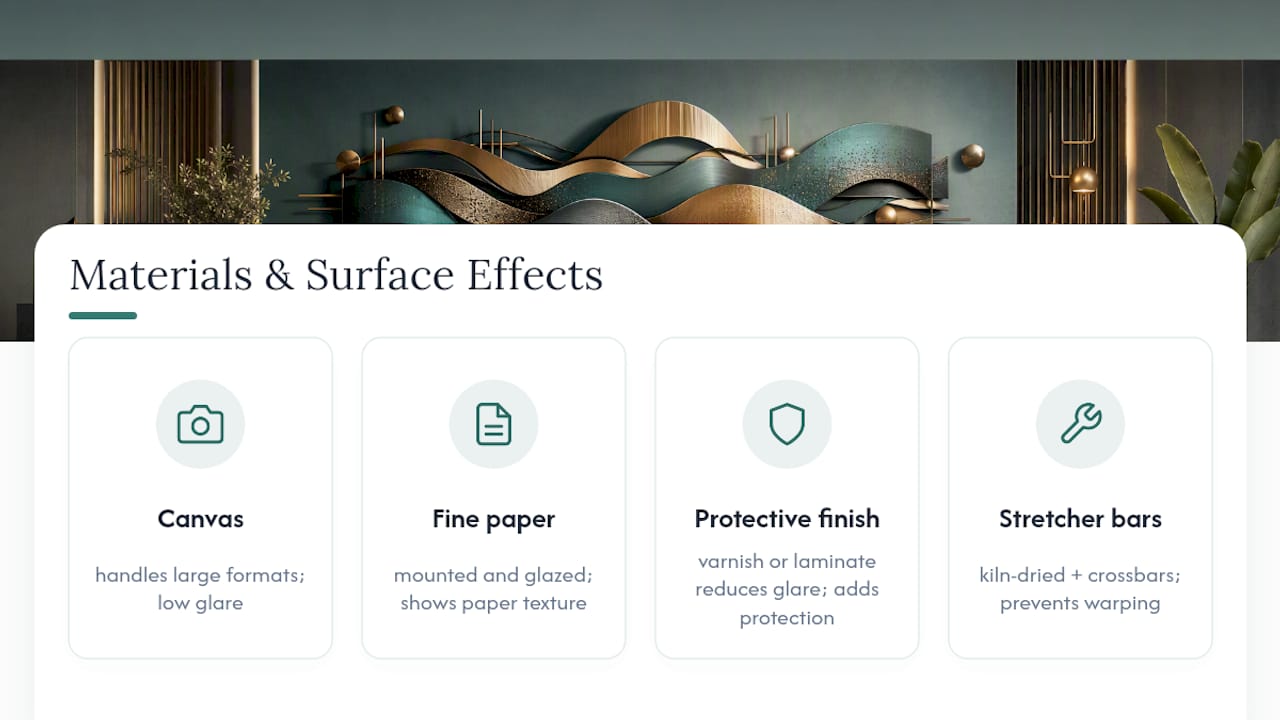
Finish matters as much as substrate. A matte or satin varnish on an original painting reduces glare from windows and picture lights, which is genuinely useful in living rooms with strong natural light during the day. High-gloss finishes look striking in photographs but can throw distracting reflections in a real room, especially opposite a window.
For prints, ask specifically whether the canvas has been coated with a protective laminate or varnish after printing. This single step meaningfully improves resistance to humidity and surface scuffing over years of display, and its absence is one of the easiest ways to spot a lower-tier print run.
Stretcher bar quality is worth a direct question too. Kiln-dried wood bars, properly braced with crossbars on anything over roughly 40 inches wide, keep a large canvas from warping or developing a visible bow at the center over time. This is a detail almost no buyer thinks to ask about, and it’s exactly the kind of thing that separates a piece that still looks perfect in ten years from one that needs re-stretching in three.
Caring for Large-Format Paintings and Prints Over Time
Longevity comes down to a short list of environmental controls, not constant maintenance. Keep humidity in the room reasonably stable. Large swings between dry heating in winter and humid summers cause canvas to expand and contract, which over years can loosen the stretch or create fine surface cracking on an original’s paint layer.
Avoid hanging any large piece directly across from an uncovered window that gets strong afternoon sun. UV exposure fades pigments gradually and unevenly, which is far more noticeable on a large surface than a small one. UV-protective glazing, mentioned earlier as part of the materials checklist, is the most effective single defense against this.
Dust originals and prints with a soft, dry microfiber cloth, working gently and never applying pressure to the painted or printed surface. Skip liquid cleaners entirely unless the seller or artist specifically confirms the surface can tolerate them; most archival inks and paint layers cannot.
Check the wall mount and hanging hardware roughly once a year, particularly in older homes where drywall or plaster can shift slightly over time. A large canvas that has quietly tilted a few degrees is easy to miss until it’s pointed out, and re-leveling it takes minutes.
Commissioning a Custom Large-Scale Piece: Options and Timelines
Commissioning gives you control over palette, composition, and dimensions that off-the-shelf inventory simply can’t match. The process typically starts with a conversation about the room: its light, existing furniture tones, and the emotional register you want the piece to carry, whether that’s calm and tonal or bold and kinetic.
Expect the artist to propose a size range based on your wall measurements and furniture, then confirm a palette direction, sometimes with a small preliminary study or color reference before starting the full-scale work. Timeline for a large commissioned painting generally runs from several weeks to a few months, depending on the piece’s scale and the artist’s current commitment load.
Customization typically covers size, palette, and general composition style. It does not usually extend to replicating a specific existing artwork stroke-for-stroke, since that undermines the point of commissioning original work in the first place. If you want a specific existing piece at a larger size, ask about a large-format print reproduction instead, which is a faster and more predictable path than requesting a hand-painted copy.
Build in a buffer beyond the quoted timeline before you finalize any other room elements, like furniture delivery or a styling shoot, that depend on the artwork being on the wall.
Installing Heavy Wall Art Safely in a Living Room
Weight, wall material, and piece dimensions all determine the right hanging approach, and getting this wrong is the single most common way an expensive piece gets damaged after purchase.
For canvases under roughly 30 pounds on drywall with accessible studs, heavy-duty picture hooks anchored directly into a stud hold securely. For anything heavier, or for walls without a convenient stud location, a French cleat, two interlocking beveled wood strips, one on the wall and one on the frame, distributes weight far more evenly and makes the piece easier to level during installation.
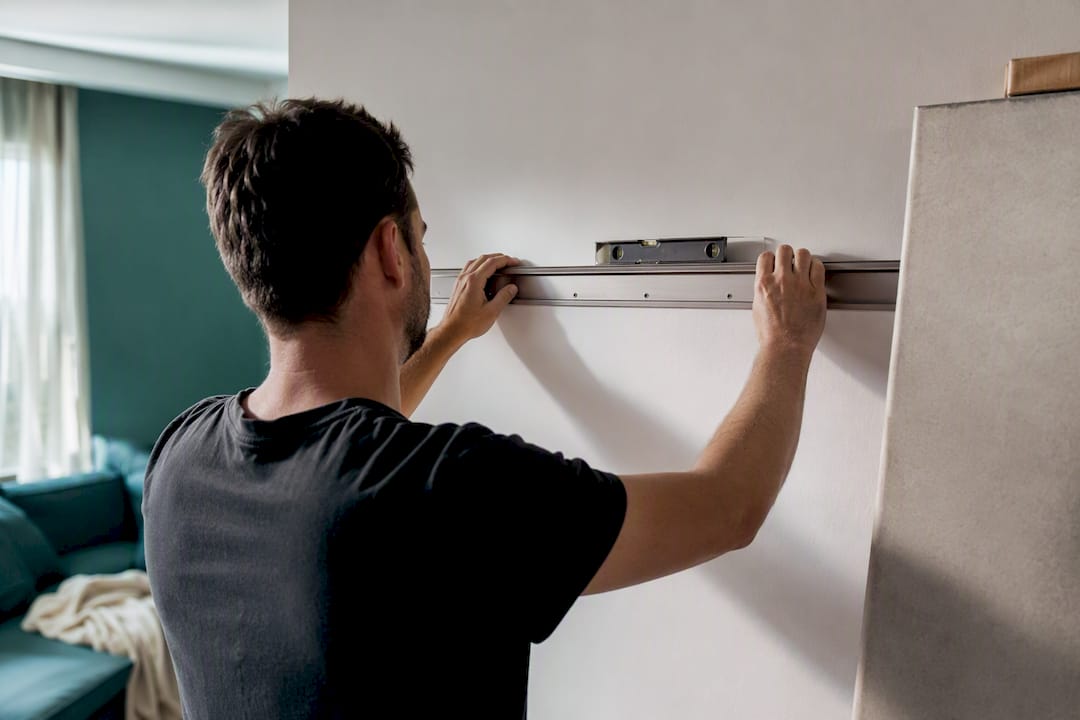
Plaster and masonry walls need a different approach entirely. Standard drywall anchors aren’t rated for the loads involved, and masonry requires proper drilled anchors matched to the wall material. This is the point where hiring a professional installer stops being a luxury and starts being a practical safeguard for both the wall and the artwork.
Always locate studs or confirm anchor points before drilling, and use a level throughout the process rather than eyeballing it, since a large canvas makes even a slight tilt obvious from across the room. If a piece ships on a stretcher rather than pre-framed, confirm with the seller whether it needs a frame before hanging or whether the stretcher edges are finished for a frameless gallery presentation.
An Artist’s Note on Scale and Presence in a Living Room
A large painting doesn’t just fill a wall. It changes how a room feels the moment you walk in, before you’ve consciously registered a single brushstroke. I design my larger works with that first impression in mind: movement that pulls the eye across the canvas, color that shifts subtly with the room’s light through the day, and a scale that gives the piece enough presence to hold its own against furniture and architecture rather than getting lost.
If you’re considering a custom piece for your space, or want to see available large-format originals, I’d genuinely welcome the conversation.
— Eman
Where to Buy: Large Originals and Museum-Quality Prints From Eman’s Gallery
Eman’s Gallery gives you a direct path to the artist rather than a warehouse catalog, which matters when you’re choosing a piece meant to anchor a room for years, not just fill a wall. Every original comes with provenance documentation, and every print is produced to museum standards on archival canvas.
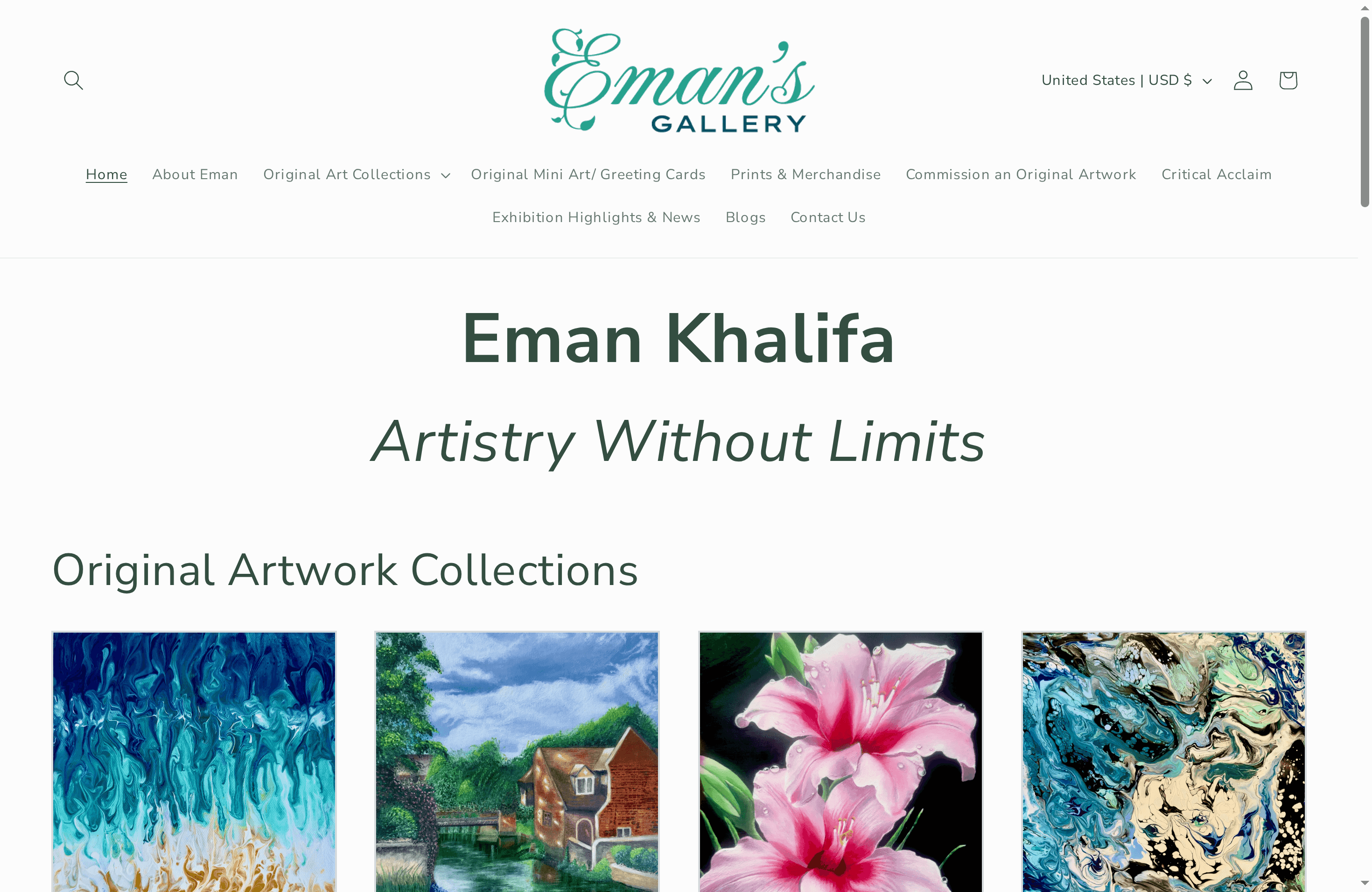
If a fluid, oceanic palette suits your space, Good Tidings is a large original built around exactly that movement and gold-blue depth. For a quieter, tonal room, Nocturned offers a moonlit scene with the muted atmosphere that works so well in formal living rooms. Prefer a print at a more accessible price point? Private Eye delivers a strong conceptual statement in museum-quality canvas. Eman’s Gallery ships worldwide with framing support available, and every original or print comes with clear documentation so you know exactly what’s arriving on your wall. Browse the full collection of originals and prints to find the piece your room has been missing, or reach out directly to start a custom commission.
Sources
FAQ
What Size Should Large Art Be for a Living Room?
Aim for artwork spanning about two thirds of the width of the furniture below it, or a large portion of the total wall width in open-plan spaces with no furniture reference point.
Should I Buy an Original Painting or a Print for a Large Wall?
Choose an original for a room’s defining focal wall where you want a one-of-a-kind piece; choose a museum-quality giclée print when you need large scale on a tighter budget or across multiple walls.
At What Height Should I Hang Large Wall Art?
Center the artwork at eye level, typically around standard standing eye height from the floor to the piece’s center, adjusting upward for double-height ceilings or stairwell walls where standing eye level isn’t the relevant reference.
How Long Does a Custom Large-Scale Commission Take?
A commissioned original painting from an artist like Eman Khalifa typically takes several weeks to a few months, depending on scale and current workload.
What Should I Ask a Seller Before Buying Large Art?
Confirm materials used, provenance or edition documentation, shipping and insurance terms, return policy for oversized pieces, and whether framing support is included.
Stay Connected
- ✨ Explore Eman Khalifa's original art, fine art prints and art-inspired merchandise.
- Follow Eman Khalifa's art journey on: Instagram @emans_gallery and Facebook
- Watch Eman Khalifa creating live art on: YouTube @emans_gallery
