


How to Hang Prints Without Frame: Creative Methods
TL;DR:
- Hanging prints without a frame relies on adhesives, clips, or rails suited to the print’s weight and wall surface. Proper placement at eye level and testing adhesives prevent wall damage and ensure preservation of valuable artwork.
Hanging prints without a frame is the practice of displaying artwork directly on a wall using adhesives, clips, rails, or mechanical systems instead of traditional framing. The method you choose depends on three factors: print weight, wall surface, and whether the print has collector or sentimental value. Interior design professionals recommend eye-level placement at 57–60 inches from the floor as the standard for visual balance. Emansgallery produces museum-quality canvas prints and fine art prints that work beautifully with frameless display, making this guide directly relevant to anyone building a personal art collection.
How to hang prints without frame: tools and materials you need
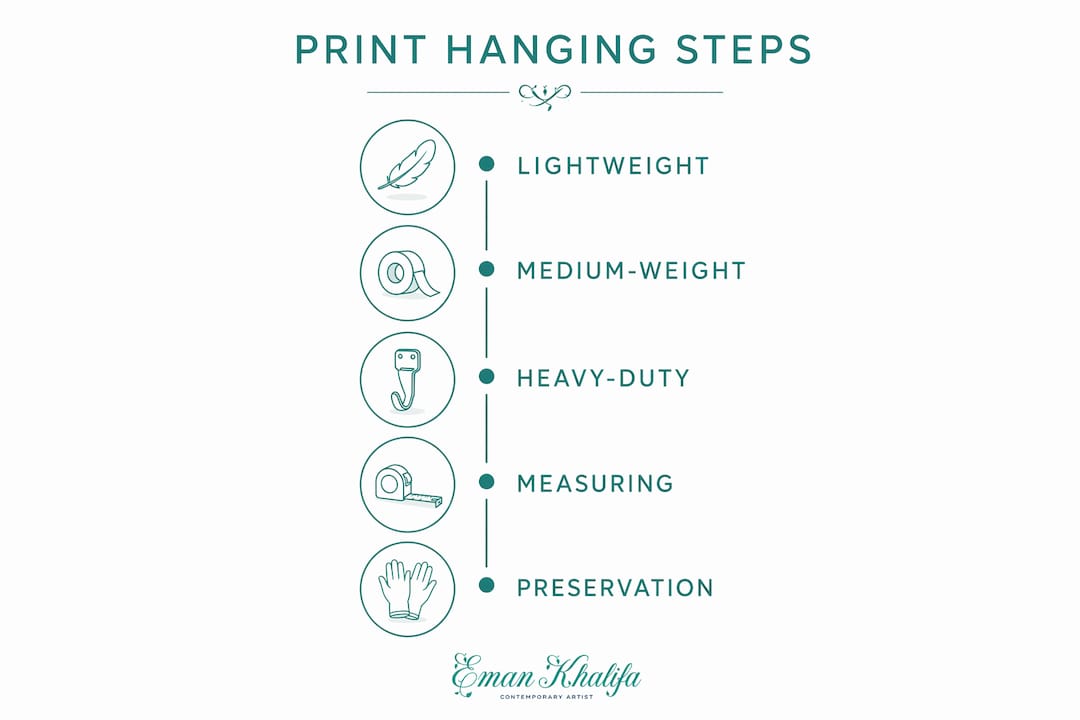
The right tool depends entirely on print weight and wall type. Grouping your options by hanging method prevents costly mistakes and wall damage.
Adhesive methods work for prints under 5 pounds. Removable adhesive strips like Command Strips grip smooth painted walls cleanly. Mounting putty handles small, lightweight prints on textured or uneven surfaces where strips lose adhesion. Both options leave minimal residue when removed correctly.
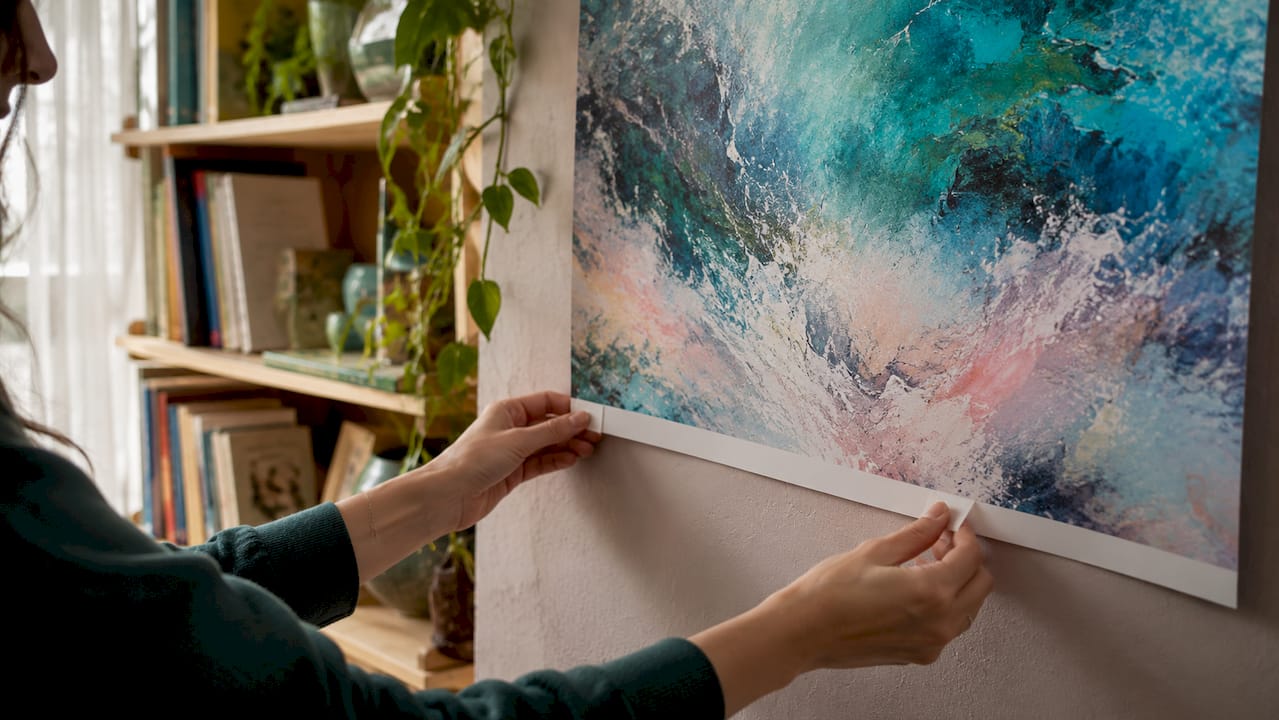
Mechanical methods suit medium-weight prints from 5 to 20 pounds. Wooden magnetic rails sandwich the top edge of a paper print between two magnetic bars, holding it flat without any adhesive touching the artwork. Binder clips attached to a dowel or wire system grip the print’s edge and suspend it cleanly. Wall anchors or picture hooks rated slightly above the print’s actual weight add security for drywall installations.
Structural methods apply to prints over 20 pounds, including large gallery-wrapped canvases. These require screws driven into wall studs or toggle bolts for hollow drywall. Never rely on adhesive alone for heavy pieces.
| Tool | Best for | Pros | Cons |
|---|---|---|---|
| Removable adhesive strips | Lightweight prints under 5 lbs | No wall damage, repositionable | Fails on textured walls |
| Mounting putty | Small prints on textured walls | Works on most surfaces | Not suitable for heavy prints |
| Wooden magnetic rails | Paper prints, medium weight | No adhesive on artwork | Requires two wall points |
| Binder clips on wire | Lightweight to medium prints | Industrial look, easy swap | Clips can crease thin paper |
| Wall anchors or hooks | Medium to heavy prints | High weight capacity | Leaves wall holes |
Pro Tip: Always run a test patch with your chosen adhesive on an inconspicuous section of the wall before committing. Wall texture, moisture, and paint type all affect adhesion strength.
Step-by-step techniques for displaying art without a frame
Choosing the right technique comes down to how permanent you want the display and how much the print is worth to you. Removable adhesive strips are the best starting point for temporary or lightweight displays, while magnetic poster hangers offer a cleaner, reusable solution for nicer prints.
Using removable adhesive strips and putty
- Clean the wall surface with a dry cloth to remove dust and grease.
- Press the adhesive strip firmly to the back corner of the print for at least 30 seconds.
- Hold the print against the wall and press for another 30 seconds.
- Wait one hour before releasing to allow full adhesion.
- For textured walls, use mounting putty pressed into a small ball at each corner instead.
Using binder clips and wire systems
- Attach two binder clips to the top edge of the print, spaced evenly.
- Thread a length of picture wire or twine through both clip handles.
- Install two small hooks or nails into the wall at the correct height.
- Hang the wire across both hooks and adjust until the print sits level.
Hanging gallery-wrapped canvas without a frame
Gallery-wrapped canvases extend the artwork around the edges of a wooden stretcher frame, creating a clean, modern look that needs no additional framing. The stretcher itself provides structural support. Most gallery-wrapped canvases include a hanging bracket or sawtooth hanger on the back, so installation requires only a single nail or hook.
Measuring and leveling correctly
Measure and mark both the print and the wall before making any holes or applying any adhesive. The center of the artwork should sit at 57–60 inches from the floor. That height aligns with average human eye level and is the standard used by professional galleries. When hanging above furniture, leave 6–8 inches of space between the top of the furniture and the bottom edge of the print.
| Method | Weight limit | Wall damage risk | Permanence |
|---|---|---|---|
| Adhesive strips | Under 5 lbs | Low | Temporary |
| Mounting putty | Under 2 lbs | Very low | Temporary |
| Binder clip and wire | Under 10 lbs | Low to medium | Semi-permanent |
| Magnetic wooden rail | Under 15 lbs | Low | Semi-permanent |
| Wall anchor and hook | Up to 50 lbs | Medium | Permanent |
Pro Tip: Use a small level app on your phone to check alignment before the adhesive sets. Correcting a crooked print after the adhesive cures often damages the wall.
How to preserve and protect prints when hanging without frames
Preservation is the most overlooked factor when people choose ways to hang artwork. The wrong adhesive can leave permanent residue on paper prints, and the damage is often irreversible.
Avoid letting adhesives contact the artwork directly for any print with collector or sentimental value. Mechanical solutions like wooden magnetic rails or clip systems hold the print by its edge, keeping the artwork surface completely untouched. This is the standard approach for archival-quality display.
Key preservation steps before hanging:
- Clean your hands before handling any print to prevent oil transfer.
- Wipe the wall surface dry before applying any adhesive or hardware.
- Check the print for existing creases or weak spots that could tear under tension.
- Store prints in a flat, dry location before hanging to prevent curling corners.
- Use acid-free tape or clips only if any material must contact the print’s surface.
Curling corners are a common problem with paper prints in humid environments. Pressing the print flat under a heavy book for 24 hours before hanging reduces curl significantly. For persistent curl, mechanical hanging systems that apply gentle downward tension along the bottom edge of the print keep it flat without any adhesive.
“Preserving the surface of a print is not just about aesthetics. It protects the artwork’s long-term value and ensures the colors remain accurate over time. A magnetic rail system is the single best investment for anyone displaying paper prints they care about.”
Pro Tip: Add a small, discrete adhesive dot at the bottom two corners of a print to prevent it from swinging or lifting away from the wall in air-conditioned rooms.
Creative and aesthetic ways to display unframed prints in home decor
Unframed prints displayed with intention look deliberate, not unfinished. A layered, relaxed approach to unframed art integrates naturally into modern interiors and signals confidence in the artwork itself.
Picture ledges are one of the most flexible options available. You can lean artwork on ledges and rotate prints seasonally without touching the wall at all. Layering prints of different sizes on a single ledge creates depth and visual interest. This method works especially well for art collectors who want to display multiple pieces from a collection like Emansgallery’s fine art prints without committing to permanent placement.
Creative display ideas worth trying:
- Washi tape borders: Apply decorative washi tape directly around the print’s edges to create a colorful, graphic border. The tape becomes part of the design and holds the print flat.
- Binder clip gallery wall: Hang a horizontal dowel from two hooks and attach multiple prints using matching binder clips. The industrial look suits loft-style and minimalist interiors.
- String and clip systems: Run a length of wire or twine between two wall hooks and use small wooden or metal clips to hang prints in a row. This method suits frequently changed displays like seasonal prints or a rotating art collection.
- Grouped gallery arrangements: Cluster three to five unframed prints of varying sizes on a single wall section. Keep consistent spacing of 2–3 inches between prints for a cohesive look.
For cultural or thematic displays, placement height and arrangement carry additional meaning. Centering the primary print at eye level and flanking it with smaller supporting prints creates a natural focal point.
Pro Tip: Photograph your wall before hanging anything. Use the photo as a planning canvas by sketching print positions over it. This prevents unnecessary holes and adhesive marks.
Prints displayed on art-styled ledges also allow you to incorporate objects like small sculptures or plants alongside the artwork, building a full vignette rather than a flat wall display.
Key Takeaways
Hanging prints without frames works best when you match the method to the print’s weight, value, and the wall surface it will occupy.
| Point | Details |
|---|---|
| Match method to weight | Use adhesive strips under 5 lbs, mechanical rails for 5–15 lbs, and wall anchors above that. |
| Protect valuable prints | Never let adhesives touch paper prints with collector value; use magnetic rails or clip systems instead. |
| Center at eye level | Place the artwork center at 57–60 inches from the floor for professional visual balance. |
| Test adhesives first | Always test adhesive products on a hidden wall section before applying near artwork. |
| Ledges allow flexibility | Picture ledges enable damage-free rotation and layering without permanent wall hardware. |
Why I think most people overcomplicate frameless display
Most guides treat frameless hanging as a budget compromise. I disagree with that framing entirely. Some of the most striking interiors I have seen use unframed prints precisely because the absence of a frame forces the artwork to carry the room on its own. That is a high bar, and it means the print itself has to be worth looking at.
The mistake I see most often is choosing the hanging method before choosing the print. People buy adhesive strips at the hardware store, then pick a print to fit the method. It works in reverse. Start with the print, understand its weight and surface, and then select the method that protects it best. A canvas print from Emansgallery’s collection, for example, arrives gallery-wrapped and ready to hang with a single hook. No adhesive, no clips, no guesswork.
I also think the fear of wall damage stops people from experimenting. Removable adhesive strips, when used correctly on smooth painted walls, leave almost no trace. The real risk is using the wrong product for the surface, not the act of hanging itself. Test first, hang confidently.
The prints worth displaying without frames are the ones that can hold attention without decoration around them. That is the real filter.
— Eman
Emansgallery prints designed for frameless display
Emansgallery produces canvas prints and fine art prints built to display cleanly without traditional framing. Every canvas print arrives gallery-wrapped on a wooden stretcher, ready to hang directly from a single hook.

The collection includes abstract, geometric, landscape, and seascape works by artist Eman Khalifa, all printed at museum quality. The Fragments of Memory canvas print and the City in Grids canvas print both feature clean edges that suit frameless walls in modern interiors. For original paintings that arrive ready to display, the Warm Embrace landscape ships worldwide from the UK, USA, Canada, and Australia. Browse the full wall art prints collection to find pieces suited to your space and display method.
FAQ
What is the easiest way to hang a print without a frame?
Removable adhesive strips are the easiest method for lightweight prints under 5 pounds on smooth painted walls. They require no tools, leave minimal wall damage, and hold securely when applied correctly.
How do I hang a print without damaging the wall?
Use removable adhesive strips or mounting putty for lightweight prints, and picture ledges for prints you want to rotate. Always test adhesives on a hidden wall section first to check for paint compatibility.
Can I hang a heavy print without a frame and without nails?
Prints over 5 pounds generally require wall hardware. Heavy prints above 20 pounds need screws driven into studs or toggle bolts. Adhesive products alone are not rated for that weight and create a fall risk.
How high should I hang a print without a frame?
The center of the print should sit at 57–60 inches from the floor. That height aligns with average eye level and is the standard used by professional interior designers and galleries.
How do I keep paper prints from curling when hung without a frame?
Press the print flat under a heavy book for 24 hours before hanging. For persistent curl, use a wooden magnetic rail system that applies gentle downward tension along the bottom edge, keeping the print flat without adhesive contact.
Stay Connected
- ✨ Explore Eman Khalifa's original art, fine art prints and art-inspired merchandise.
- Follow Eman Khalifa's art journey on: Instagram @emans_gallery and Facebook
- Watch Eman Khalifa creating live art on: YouTube @emans_gallery
