


How to Customize Canvas Pictures for Home Decor and Gifts
TL;DR:
- Choosing high-resolution images and reviewing digital proofs ensures quality in customized canvas prints.
- Focusing on meaningful, durable images creates artwork that lasts and retains emotional significance.
Customizing canvas pictures is the process of creating personalized wall art by selecting images, design features, and finishes that reflect your taste and purpose. The result is a one-of-a-kind piece that carries real meaning, whether it hangs in your living room or arrives as a gift. Getting it right requires three things: a strong image, the right design choices, and a clear understanding of the printing process. This guide covers all three, from choosing canvas sizes and finishes to avoiding the most common mistakes buyers make before they hit “order.”
What design options can you choose when you customize canvas pictures?
The first decision is size and format. Canvas sizes range from small accent pieces to large statement prints, with portrait, landscape, and square formats available to suit different wall spaces. Portrait orientation works well for hallways and narrow walls. Landscape suits wide living room walls or above a sofa. Square formats are popular for gallery wall arrangements.
Beyond size, you control the visual elements that define the piece.
- Image source: Personal photos, original artwork, digital illustrations, or licensed images
- Color adjustments: Saturation, contrast, and tone corrections applied before printing
- Text overlays: Names, dates, quotes, or coordinates added directly to the design
- Border style: Borderless bleed, white border, or black border framing the image
- Gallery wrap: The image wraps around the frame edges for a clean, frameless look
- Framing options: Floating frames or traditional frames added around the finished canvas
Finish type is one of the most overlooked choices. Matte finishes reduce glare and suit rooms with strong natural light. Glossy finishes intensify color and work well in dimmer spaces or for high-contrast images. Satin sits between the two and is a reliable default for most photos.
Material quality matters as much as design. Archival pigment inks and gallery canvas preserve colors and resist fading over time. Museum-grade materials are the standard for any print intended to last decades. For buyers who also care about environmental impact, eco-friendly HP Latex printing produces vibrant colors without solvent-based chemicals.
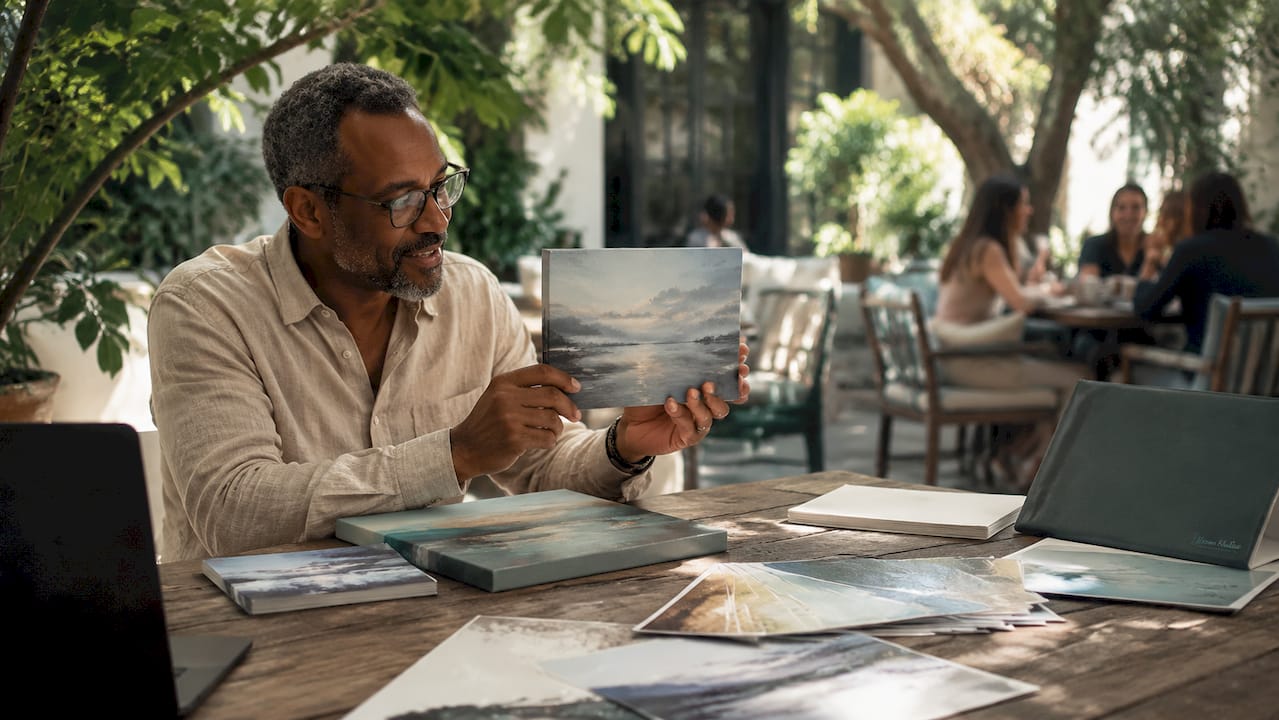
Inspiration for your image or theme can come from family portraits, travel photography, abstract digital art, or nature scenes. Floral and seascape themes remain consistently popular for home decor. Abstract designs work especially well in modern or minimalist interiors. For gifts, meaningful personal photos carry the most emotional weight.
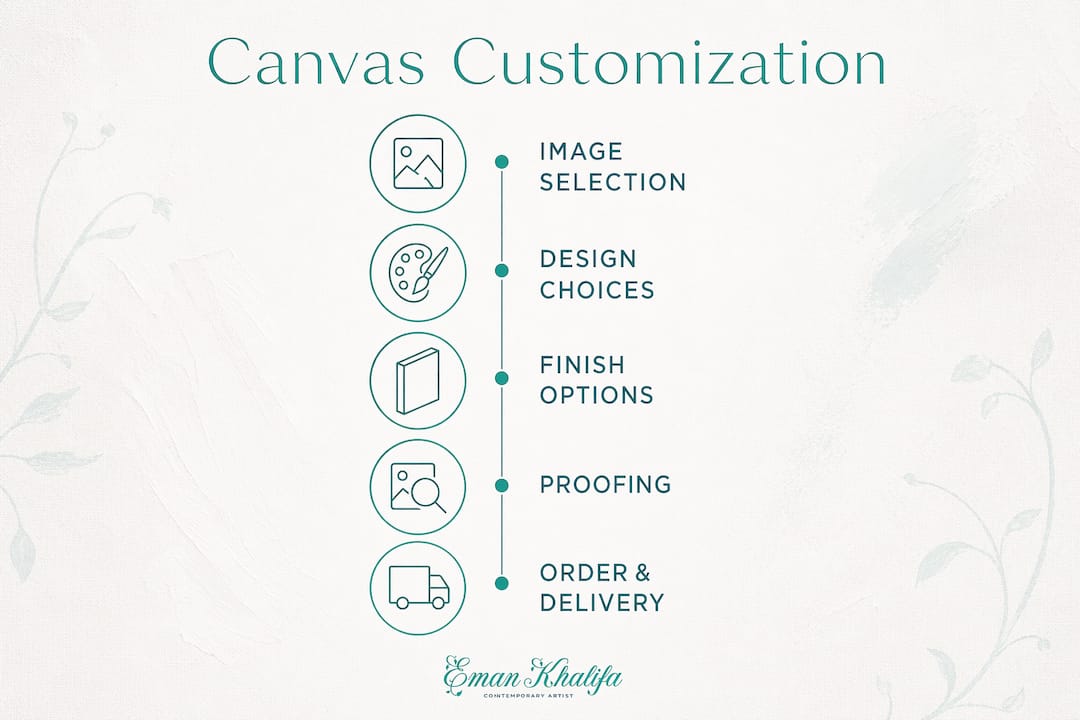
Pro Tip: Before finalizing your design, hold a printed color swatch or sample next to your wall to check how the tones interact with your room’s lighting.
How to prepare images for high-quality personalized canvas art
Image resolution is the single biggest factor in print quality. Professional printers require a minimum of 300 DPI (dots per inch) at the intended print size. An image that looks sharp on a phone screen can print blurry at 60 x 40 cm if the original file lacks sufficient resolution. Always start with the highest-resolution version of your photo.
Follow these steps to prepare your image correctly:
- Check resolution first. Open the image in any photo editor and confirm it meets 300 DPI at your chosen canvas size. If it falls short, choose a smaller canvas size rather than stretching a low-resolution file.
- Choose the right file format. Accepted formats include JPEG, PNG, TIFF, PDF, and PSD, but JPEG and PNG are the most widely used for photo canvas prints. TIFF preserves the most detail for large-format prints.
- Correct color before uploading. Adjust brightness, contrast, and white balance in a photo editor like Adobe Lightroom or Photoshop. Screens display colors differently than printers, so slight adjustments prevent unexpected color shifts.
- Crop to your canvas ratio. A 60 x 40 cm canvas uses a 3:2 ratio. Crop your image to match before uploading to avoid the printer auto-cropping important parts of your composition.
- Request a digital proof. Reputable printers provide digital proofs within 1–2 days so you can review the layout and colors before the canvas goes to print.
Pro Tip: If you are printing a portrait or a photo with a specific focal point, mark the center of interest clearly when submitting your file. Some printers allow you to annotate the proof to flag areas that need extra attention.
For color-critical prints, ordering a physical sample is the most reliable check. A panel sample on your chosen material lets you verify color accuracy and texture before committing to a full-size order. Many professional printers offer this for a small fee, often refunded when you complete the full order.
What are the typical steps in ordering your custom canvas print?
The ordering process for personalized canvas art follows a consistent sequence across most professional providers.
- Select your canvas size and format. Choose portrait, landscape, or square, and pick a size that fits your wall space.
- Upload your image. Use the highest-resolution file available. Most platforms flag low-resolution uploads automatically.
- Adjust your design. Apply filters, add text, set border style, and choose your finish type.
- Review the digital proof. Approve or request changes. Unlimited free revisions before printing are standard with quality providers. Use this step to check cropping, text placement, and color.
- Place your order. Confirm size, finish, and framing options, then complete payment.
- Receive and inspect. Check the canvas against your approved proof when it arrives.
A few practical points on ordering for gifts:
- Order at least two weeks before the occasion to allow for proof revisions and shipping time
- Ask whether the provider offers gift wrapping or ships directly to the recipient
- Properly stretched canvas on hardwood frames resists warping during shipping, so check that the provider uses solid frame construction
- For gifts, consider adding a short personal message card rather than printing text directly on the canvas, which keeps the design cleaner
Pro Tip: If you are ordering a canvas as a surprise gift, request that the provider ships in plain or neutral packaging without branded invoices inside the box.
Turnaround times vary. Standard orders typically ship within 5–7 business days after proof approval. Rush options are available from many providers but carry a premium. Factor proof revision time into your timeline, especially if you expect to request changes.
What common pitfalls should you avoid when customizing canvas pictures?
Most dissatisfaction with custom canvas art traces back to a small set of avoidable mistakes.
- Low-resolution images. Uploading a compressed or small file produces pixelated prints. Always verify resolution at the intended print size before submitting.
- Skipping the proof. Approving a print without reviewing the digital proof is the fastest way to receive a canvas that does not match your expectations. Digital proofs and unlimited revisions exist specifically to prevent this.
- Overcrowding the design. Too much text or conflicting visual elements reduce the overall impact of the piece. Simplicity and visual balance produce stronger results.
- Ignoring color calibration. Colors on your screen may not match the printed output. Adjust your image for print, not for screen display.
- Choosing the wrong size for the space. A canvas that is too small for a large wall looks lost. Measure your wall and use painter’s tape to mark the intended canvas dimensions before ordering.
Ordering a physical panel sample before committing to a full-size print is the single most effective way to avoid color and texture surprises. It costs little and eliminates the most common source of disappointment in custom canvas orders.
Pro Tip: Take a photo of your wall with the painter’s tape outline in place, then compare it to your digital proof. This gives you a realistic preview of how the finished canvas will look in the actual space.
Avoiding these pitfalls does not require technical expertise. It requires slowing down at each decision point and using the tools providers already offer, especially proofs and samples.
Key takeaways
Customizing canvas pictures produces the best results when you combine a high-resolution image, deliberate design choices, and a thorough proof review before printing.
| Point | Details |
|---|---|
| Resolution is non-negotiable | Use images at 300 DPI or higher at your chosen print size to avoid pixelation. |
| Finish type affects the final look | Choose matte for bright rooms, glossy for dim spaces, and satin as a reliable default. |
| Proofs prevent costly mistakes | Always review and approve a digital proof before the canvas goes to print. |
| Size must match the wall | Measure your wall and mock up the dimensions with tape before placing your order. |
| Simplicity strengthens the design | Avoid overcrowding with text or competing elements; one strong focal point works best. |
Why I think most people underestimate the image selection step
Most guides on how to customize canvas pictures spend the bulk of their advice on printing specs and finish types. Those details matter. But in my experience as an artist, the image itself is where the real decision happens, and most buyers treat it as an afterthought.
The consumer shift toward human-made art over AI-generated pieces reflects something real: people want objects that carry a story. A canvas print of a meaningful photograph, a hand-painted portrait, or an original artwork communicates something that a generic stock image cannot. When I create original paintings at Emansgallery, the choices I make about color, composition, and subject are the same choices you face when selecting an image for your custom canvas.
My honest advice is to spend more time on image selection than on any other part of the process. Choose an image that will still feel meaningful in ten years. A well-chosen image printed on a standard matte canvas will outlast a mediocre image printed on the finest archival materials. The personalized art prints guide at Emansgallery covers this in more depth if you want a practical framework for making that choice.
The finish, the frame, and the size are all refinements. The image is the foundation. Get that right first, and the rest of the process becomes straightforward.
— Eman
Original canvas art and prints from Emansgallery
Emansgallery offers original handmade paintings and museum-quality canvas prints by artist Eman Khalifa, spanning abstract, geometric, floral, landscape, and seascape styles. Each piece ships worldwide from fulfillment centers in the UK, USA, Canada, Australia, and across Europe and the UAE.
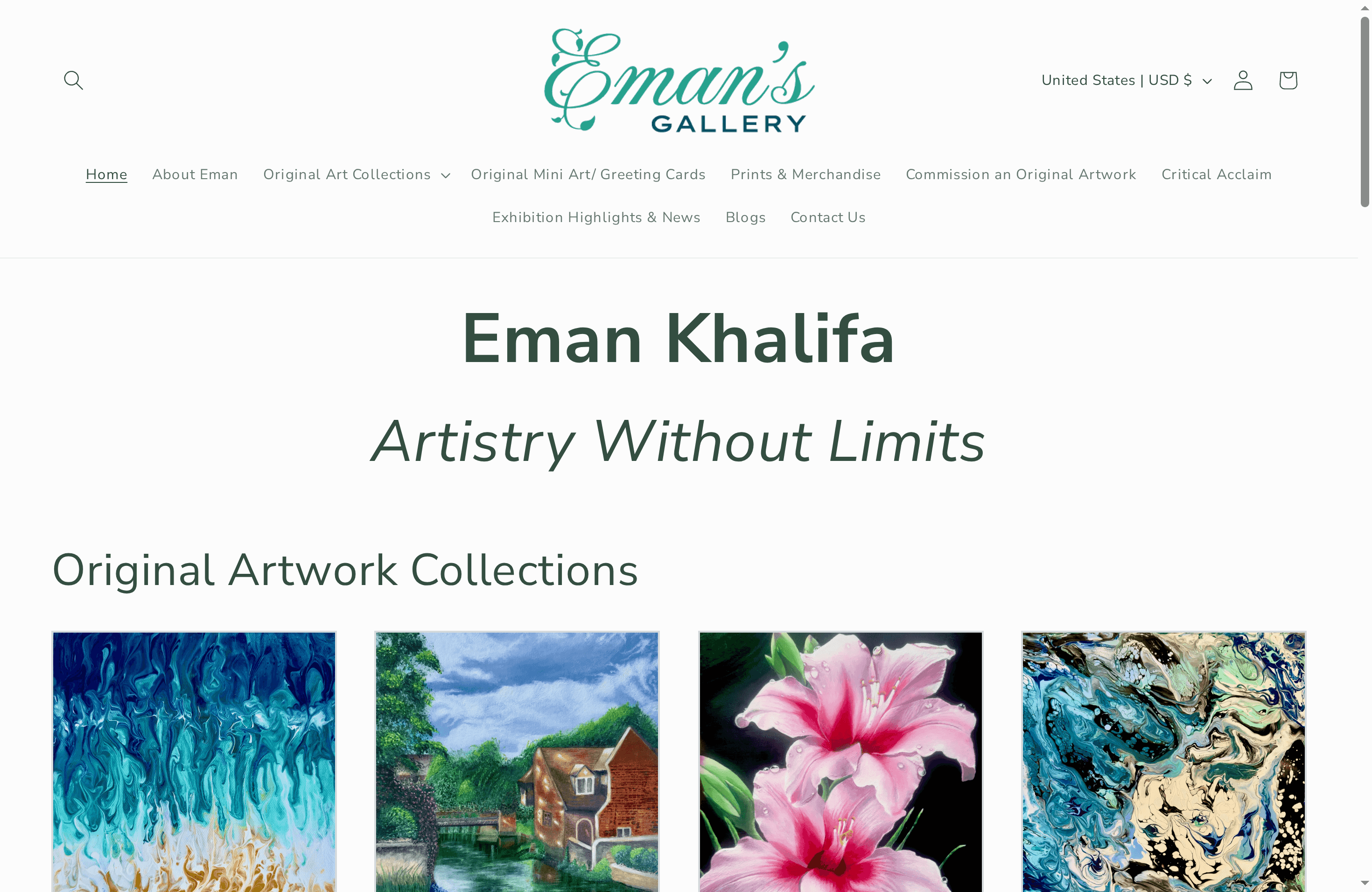
For buyers who want a canvas that goes beyond a personal photo, Emansgallery’s original works offer a different kind of personalization: art chosen for its meaning, mood, and fit with a specific space. The abstract ink splash canvas and geometric urban prints are strong choices for modern interiors. For gift buyers, Emansgallery also carries art-inspired gifts including merchandise and original works that ship ready to give.
FAQ
What resolution do I need to customize canvas pictures?
The standard requirement is 300 DPI at the intended print size. Images below this threshold produce visible pixelation on the finished canvas.
What file formats do canvas printers accept?
Most professional printers accept JPEG, PNG, TIFF, PDF, and PSD files. JPEG and PNG are the most widely used formats for photo canvas prints.
How do I verify colors before my canvas prints?
Request a digital proof from your printer and, for color-critical orders, order a physical panel sample on your chosen material to check color accuracy and texture before full production.
What canvas size works best for a living room wall?
Landscape formats in the 60 x 40 cm to 100 x 70 cm range suit most living room walls above a sofa. Measure your wall and mark the dimensions with painter’s tape before ordering.
Can I customize canvas pictures as a gift?
Yes. Order at least two weeks before the occasion to allow time for proof revisions and shipping. Ask your provider about plain packaging and direct-to-recipient shipping options.
Stay Connected
- ✨ Explore Eman Khalifa's original art, fine art prints and art-inspired merchandise.
- Follow Eman Khalifa's art journey on: Instagram @emans_gallery and Facebook
- Watch Eman Khalifa creating live art on: YouTube @emans_gallery
