


Guest Room Wall Decor: Style, Scale, and Sourcing
A single well-scaled, calming artwork centered above the bed plus one complementary piece is an effective way to make a guest room feel intentional and welcoming. Guest room wall decor works best when it communicates care without demanding attention.
What to put on guest room walls:
- One focal artwork centered above the headboard, sized at roughly 60–75% of the headboard’s width
- A calm subject: serene landscape, botanical, or abstract in muted tones
- One smaller companion piece or mirror on an adjacent wall
- A neutral, welcoming palette that coordinates with bedding and wall color
- No personal memorabilia or family photos — guests need neutral, restful imagery
- Soft layered lighting alongside the artwork to complete the hospitality feel
- For a ready-made option: an original painting or fine art print from Emansgallery
Key Takeaways
| Point | Details |
|---|---|
| Size to the headboard | Target art width at 60–75% of headboard width. |
| Choose a calm subject | Landscapes, botanicals, and muted abstracts reduce cognitive load and help guests feel at ease. |
| Hang at the right height | Center the artwork 8–10 inches above the headboard, or 57–60 inches from floor to artwork midpoint. |
| Layer lighting alongside art | A dimmable bedside lamp or picture light at 2700–3000K completes the hospitality effect. |
| Emansgallery for sourcing | Originals and museum-quality canvas prints by Eman Khalifa ship to the US, sized for above-bed placement. |
Table of Contents
- What style of guest room wall decor actually works?
- How do you size and place art in a guest room?
- Which materials and formats suit guest room walls?
- How does lighting turn wall art into a hospitality experience?
- How do you hang guest room art safely and cleanly?
- Where should you buy guest room wall art?
- What are the current trends in guest room wall decor?
- Quick checklist: choosing, hanging, and finishing guest room wall decor
- Why the guest room deserves one piece of real art
- Emansgallery originals and prints for guest rooms
- Sources
- FAQ
What style of guest room wall decor actually works?
Style choice shapes how a guest feels the moment they walk in. The goal is calm and welcoming, not personal or stimulating. These styles consistently deliver that result:
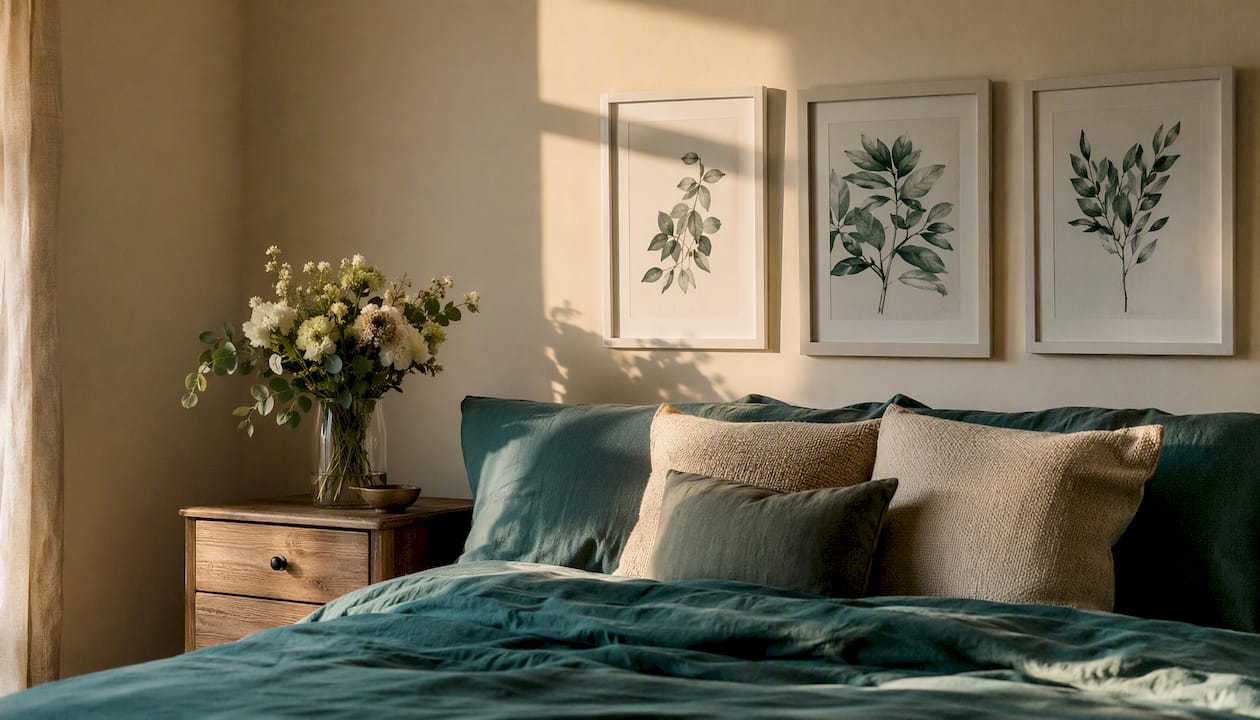
- Botanicals. Leaf prints, pressed-flower compositions, and soft floral studies read as restful and universally appealing. Serene landscapes, botanicals, and nature-inspired art reduce cognitive load and help guests relax.
- Landscapes. A horizon line, a quiet forest, or a coastal view gives the eye somewhere to rest. Restorative without being specific to anyone’s taste.
- Abstract in muted palettes. Soft blues, warm grays, sage, and sand-toned abstracts hold the room without directing an emotional response. Avoid high-contrast or aggressive compositions.
- Coastal and seascape. Ocean-toned work in fluid or painterly styles creates a calm, spa-like atmosphere. Works across most room sizes.
- Minimalist. One clean-lined piece with generous negative space suits smaller rooms and modern architecture. Less is more when the room itself is compact.
- Farmhouse. Soft typography, dried botanicals, and neutral-toned still-life prints suit cottage-style or traditional guest rooms.
- Gallery walls. Appropriate in larger guest rooms with high ceilings. Use a consistent frame finish and a single color family across all pieces to avoid visual noise.
A single higher-quality print with thoughtful framing reads as more intentional than multiple mismatched small pieces. Architectural Digest notes that accent walls and monochromatic approaches work well when balanced with neutral art and layered textiles. For smaller rooms, one statement piece above the bed is almost always the stronger choice.
Pro Tip: Match frame finish to one existing metal tone in the room — door hardware, lamp base, or mirror frame — for a cohesive look without effort.
How do you size and place art in a guest room?
Scale is where most guest-room art decisions go wrong. Art that is too small floats; art that is too large overwhelms. The standard professional rule: artwork above the bed should occupy roughly 60–75% of the headboard width to feel properly anchored.
Recommended artwork sizes by bed:
| Bed Size | Headboard Width | Target Art Width (60–75%) | Suggested Art Size |
|---|---|---|---|
| Twin | 38 in | 23 in | 16×20 in |
| Full | 54 | 32 in | 24×30 in |
| Queen | 60 in | 36 in | 24×36 in |
| King | 76 in | 46 in | 36×48 in |
Height and spacing guidelines:
- Center the artwork 8–10 inches above the top of the headboard
- If hanging without a headboard reference, center the artwork 57–60 inches from the floor to the artwork’s midpoint
- For a two-piece arrangement, keep the gap between pieces to 2–3 inches and treat them as one visual unit
- Gallery walls: map the arrangement on paper first, keep outer edges within the headboard width, and use a consistent 2–3 inch gap between frames
Pro Tip: Cut paper templates to your target art size and tape them to the wall before buying. Seeing the actual footprint prevents the most common sizing mistake.
For detailed display techniques, wall art display ideas cover arrangement methods that translate directly to guest-room layouts.
Which materials and formats suit guest room walls?
Format affects both the visual result and the practical reality of installation, maintenance, and cost.
| Format | Visual Effect | Durability | Best For |
|---|---|---|---|
| Stretched canvas | Warm, painterly, no glare | High | Statement pieces, originals |
| Giclée / framed print | Clean, gallery-quality | High with UV glass | Budget-conscious buyers |
| Framed paper print | Crisp, versatile | Moderate | Rentals, frequent swaps |
| Metal print | Modern, high-contrast | Very high | Contemporary schemes |
| Textile / tapestry | Soft, textural, sound-absorbing | Moderate | Boho, farmhouse, rentals |
| Mirror | Reflects light, adds depth | High | Small rooms, layering |
Maintenance and durability notes:
- Avoid hanging paper prints or textiles on walls that receive direct afternoon sun; UV exposure fades pigments over time
- Durable, washable paint finishes are recommended for guest-room walls that see frequent use — the same logic applies to framing: choose UV-protective glass for any framed piece near a window
- Dust canvas and metal prints with a dry microfiber cloth; avoid moisture near paper-backed works
- For rental properties or rooms you may redecorate: lightweight framed prints, textile hangings, and removable Command strips keep options open
Budget tiers: Framed paper prints typically start under $50. Museum-quality giclée canvas prints range from roughly $80 to several hundred dollars depending on size. Original paintings vary widely by artist and scale, but a single original in the $300–$800 range from an emerging artist often delivers more visual impact than a wall of inexpensive mass-produced prints.
A guide to choosing wall prints that last covers framing materials and print finishes in more detail.
How does lighting turn wall art into a hospitality experience?
Art alone does not create a boutique-guest feel. Design professionals recommend hospitality layering — combining artwork with layered lighting, crisp linens, and textures — to produce the kind of warmth guests associate with a considered hotel room.
The sequence is straightforward: start with the artwork as the visual anchor, then build light around it.
- Bedside sconces or dimmable table lamps at roughly 24–28 inches above the mattress surface give guests reading light and ambient warmth simultaneously
- Picture lights mounted directly above or on the frame draw attention to the artwork and add a gallery-quality finish; low-wattage warm-white LEDs work best
- Mirrors placed on an adjacent or opposite wall bounce natural and artificial light, making smaller guest rooms feel larger and brighter
- Warm color temperature (2700–3000K) in all light sources keeps the room feeling restful rather than clinical
Artwork choice reinforces this. Calming palettes — soft blues, warm neutrals, sage — absorb and reflect warm light well. High-contrast or very dark works can feel heavy under low ambient light. Studio McGee notes that practical hotel-style touches — a mirror, accessible storage, and bedside extras like a water carafe — complete the effect that wall decor starts.
Pro Tip: A single picture light above the headboard artwork costs less than $60 at most home stores and immediately signals “this room was designed, not assembled.”
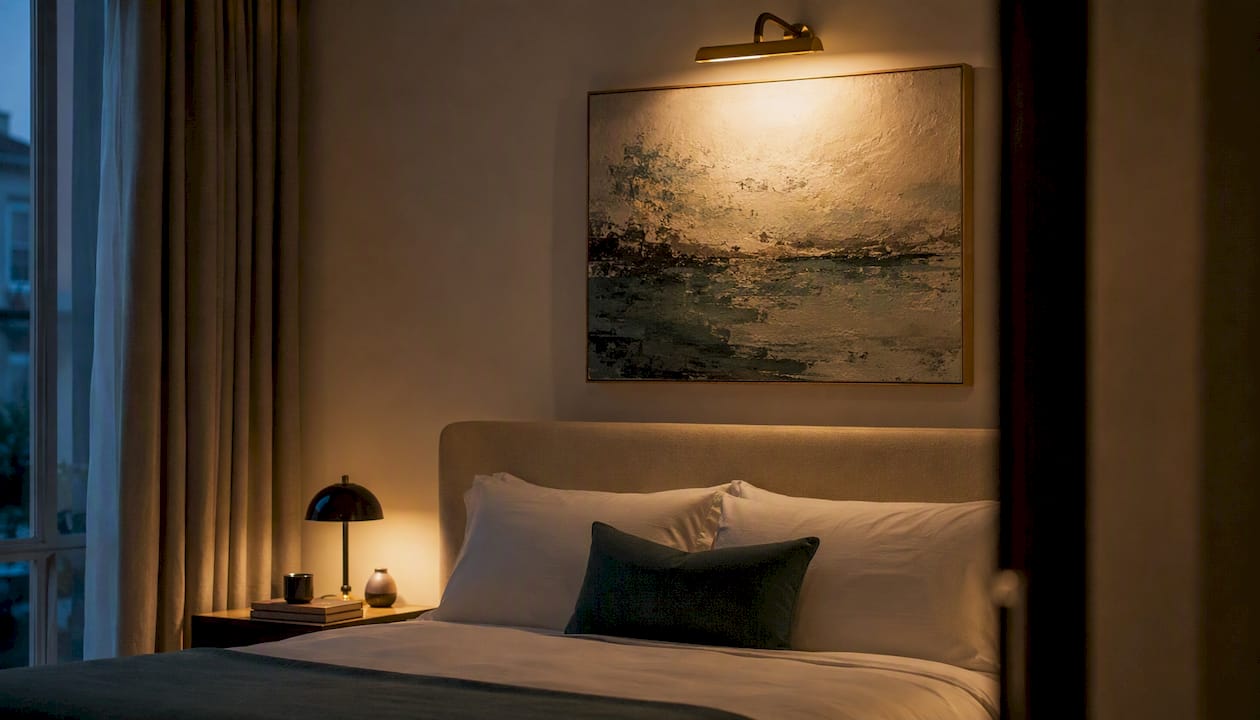
For color coordination between art and wall paint, wall art color tips for luxury interiors offers specific palette pairings.
How do you hang guest room art safely and cleanly?
A clean installation protects both the wall and the artwork. Follow this sequence:
- Measure the wall space and confirm your target art size against the headboard-width rule above
- Mark the hanging point in pencil — use a level to confirm horizontal alignment before committing
-
Choose hardware based on wall type and artwork weight:
- Drywall: standard picture hooks hold up to 20 lbs; for heavier pieces, use drywall anchors or locate a stud
- Plaster walls: use molly bolts or toggle anchors rated for the piece’s weight
- Picture rails (common in older homes): use rail hooks and adjustable wire — no wall damage at all
- Hang and level — a small torpedo level takes 10 seconds and prevents the most common finishing mistake
- Secure large or heavy pieces with two hanging points to prevent tilting
Rental-friendly alternatives:
- Command strips (large picture-hanging strips) hold up to 16 lbs per pair on smooth painted drywall — check the weight rating before use
- Lean-and-layer: prop a large framed canvas against the wall on a low shelf or dresser for a relaxed, no-damage display
- Removable adhesive hooks work for lightweight textile hangings and small framed prints
Safety notes:
- Never hang a piece heavier than 5 lbs with a single small nail on drywall without an anchor
- Keep art away from direct humidity sources (humidifiers, exterior walls in cold climates) to prevent warping
- For originals and high-value prints, avoid south- or west-facing walls with unfiltered afternoon sun
Pro Tip: The “paper bag trick”: trace the artwork’s hanging hardware onto a paper bag, cut it out, and tape it to the wall to mark exact hook positions before drilling.
Where should you buy guest room wall art?
Sourcing channel determines quality, price, and how personal the result feels. Each option has a clear use case:
- Local artists and commissions: highest originality, supports independent makers, longer lead time. Best when you want something specific to the room’s palette or scale.
- Fine-art print marketplaces: wide selection, fast shipping, moderate cost. Quality varies significantly — check print method (giclée vs. inkjet) and paper weight before ordering.
- Big-box retailers: lowest cost, fastest availability, lowest visual impact. Suitable for temporary or rental setups.
- Curated galleries (online or physical): consistent quality, vetted artists, often includes originals and museum-quality prints. Best for a guest room that needs to feel considered rather than assembled.
Print vs. original: A print is the right choice when budget is the primary constraint or when you want multiple rooms to share a cohesive aesthetic. An original is worth the investment when you want the guest room to have a singular, unmistakable presence — and when you want the artwork to appreciate rather than depreciate.
Shopping checklist before you buy:
- Confirm the artwork size against your headboard-width calculation
- Check whether the piece arrives framed or unframed, and factor in framing cost
- Review the return policy — especially for large or fragile pieces shipped across the country
- Confirm shipping timeline if you have a guest arriving on a fixed date
Emansgallery offers original handmade paintings and museum-quality canvas prints by London-based artist Eman Khalifa — including seascapes, abstracts, botanicals, and landscapes sized for above-bed placement. Each piece ships ready to hang, and commissions are available for buyers who need a specific palette or scale. For guest rooms that need a calm, considered focal piece, the gallery’s wall art prints and originals are a direct sourcing option with worldwide shipping.
For further guidance on selecting prints for intimate spaces, best wall prints for personal spaces covers finish, framing, and scale in detail.
What are the current trends in guest room wall decor?
The dominant direction in 2026 is restrained and tactile. Guests respond to rooms that feel considered, not curated-for-Instagram.
- Muted botanicals: Sage, dusty rose, and warm ochre botanical prints in simple frames. Widely used because they read as calm across age groups and design styles.
- Calm abstracts with hand-painted texture: Works where brushstroke and surface texture are visible — oil or acrylic on canvas — add warmth that digital prints cannot replicate.
- Matte gold and natural oak frames: Both finishes sit quietly against most wall colors. Matte gold adds warmth; natural oak reads as relaxed and contemporary.
- Accent walls: A single painted or wallpapered wall behind the bed, paired with neutral art, is a high-impact move that Architectural Digest identifies as effective when balanced with layered textiles.
- Tactile textile accents: Woven wall hangings, goatskin hide accents, and natural-fiber pieces add dimension alongside framed art.
Seasonal swaps without replacing core art: Rotate one small print on a side wall between seasons. Switch throw textiles — a linen duvet cover in summer, a heavier knit in winter — and the room reads as refreshed without touching the main artwork. Benjamin Moore’s guidance on neutral palettes supports this: a neutral wall and bedding palette lets accent pieces change without the room ever feeling inconsistent.
The most durable guest-room art choices are timeless in subject (nature, abstraction, quiet still life) and current only in finish and frame. Trend adoption works best at the accessory level, not the focal-piece level.
Quick checklist: choosing, hanging, and finishing guest room wall decor
Step-by-step:
- Measure the headboard width and calculate your target art size (60–75% of that width)
- Choose a subject: landscape, botanical, abstract, or seascape in a calm palette
- Confirm the format: original, canvas print, or framed giclée
- Select hanging hardware based on wall type and artwork weight
- Mark, level, and hang the focal piece 8–10 inches above the headboard
- Add one complementary piece or mirror on an adjacent wall
- Layer bedside lighting: dimmable lamp or sconce at 24–28 inches above mattress height
- Add one soft textile accent (throw, cushion) that picks up a color from the artwork
Two-minute compatibility checks:
- Does the art’s dominant color appear somewhere else in the room (bedding, rug, lamp base)?
- Is the frame finish consistent with at least one other metal or wood tone in the room?
- Does the subject feel neutral and welcoming to someone who has never been in the room before?
If buying online or collecting in person:
- Measure the artwork’s shipping dimensions before ordering — oversized pieces may require freight delivery
- Keep original packaging until the piece is hung and confirmed undamaged
- For framed works, check corner protectors and glass before signing for delivery
For a broader styling framework, how to style wall prints with intention covers arrangement and finishing in more detail.
Why the guest room deserves one piece of real art
Most guest rooms get whatever is left over after the rest of the house is decorated. A spare print from a previous apartment, a calendar photo in a clip frame, a mirror that was on sale. Guests notice. Not consciously — but a room assembled from leftovers reads differently from a room where one decision was made with them in mind.
Environmental psychology research shows that intentional art increases perceived warmth, safety, and belonging. One well-chosen piece signals that someone thought about the person sleeping in that room. That is the entire point of hospitality.
The instinct to fill every wall, or to use whatever is available, works against this. A single original or museum-quality print, properly sized and hung, does more for a guest’s experience than four small prints arranged without a clear logic. The frame matters too: natural oak and matte finishes support the artwork without competing with it.
What Emansgallery selects for guest-room placement tends toward work that holds the room quietly — seascapes with movement and depth, abstracts where color does the emotional work, botanicals with enough detail to reward a second look. The scale is chosen to anchor the bed, not to fill the wall. The palette is chosen to complement neutral bedding, not to match it exactly.
A guest room with one considered piece of art is a guest room that communicates welcome.
Emansgallery originals and prints for guest rooms
Emansgallery offers original handmade paintings and museum-quality canvas prints by Eman Khalifa, sized and finished for above-bed placement in guest rooms. Two strong options for a calming focal piece: the Good Tidings original seascape in fluid blue and gold, and the Fragments of Memory canvas print in muted abstract tones suited to smaller rooms. Both ship ready to hang.
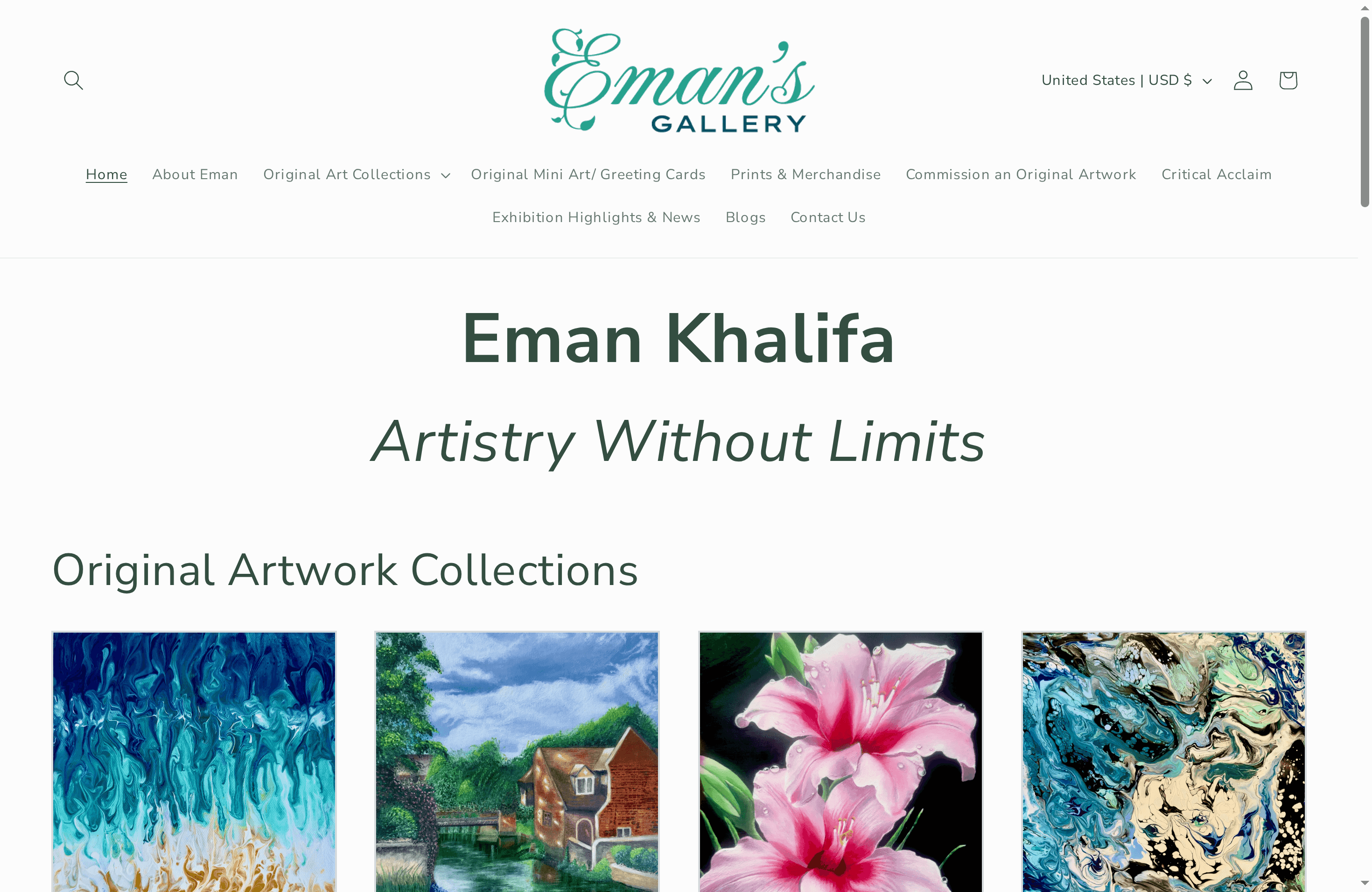
Commissions are available for buyers who need a specific palette, scale, or subject. Framing options, print sizes, and shipping to the US are listed on each product page. Browse the full collection or request a commission at Emansgallery.
Sources
- Experts Say These 39 Guest Room Ideas Are Warm Welcomes | Architectural Digest
- How to Create a Welcoming Guest Bedroom — Studio McGee
- 15 Guest Bedroom Ideas for a Cozy and Inviting Space | Benjamin Moore
- 18 Guest Room Decorating Ideas for a Cozy Stay
FAQ
How do you decorate walls in a guest room?
Layer bedside lighting and neutral textiles to complete the effect.
What are good wall art ideas for a guest room?
Serene landscapes, botanical prints, and muted abstract paintings are consistently reliable choices. They reduce cognitive load and feel welcoming to guests regardless of personal taste.
What decor ideas work best for a guest room overall?
Combine one focal artwork with layered lighting, crisp neutral bedding, and one or two practical extras — a mirror, a bedside lamp, accessible storage. Design professionals call this hospitality layering, and it converts a spare room into a considered space.
What is the latest trend in wall decor for 2026?
Muted botanicals, calm abstracts with visible hand-painted texture, and matte gold or natural oak frames are the dominant directions. Tactile textile accents alongside framed art add dimension without visual noise.
Where can you buy quality wall art for a guest bedroom?
Curated online galleries offer the most consistent quality. Emansgallery carries original paintings and museum-quality canvas prints by Eman Khalifa — including seascapes, abstracts, and botanicals — with US shipping and commission options.
Stay Connected
- ✨ Explore Eman Khalifa's original art, fine art prints and art-inspired merchandise.
- Follow Eman Khalifa's art journey on: Instagram @emans_gallery and Facebook
- Watch Eman Khalifa creating live art on: YouTube @emans_gallery
