


Contemporary Art Examples: Styles, Artists, and Types
TL;DR:
- Contemporary art from the 1970s onward emphasizes ideas and social issues over a singular style. Artists create immersive installations, performance pieces, and digital or street art that engage viewers physically and emotionally. The movement focuses on social themes like identity, migration, and climate change, encouraging dialogue and personal reflection.
Contemporary art is defined as art produced from the 1970s through the present day, distinguished by a lack of singular style and a focus on conceptual depth and global social issues. If you want to understand what are the example of contemporary art, the answer spans installation environments, performance events, digital projections, street murals, and mixed media assemblages. Artists like Ai Weiwei, Yayoi Kusama, Marina Abramović, and Banksy represent the breadth of this movement. Each works in a different medium, yet all share one defining trait: they ask viewers to think, not just look. This guide covers the most significant examples across every major category.
1. What are the examples of contemporary art by type?
Contemporary art is not one style. It is a broad category that includes installation art, performance art, digital art, video art, land art, and mixed media assemblages using found objects. That range is deliberate. The fluidity of mediums is a deliberate strategy to keep contemporary art relevant and accessible to audiences across cultures and generations. Each type carries its own logic, materials, and relationship with the viewer.
The table below maps the main types to their defining characteristics and a key artist in each category.
| Type | Key characteristic | Notable artist |
|---|---|---|
| Installation art | Site-specific, immersive environments | Ai Weiwei |
| Performance art | Live, time-based, body-centered | Marina Abramović |
| Digital art | Algorithm-driven or screen-based | Refik Anadol |
| Street art | Public, often political, urban surfaces | Banksy |
| Mixed media | Found objects, layered materials | El Anatsui |
| Conceptual art | Idea over visual form | Felix Gonzalez-Torres |
2. Installation and immersive art
Installation art creates site-specific, immersive environments that transform how viewers experience a space. The work does not hang on a wall. It surrounds you, and your movement through it becomes part of the piece.
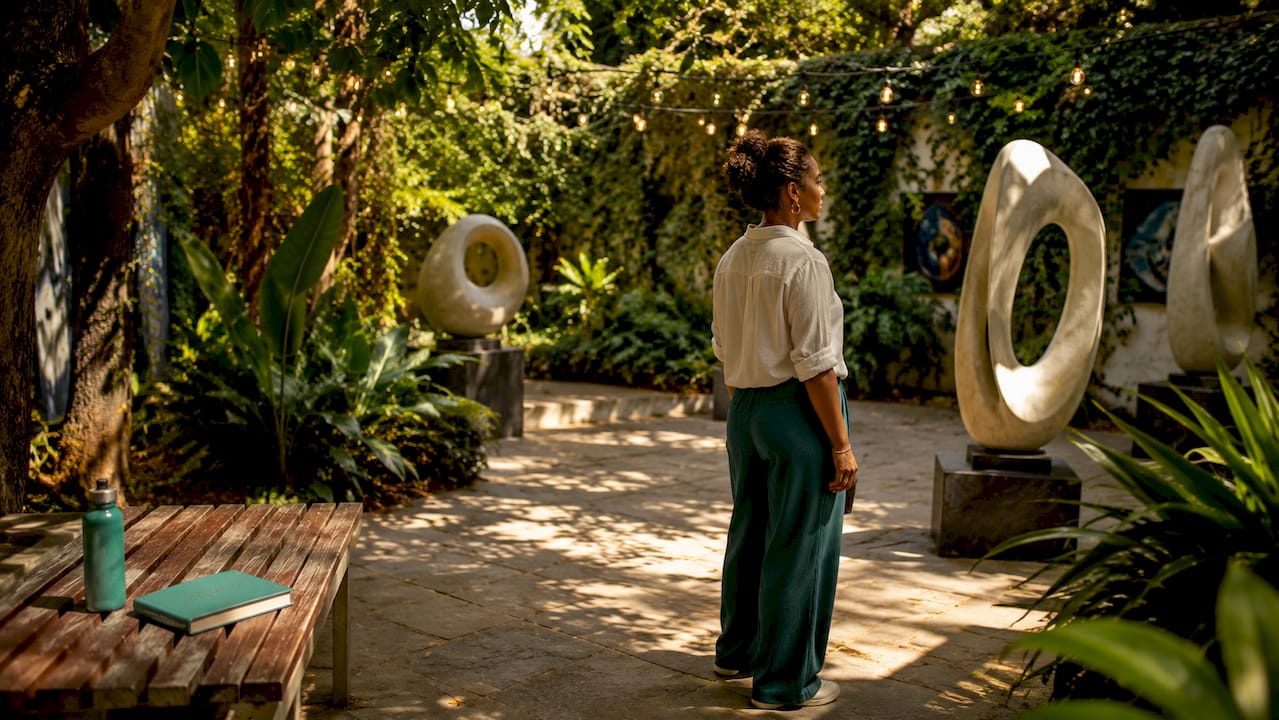
Ai Weiwei’s Sunflower Seeds, shown at Tate Modern in London in 2010, covered the Turbine Hall floor with 100 million hand-painted porcelain seeds made by 1,600 artisans in Jingdezhen, China. Each seed looked identical from a distance, but every single one was unique. The work addressed mass production, individual identity, and China’s political culture simultaneously.
Yayoi Kusama’s Infinity Mirrored Rooms use mirrors, LED lights, and reflective pools to create the sensation of infinite space. Kusama has produced multiple versions of this installation since the 1960s, and they remain among the most photographed contemporary works in the world. The experience is disorienting and meditative at the same time.
Notable contemporary artists working in installation consistently prioritize the viewer’s physical and emotional experience over the object itself. The artwork is the encounter, not the materials.
Pro Tip: When visiting an installation, resist the urge to photograph immediately. Stand still for 60 seconds and let the environment register. The conceptual layer becomes much clearer.
3. Performance and conceptual art
Performance art uses the artist’s body, time, and presence as the primary medium. Conceptual art places the idea above the visual object. Both forms ask viewers to participate actively in meaning-making, not passively receive a finished image.
The most cited example of contemporary performance art is Marina Abramović’s The Artist Is Present, staged at the Museum of Modern Art in New York in 2010. Abramović sat motionless at a table for 736 hours across 79 days. Visitors could sit across from her, one at a time, in silence. Performances like Abramović’s invite direct audience engagement and blur the boundary between artist and spectator. Many visitors reported intense emotional responses simply from sustained eye contact.
Felix Gonzalez-Torres created Untitled (Portrait of Ross in L.A.) in 1991. The work is a pile of candy weighing 175 pounds, the ideal body weight of his partner Ross Laycock, who died of AIDS. Visitors are invited to take a piece. The pile diminishes and is replenished, enacting themes of loss, love, and regeneration through viewer participation.
“Contemporary art often purposefully lacks a singular interpretation, aiming instead to spark personal reflection and dialogue.” — Phillips Dropshop
- Identify the medium (body, object, space, time).
- Ask what the artist is withholding from traditional craft.
- Notice what the work asks you to do physically or emotionally.
- Sit with ambiguity rather than searching for a fixed answer.
4. Digital, street, and mixed media art
These three categories share one quality: they all use non-traditional mediums to reach audiences outside museum walls and to reflect the materials of contemporary life.
Digital art
Refik Anadol is the most prominent figure in data-driven digital art. His large-scale projections feed machine learning algorithms with millions of data points, such as architectural records or ocean temperature readings, and render them as flowing visual forms on building facades. His work Unsupervised at the Museum of Modern Art in New York ran in 2022 and 2023, using MoMA’s own collection data as its source material. Digital art has moved from screen-based novelty to a recognized category with serious institutional support.
Pro Tip: AI-generated art and data-driven installations are not the same thing. AI art uses generative models to create images. Data-driven installation uses real-world datasets to produce live, evolving visual environments. The distinction matters when evaluating the work.
Street art
Street art has transitioned from vandalism to mainstream contemporary art recognized for political and social commentary. Banksy’s stenciled works appear on walls in cities from London to Gaza, addressing surveillance, war, and consumer culture. Shepard Fairey’s Obey Giant campaign, which began in 1989, became a global visual language before his Hope poster for Barack Obama’s 2008 presidential campaign brought street art into political history.
Mixed media
El Anatsui, a Ghanaian sculptor, creates large-scale tapestries from flattened bottle caps and aluminum scraps connected by copper wire. His works hang like fabric but read as painting. Found objects in contemporary art challenge viewers to find meaning in context rather than in traditional craftsmanship. El Anatsui’s pieces sell at major auction houses and hang in institutions including the Metropolitan Museum of Art.
| Medium | Primary material | Key artist | Venue type |
|---|---|---|---|
| Digital installation | Algorithms, projections | Refik Anadol | Museums, public buildings |
| Street art | Spray paint, stencils | Banksy, Shepard Fairey | Urban walls, public spaces |
| Mixed media | Found objects, recycled waste | El Anatsui | Galleries, auction houses |
5. How contemporary art reflects social and political themes
Contemporary art themes range broadly, including identity, migration, technology, and climate, reflecting urgent cultural and social issues. This is not incidental. The movement’s defining shift was from reimagining form to rethinking meaning, and social content is where that shift shows most clearly.
Kara Walker creates large-scale cut-paper silhouettes that depict the history of American slavery with graphic, unflinching detail. Her work A Subtlety, installed in a Brooklyn sugar factory in 2014, used a 35-foot sphinx made of sugar to address the labor of enslaved people in the sugar trade. The setting was inseparable from the meaning.
Olafur Eliasson builds environmental installations that make climate data physical. His Ice Watch series places large blocks of Greenland glacial ice in public squares in Paris, London, and Copenhagen, letting them melt in real time. The work turns abstract climate statistics into a direct sensory experience.
- Identity and race: Kara Walker, Kerry James Marshall, Zanele Muholi
- Migration and borders: Ai Weiwei, Doris Salcedo
- Climate and environment: Olafur Eliasson, Agnes Denes
- Technology and surveillance: Trevor Paglen, Hito Steyerl
Contemporary art’s open-ended, participatory nature emphasizes dialogue over fixed meanings. That is not a weakness. It is the mechanism by which the work stays relevant across different audiences and contexts.
Key takeaways
Contemporary art is defined by conceptual depth and social relevance, not by a single style, and its best examples span installation, performance, digital, street, and mixed media forms.
| Point | Details |
|---|---|
| Definition is broad | Contemporary art covers work from the 1970s to today across many mediums and styles. |
| Installation art immerses | Works by Ai Weiwei and Yayoi Kusama turn physical space into the artwork itself. |
| Performance art demands presence | Marina Abramović’s live works dissolve the line between artist and audience. |
| Digital and street art expand access | Refik Anadol and Banksy bring contemporary art into public and digital spaces. |
| Social themes drive meaning | Identity, climate, and migration are the subjects most contemporary artists return to. |
Why I stopped looking for the “right” answer in contemporary art
The first time I stood in front of a Felix Gonzalez-Torres candy pile, I genuinely did not know what to do. I felt awkward taking a piece. I felt equally awkward not taking one. That discomfort was the work doing exactly what it was designed to do.
Most people approach contemporary art the way they approach a math problem. They want a correct answer. But successful engagement with contemporary art requires acceptance of ambiguity and a focus on the dialogue the artwork creates. Once I stopped trying to decode and started paying attention to my own reactions, the work opened up completely.
The artists I find most compelling are the ones who use the simplest materials to create the most uncomfortable questions. El Anatsui uses bottle caps. Gonzalez-Torres uses candy. Banksy uses a stencil and a wall. The material is almost never the point. The context, the placement, and the viewer’s response are the point.
If you are building a collection or simply learning to appreciate contemporary art, I recommend starting with works that provoke a reaction you cannot immediately explain. That friction is where the meaning lives. You can explore popular art styles to build vocabulary, but trust your instincts first.
— Eman
Original contemporary art from Emansgallery
Emansgallery offers original handmade paintings and museum-quality canvas prints by artist Eman Khalifa, shipped worldwide from the UK, USA, Canada, Australia, and across Europe and the UAE.
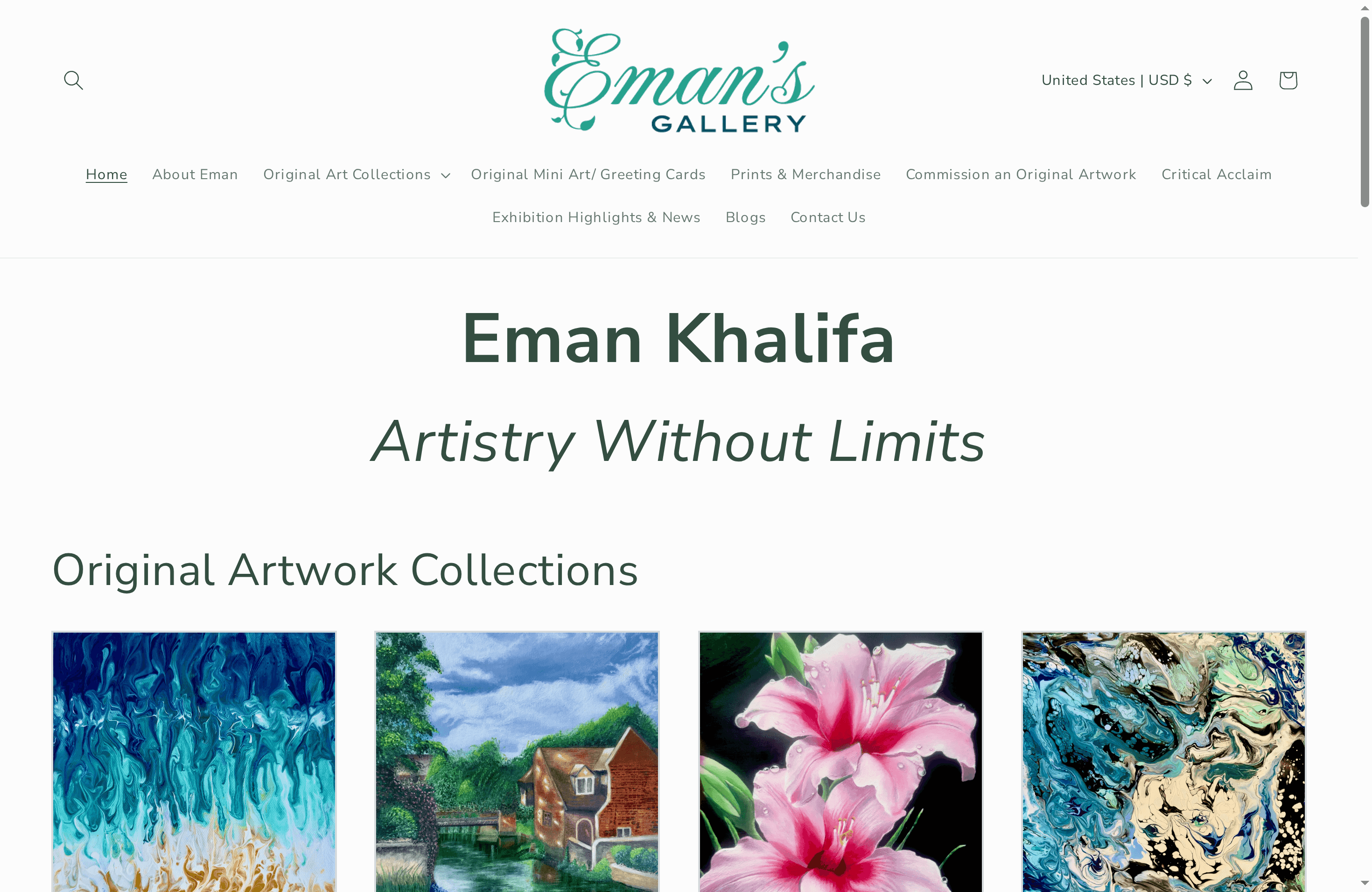
The collection spans abstract, geometric, floral, landscape, and seascape works, all one-of-a-kind originals or limited fine art prints. For collectors drawn to conceptual expression, the Private Eye canvas print brings a bold conceptual expressionist sensibility to any wall. For those drawn to fluid abstraction in the tradition of contemporary painting, the Good Tidings original delivers layered blue and gold ocean movement in a single handmade piece. Browse the full wall art prints collection to find works that fit your space and your taste.
FAQ
What is contemporary art in simple terms?
Contemporary art is art made from the 1970s to the present day. It has no single style and focuses on ideas, social issues, and viewer engagement rather than traditional beauty or technique.
Who are the most notable contemporary artists?
Ai Weiwei, Yayoi Kusama, Marina Abramović, Banksy, Refik Anadol, Kara Walker, and Olafur Eliasson are among the most recognized contemporary artists working across installation, performance, digital, and street art.
What is the difference between modern art and contemporary art?
Modern art generally refers to work from the 1860s through the 1960s, focused on formal experimentation. Contemporary art begins around the 1970s and shifts focus from reimagining form to rethinking meaning and social context.
What types of contemporary art exist?
The main types of contemporary art include installation art, performance art, digital art, street art, video art, land art, and mixed media. Each uses different materials and engages viewers in different ways.
Can I own original contemporary art?
Original contemporary art is available through galleries, auction houses, and online platforms. Emansgallery offers original contemporary paintings and fine art prints by Eman Khalifa, shipped worldwide.
Stay Connected
- ✨ Explore Eman Khalifa's original art, fine art prints and art-inspired merchandise.
- Follow Eman Khalifa's art journey on: Instagram @emans_gallery and Facebook
- Watch Eman Khalifa creating live art on: YouTube @emans_gallery
