


Gallery-Quality Art Display Ideas for Refined Interiors
Gallery-quality presentation in a residential interior depends on three decisions made before a single nail goes in: what you hang, where you center it, and how you protect it. Center every work at 57–60 inches (145–150 cm) from the floor, the standard used by major museums to align with average eye level. Avoid direct sunlight on works on paper. Use UV-filtering glazing. Plan layered LED lighting with a CRI of 90 or higher. These four actions separate a collected interior from a decorated one.
Quick checklist before installation:
- Center artwork at 57–60 in (145–150 cm) from the floor
- Keep works on paper out of direct sunlight
- Specify UV-filtering glazing or museum-grade glass for any framed work
- Use LED fixtures with CRI 90+ and color temperature in the 2700K–3000K range
- Test sightlines from primary seating positions before drilling
Pro Tip: Trace each frame on kraft paper, cut it out, and tape it to the wall before committing to hardware. This single step eliminates most placement errors. Emansgallery’s hanging guide for luxury interiors covers this method in detail.
Key Takeaways
Gallery-quality display in a refined interior requires precise placement at 57–60 inches, museum-grade glazing, layered LED lighting with CRI 90+, and tight curation where every piece earns its position.
| Point | Details |
|---|---|
| Standard hanging height | Center every work at 57–60 in (145–150 cm) from the floor. |
| Spacing and proportion | Keep frames 2–3 in apart; lowest frame 6–10 in above furniture. |
| Glazing and preservation | Use UV-filtering glazing for all works on paper and photographic prints. |
| Lighting specification | Specify LED fixtures with CRI 90+ and color temperature 2700K–3000K. |
| Emansgallery originals and prints | Emansgallery ships original paintings and canvas prints to U.S. collectors and supports commission and framing decisions. |
Table of Contents
- How do you curate a gallery-style selection for a luxury interior?
- What layout patterns and spacing rules do designers use?
- How do you choose frames, mats, and glazing for originals and fine prints?
- What lighting specs do designers use to show art without damaging it?
- What hardware and installation methods protect high-value works?
- How do you maintain and conserve displayed originals over time?
- How do seasonal themes keep a refined interior display dynamic?
- How does displaying student artwork build pride and motivation?
- What budget-friendly display materials work in studio or secondary spaces?
- What three-dimensional display techniques work in refined interiors?
- How do you involve collectors or household members in organizing a display?
- Safety considerations for displayed art in residential and semi-public spaces
- A practitioner’s perspective on placing originals in elegant interiors
- Eman’s Gallery originals and prints for gallery-quality U.S. interiors
- Sources
- FAQ
How do you curate a gallery-style selection for a luxury interior?
Prioritize fewer, higher-quality works and repeat one visual thread — color, material, or subject — across the group. A living room with two strong originals and two supporting prints reads more intentional than eight pieces competing for attention.
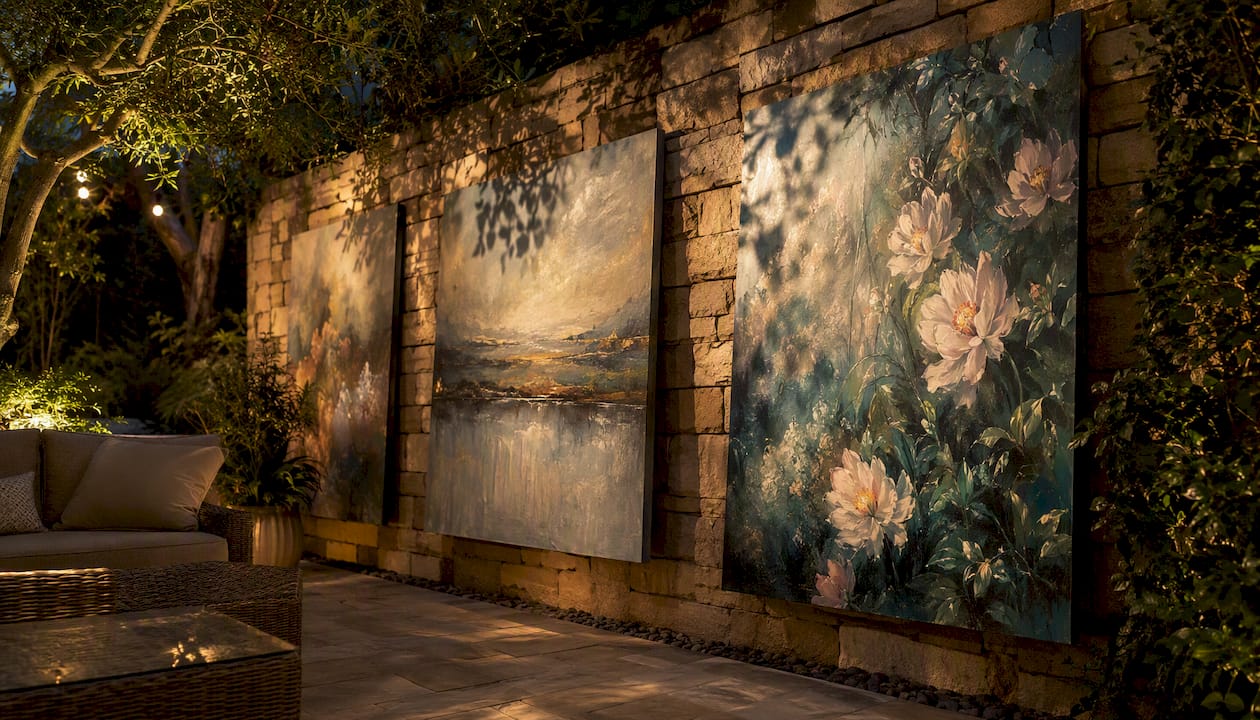
Original vs. museum-quality print: originals carry presence and investment value, making them the right choice for focal walls, entry statements, and commissioned pieces. Fine-art canvas prints work well for scale-balancing in secondary rooms or when a specific palette is needed without the cost of a second original. Displaying prints effectively follows the same placement logic as originals; the framing decision differs.
Negative space is a design element, not a gap to fill. Design experts at House Beautiful note that high-end displays treat empty wall as intentional, letting each work breathe rather than crowding for coverage.
Selection guidelines by room type:
- Living room focal wall: one large original (36 in wide or more) anchors the arrangement; one or two smaller supporting works echo its palette.
- Staircase vertical run: three to five pieces in a vertical sequence, spaced evenly, with the center of the arrangement at eye level on the landing.
- Bedroom pair: two works of identical or near-identical size, hung symmetrically above the headboard, with the combined width no more than two-thirds of the bed width.
Pro Tip: Pull two or three colors from the room’s existing palette before selecting works. A piece that shares even one tone with the upholstery or rug reads as chosen, not placed.
What layout patterns and spacing rules do designers use?
Use a considered layout system and center the overall arrangement at 57–60 in from the floor. The five patterns designers rely on are: single focal, grid, salon/salon-style, triptych, and vertical stair run.
Mockup method (step by step):
- Trace each frame on kraft paper and cut to size.
- Tape templates to the wall and step back to assess the composition.
- Mark hook positions through the paper.
- Remove templates and install hardware at marked points.
- Hang the anchor piece first, then work outward, using a cardboard spacer to keep gaps consistent.
Spacing and placement reference:
| Measurement | Standard |
|---|---|
| Center height from floor | 57–60 in (145–150 cm) |
| Gap between frames (grid) | 1.5–2 in |
| Gap between frames (salon) | 2–3 in |
| Lowest frame above furniture | 6–10 in |
| Arrangement width vs. furniture | ~2/3 of furniture width |
These figures align with LivingFinds’ gallery-wall guidance, which recommends 2–3 in between frames and 6–10 in above furniture for the lowest piece.
Limit frame finishes to two or three across a grouping. Mixing four or more finishes reads as eclectic rather than curated.
Pro Tip: For large or rental-property installations, photograph the wall, then overlay scaled frame outlines in Canva or Photoshop before ordering hardware. Check the composition from every seating position in the room, not just head-on.
How do you choose frames, mats, and glazing for originals and fine prints?
Choose museum-grade framing and UV-filtering glazing for any work you intend to preserve while displayed. This applies to works on paper, photographic prints, and watercolors without exception.
Medium-by-medium guidance:
- Oil on canvas: float-mount in a simple profile frame; no glazing required for most originals, though acrylic glazing adds protection in high-traffic spaces.
- Works on paper and watercolor: mat with acid-free board, frame with UV-filtering glass or conservation acrylic.
- Photographic and giclée prints: conservation acrylic (lighter than glass, shatter-resistant) with UV filtering is the standard choice for large-format works.
- Canvas prints: gallery-wrap edges can display unframed; a thin float frame adds definition without competing with the image.
Conservators and curators recommend UV-filtering glazing as the single most cost-effective preservation step for displayed works. The upfront cost of a glazing upgrade is modest relative to the long-term protection it provides.
Realistic cost and timeline: custom conservation framing in the United States typically runs $200–$800 per piece depending on size and materials, with lead times of 2–6 weeks at most custom framers.
Pro Tip: Humidity fluctuations damage works on paper faster than light does. Keep relative humidity stable, and never hang a framed work on an exterior wall where temperature differentials cause condensation behind the glazing.
What lighting specs do designers use to show art without damaging it?
Plan layered lighting using LED fixtures with CRI 90+ and color temperatures in the 2700K–3000K range. This combination flatters most painting palettes while producing minimal heat and UV output.
Livingetc’s curator-sourced lighting guide recommends warm-to-neutral LED temperatures around 2700K and high-CRI sources to reveal color and texture accurately. Recessed fixtures are preferred in residential settings for their discreet profile.
Placement rules:
- Aim beam angles at 30° from vertical to minimize glare on glazed surfaces.
- Use dimmers on all accent circuits so intensity can be adjusted by time of day.
- Never rely on a single overhead source; ambient plus accent is the minimum for a gallery-quality result.
Pro Tip: Specify lighting in the electrical plan before walls are closed. Retrofitting recessed fixtures in a finished ceiling costs significantly more than planning them at the rough-in stage. For collections that evolve, flexible track is the practical alternative.
What hardware and installation methods protect high-value works?
Use professional-grade hanging systems and consider a certified installer for any original painting valued above $1,000 or any piece weighing more than 20 lb.
Hardware checklist:
- D-rings or strap hangers rated for the work’s weight
- Braided picture wire, rated to at least twice the artwork’s weight
- Wall anchors matched to substrate (toggle bolts for drywall, masonry anchors for concrete or brick)
- Security fasteners or locking hangers for public-facing or high-traffic installations
- Picture rail systems for plaster walls where drilling is undesirable
Cost and timeline: professional residential installation in the United States typically runs $75–$200 per hour, with most single-room installations completed in two to four hours. Combined with custom framing, plan a total lead time of three to eight weeks from order to finished wall.
Safety checklist by room type:
- Keep all works at least 36 in from active fireplaces and heat sources.
- Avoid direct sun exposure for any framed work on paper or photographic print.
- In high-traffic corridors, use security hangers that require a tool to remove.
- For oversize pieces (wider than 48 in or heavier than 50 lb), engage a rigging professional rather than a standard picture hanger.
How do you maintain and conserve displayed originals over time?
Control light, humidity, and handling to extend the life of originals and prints. These three variables account for the majority of preventable deterioration in displayed works.
Routine maintenance:
- Dust frames and glazing with a dry microfiber cloth; never spray cleaner directly onto glazing.
- Inspect hanging hardware every six months for wire fraying or loosened D-rings.
- Rotate works that receive significant light exposure every 12–18 months to distribute cumulative exposure.
- Store temporarily removed works face-out, wrapped in acid-free tissue, away from exterior walls.
Insurance and documentation: photograph each work against a neutral background, record dimensions and provenance, and update your homeowner’s or collector’s policy to schedule individual high-value pieces.
When a displayed work shows signs of mold, active flaking, warping, or visible fading, remove it from the wall immediately, store it flat in a stable environment, and contact a professional conservator before attempting any cleaning or repair. Amateur intervention on an original painting can cause irreversible damage.
Pro Tip: A simple digital hygrometer placed near your primary display wall costs under $20 and gives you continuous humidity data. Aim for 45–55% relative humidity for most media.
How do seasonal themes keep a refined interior display dynamic?
Rotating the thematic focus of a display two to three times per year keeps a collection visually active without requiring new acquisitions. In practice, this means swapping one or two supporting works while keeping the focal original in place, then adjusting the lighting intensity or color temperature slightly to suit the season.
A winter rotation might bring forward darker, tonalist works with warmer lighting. A spring or summer shift favors fluid, light-saturated pieces with cooler accent temperatures. The focal work anchors the wall; the supporting pieces carry the seasonal shift. This approach works equally well in a private residence and in a boutique commercial space where the collection is part of the brand environment.
How does displaying student artwork build pride and motivation?
In educational or studio settings within a private home, dedicating a specific wall or alcove to rotating student or emerging-artist work signals that the space takes art seriously. Consistent framing, even simple clip frames in a uniform finish, elevates the perceived quality of any work. Label each piece with the artist’s name and date; this small detail transforms a display into a record.
Rotating the display on a fixed schedule, such as every eight weeks, gives each work a defined moment of prominence rather than indefinite accumulation.
What budget-friendly display materials work in studio or secondary spaces?
Clipboards, tension wire with clips, and cork panels all allow works on paper to be displayed without permanent framing. These systems suit studio spaces, home offices, and secondary rooms where the collection changes frequently.
Tension wire systems (a horizontal cable stretched between two wall-mounted brackets, with adjustable clips) allow multiple works to hang at consistent heights without drilling individual holes. Cork panels accept pushpins without damaging works when a backing sheet of acid-free paper is placed between the pin and the artwork.
For a more finished look, a uniform set of clip frames in black or natural wood reads as intentional rather than temporary.
What three-dimensional display techniques work in refined interiors?
Sculptural works and dimensional pieces require shelf ledges, plinths, or purpose-built niches rather than wall hardware. A floating shelf at 54–60 in from the floor places a three-dimensional work at the same visual center as a hung painting, maintaining compositional consistency across a mixed display.
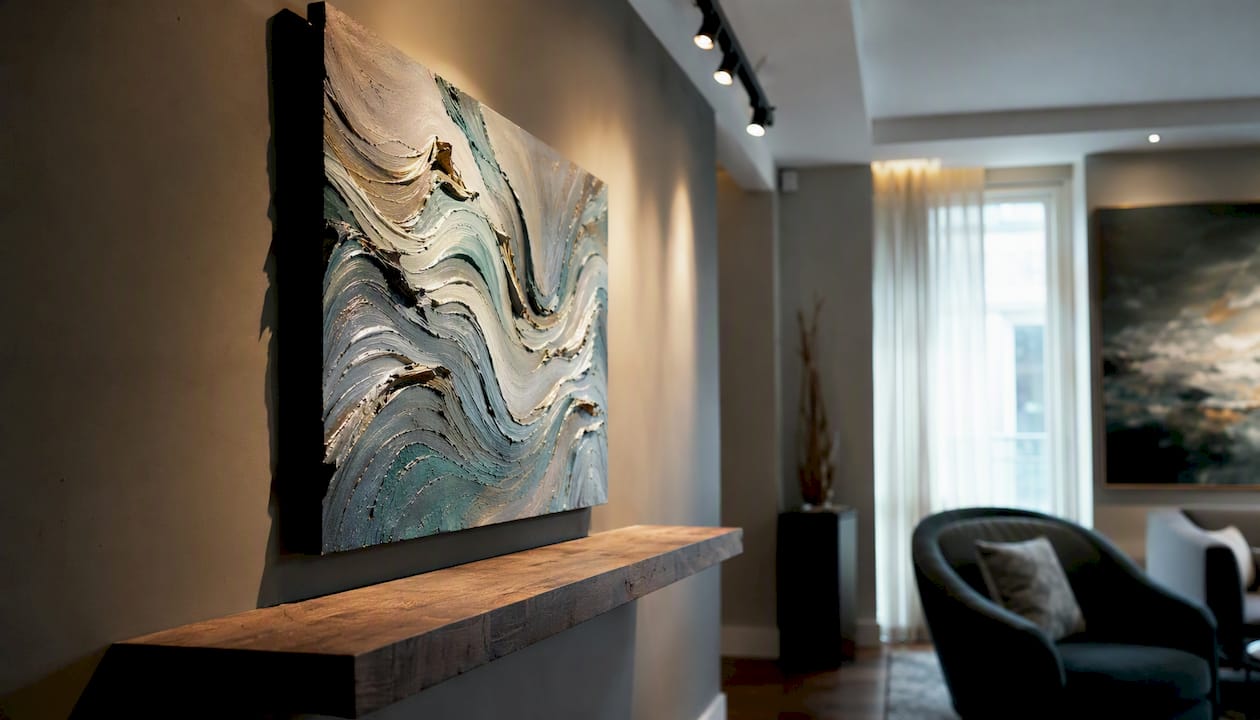
For mixed-media works that combine a painted surface with dimensional elements, a deep-profile float frame (2–3 in depth) accommodates the relief without compressing it against the glazing. Shadow boxes serve the same function for assemblage works.
How do you involve collectors or household members in organizing a display?
The most durable displays are ones where the selection logic is understood by everyone who lives with the work. A brief written rationale for each grouping, even a single sentence per wall, helps household members and future installers maintain the intent of the arrangement when pieces are moved or added.
For collectors building a long-term display strategy, a simple spreadsheet recording each work’s dimensions, hanging hardware, and placement history eliminates guesswork during rotations.
Safety considerations for displayed art in residential and semi-public spaces
Secure all works above seating areas with locking hangers rated for at least twice the piece’s weight. In rooms accessible to children or high-traffic events, avoid hanging works at head height in narrow corridors. Glazed works should use conservation acrylic rather than standard glass in any space where physical contact is possible; acrylic does not shatter.
For works displayed near kitchens or bathrooms, humidity and airborne grease are the primary risks. UV-filtering glazing and sealed frames reduce both.
A practitioner’s perspective on placing originals in elegant interiors
The guiding principle for placing work in an elegant interior is restraint. A single original painting, positioned correctly and lit with precision, does more for a room than six pieces hung without intention.
Emansgallery’s practical display guide reflects this directly: the placement decisions, the lighting specifications, and the framing choices described there come from working with collectors who want their interiors to feel considered. A living room installation with one large-scale original at the correct center height, flanked by two smaller works that echo its palette, reads as a gallery. The same three pieces hung at random heights do not.
Commission work adds another layer: when a collector works with an artist from concept to finished painting, the placement conversation happens before the canvas is stretched. That workflow, from commission brief to wall, is one Emansgallery supports directly.
Eman’s Gallery originals and prints for gallery-quality U.S. interiors
Emansgallery offers original paintings and museum-quality canvas prints suited to the placement and framing standards described throughout this article, with shipping available to collectors across the United States.

Four works that fit the focal-wall and supporting-piece roles discussed here:
- Good Tidings, Fluid Blue Gold Ocean Art: a large-scale original in fluid acrylic, suited to living room focal walls where a warm gold and blue palette anchors the room.
- Nocturned, Tonalism Moonlit Night Scene: an intimate original with deep tonal range, well-proportioned for bedroom focal walls or a study.
- Mystic Sea, Fluid Abstract Ocean Gold: a dramatic original for foyer or dining room installations where scale and movement are the priority.
- Private Eye, Conceptual Expressionism (Canvas Print): a museum-quality canvas print for secondary rooms or to balance scale across a multi-piece grouping.
U.S. collectors can request commission work or framing consultation directly through Emansgallery. Eman Khalifa accepts commissions and can advise on scale, palette, and placement before a canvas is started.
Sources
- The Spruce
- How to Hang a Gallery Wall: A Step-by-Step Guide | LivingFinds
- How to light art in your home like a professional curator | Livingetc
- Remodelista
FAQ
What is the correct height to hang artwork in a home?
Center the artwork at 57–60 inches (145–150 cm) from the floor. This is the standard used by major museums and recommended by professional installers for consistent viewing at average eye level.
How far apart should frames be in a gallery wall arrangement?
Space frames 2–3 inches apart for a salon-style grouping and 1.5–2 inches for a tighter grid. Keep the lowest frame at least 6–10 inches above any furniture beneath it.
Do I need UV-filtering glazing for canvas paintings?
Oil on canvas does not require glazing, but UV-filtering glass or conservation acrylic is recommended for works on paper, watercolors, giclée prints, and photographic prints to prevent fading from ambient light exposure.
What lighting works best for displaying original paintings?
LED fixtures with a CRI of 90 or higher and a color temperature of 2700K–3000K reveal color and texture accurately while producing minimal heat and UV output. Adjustable track or recessed downlights with dimmers give the most control.
Where can U.S. collectors find original paintings suited to these display standards?
Emansgallery offers original paintings and museum-quality canvas prints by Eman Khalifa, with shipping to collectors across the United States. Commission inquiries and framing consultations are available through Emansgallery.
Stay Connected
- ✨ Explore Eman Khalifa's original art, fine art prints and art-inspired merchandise.
- Follow Eman Khalifa's art journey on: Instagram @emans_gallery and Facebook
- Watch Eman Khalifa creating live art on: YouTube @emans_gallery
