


Canvas Art for Collectors and Designers: A Buying Guide
TL;DR:
- For collectors and designers seeking immediate impact, museum-quality giclée prints or original handmade paintings are the best options. Originals offer uniqueness and investment value, while giclée prints provide large-scale presence at a lower cost.
For collectors and designers seeking immediate impact, the clearest choice is either a museum-quality giclée print or an original handmade painting from a reputable contemporary gallery. If uniqueness and investment value matter most, buy an original. If you need large-scale presence at a lower price point, a museum-quality canvas print delivers. Emansgallery offers both, with worldwide shipping and commissions available directly from artist Eman Khalifa.
Table of Contents
- What types of canvas art will you actually encounter?
- How do you choose the right canvas art for a room?
- What should you verify before you buy canvas art?
- How do you commission or buy an original canvas painting?
- How do you hang canvas art securely?
- How do you care for canvas art over time?
- What should you budget for canvas art?
- Original or print: which should you buy?
- Key Takeaways
- What working with Eman Khalifa actually means for collectors
- How to buy from Emansgallery
- FAQ
What types of canvas art will you actually encounter?
Canvas wall decor falls into a few distinct categories, and knowing the difference prevents costly mismatches.
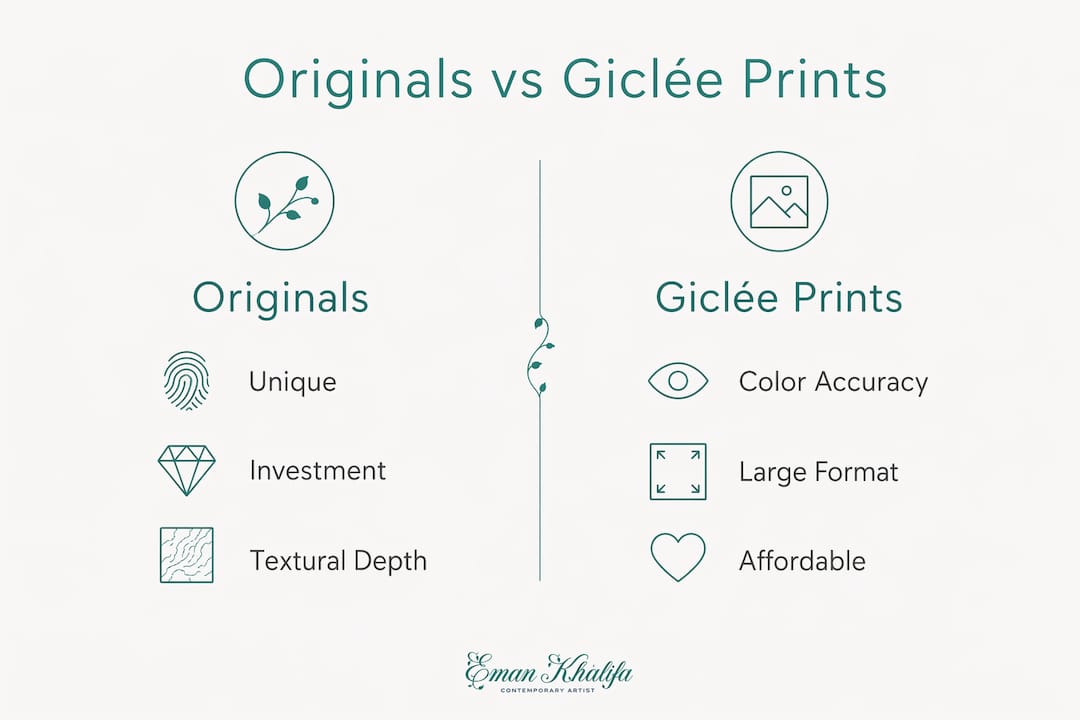
- Original paintings: Handmade, one-of-a-kind works in oil, acrylic, or mixed media. Collectors value them for rarity, provenance, and direct connection to the artist’s practice.
- Museum-quality giclée prints: Reproductions printed with archival pigment inks on heavyweight canvas or fine art paper. The term “museum-quality” refers to ink longevity and color accuracy, not the subject matter. These suit designers who need a specific scale or palette without commissioning an original.
- Gallery-wrapped (stretched) canvas: The image wraps around the sides of the stretcher bars, so no frame is needed. Clean, contemporary, and the most common format for both originals and prints.
- Framed canvas: A gallery-wrapped canvas set inside a floater or traditional frame. Adds visual weight and suits formal or traditional interiors.
- Standard canvas prints: Lower-cost reproductions on thinner canvas with dye-based inks. Appropriate for temporary installations or low-budget projects, but not for collectors or long-term display.
Abstract canvas paintings, seascapes, and florals work well as originals or giclées. The format decision comes down to budget, timeline, and whether you need a one-of-a-kind work.
How do you choose the right canvas art for a room?
Scale is the single most important factor. A piece that is too small reads as an afterthought; one that is too large overwhelms the wall and the furniture beneath it.
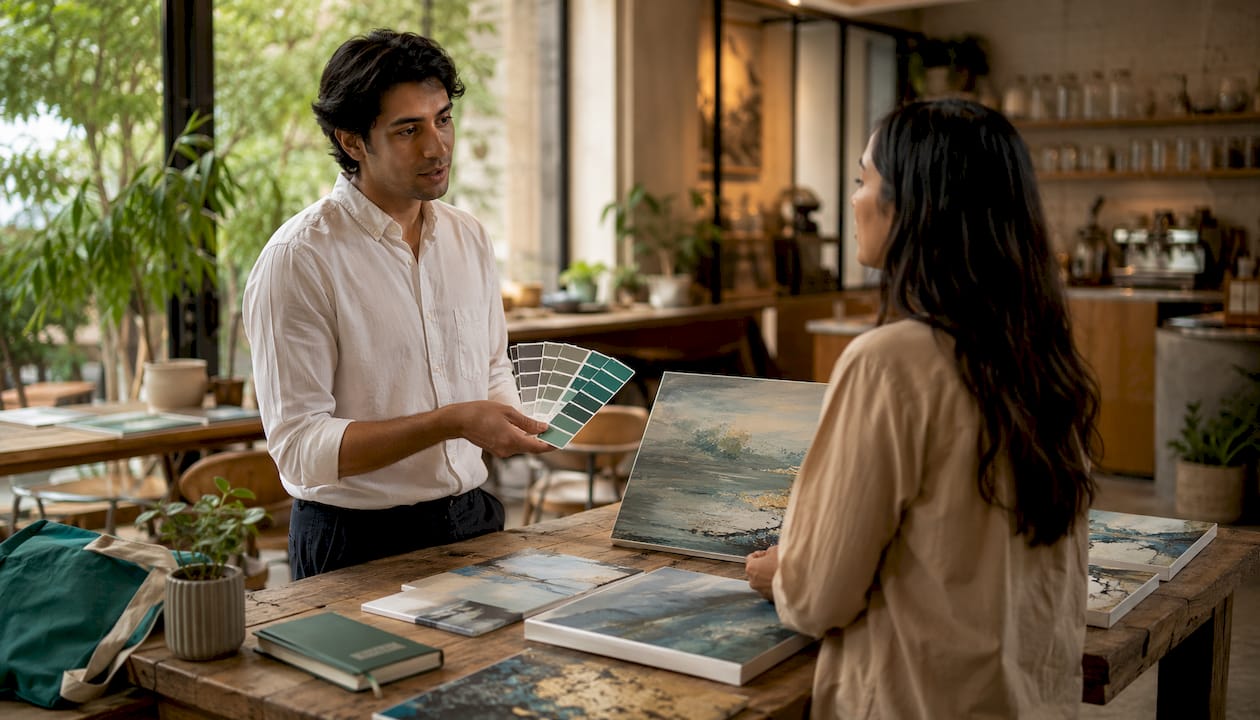
The gallery-standard centerline for hanging art is 57–60 inches from the floor to the center of the piece. That measurement aligns with average eye level and is the standard used by museums and interior designers alike. When hanging above furniture, leave some consistent space between the top of the piece and the bottom of the canvas. For grouped arrangements, keep a small gap between frames.
| Placement scenario | Centerline height | Gap above furniture | Spacing between pieces |
|---|---|---|---|
| Single piece, open wall | 57–60 inches from floor | N/A | N/A |
| Above sofa or console | 57–60 inches from floor | 6–8 inches | N/A |
| Gallery wall grouping | 57–60 inches (anchor piece) | 6–8 inches (if above furniture) | 2–3 inches between frames |
| Hallway vignette | 57–60 inches from floor | 6–8 inches above console | 2–3 inches if multiple pieces |
For a wide sofa, a canvas sized proportionally keeps the composition balanced without crowding the wall. In a narrow hallway, a single vertical canvas of moderate width creates a vignette without blocking sightlines.
Pro Tip: Before you order a large canvas, cut butcher paper or use painter’s tape on the wall to mock up the exact dimensions. Living with the shape for a day reveals whether the scale works before you commit.
For more placement guidance for interiors, Emansgallery’s blog covers room-specific scenarios in detail.
What should you verify before you buy canvas art?
Verify four things before any purchase: canvas weight and weave, ink or medium archivality, stretcher bar construction, and surface protection.
- Canvas weight and weave: Heavier cotton or linen canvas (300 gsm and above for prints) resists warping and holds texture better over time.
- Archival pigment inks: For giclée prints, pigment-based inks outlast dye-based inks significantly. Confirm the specification on the product page.
- Stretcher bars with corner keys: Solid kiln-dried pine or spruce bars with expandable corner keys allow re-tensioning if the canvas relaxes with humidity changes.
- Varnish or protective coating: A UV-resistant varnish protects both originals and prints from light degradation and makes surface cleaning safer.
- Certificate of authenticity (COA): For originals, a signed COA from the artist confirms provenance and is required for insurance and resale.
On any product page, look for high-resolution images with close-up detail shots, a clear artist biography, explicit shipping and insurance terms, and a stated returns policy. The Private Eye canvas print at Emansgallery demonstrates these signals: multiple image angles, size options, and full product specifications are listed directly on the page.
For a side-by-side comparison of canvas versus paper prints, Emansgallery’s guide covers the material tradeoffs in detail.
Quality signal to remember: A gallery that lists artist biography, exhibition history, COA terms, and insured shipping on every product page is operating at collector-grade standards. Absence of any one of these is a reason to ask before you buy.
How do you commission or buy an original canvas painting?
Commissioning from an artist is the best route for collectors who want a work built to a specific space, palette, or concept. The process follows a predictable sequence.
- Initial brief: Submit dimensions, color palette, subject references, and any room photography. The more specific, the better.
- Proposal and estimate: The artist returns a written proposal with price, timeline, and materials. Review this carefully before proceeding.
- Deposit: A deposit of a substantial portion is standard. Confirm the deposit is non-refundable only after approval of the initial sketch or composition.
- Progress updates: Request at least one mid-point photo update before the work is finished. This is the point to raise any compositional concerns.
- Delivery and COA: On completion, the artist ships the work with a signed certificate of authenticity and, ideally, insured transit coverage.
Typical timelines include days for sketch approval, several weeks for painting depending on scale and medium, additional time for drying and varnishing, and shipping from the UK or US taking about a week or more.
Questions to ask before you commit:
- What canvas, medium, and varnish will be used?
- Does the price include framing or gallery wrap finishing?
- Is shipping insured, and who bears the risk in transit?
- What reproduction rights, if any, does the artist retain?
- What is the return or dispute process if the work arrives damaged?
Emansgallery ships worldwide and accepts commission enquiries directly through the gallery.
How do you hang canvas art securely?
Use the right hardware for the weight and wall material. That single decision prevents most installation failures.
Essential toolkit:
- Tape measure and pencil
- Bubble or digital level
- Stud finder
- Hammer and appropriate nails or picture hooks
- Wall anchors (for drywall without a stud)
- French cleat (for large or heavy canvases)
The installation steps are straightforward: measure and mark the centerline at 57–60 inches, locate the hanging hardware on the back of the canvas, transfer the measurement to the wall, install the anchor or hook, hang the piece, and check level. Canvas prints are typically lighter than framed works because the image wraps a wooden frame rather than sitting behind glass, so standard picture hooks handle most sizes.
For large originals, a French cleat system distributes weight across a wider wall area and makes leveling straightforward. When possible, secure into a stud. A stud finder removes guesswork and provides the most reliable support for expensive originals.
Pro Tip: Apply adhesive bumpers to the bottom two corners of the canvas frame. They keep the piece flush against the wall, prevent tilting, and protect the paint surface from contact scuffs.
How do you care for canvas art over time?
Keep canvases away from direct sunlight and high humidity. Those two factors cause more color degradation and canvas warping than any other.
- Dust with a soft, dry brush or microfiber cloth. Never use chemical cleaners directly on a canvas surface.
- Keep relative humidity controlled and avoid placing works near radiators, air conditioning vents, or exterior walls prone to condensation.
- Use UV-filtering glass or acrylic if framing prints in high-light rooms.
- For storage, wrap in acid-free tissue and store vertically, never stacked flat.
Conservation note: Originals painted in oil or mixed media with impasto texture are particularly vulnerable to physical impact. If a valuable original shows cracking, flaking, or canvas sag, consult a professional conservator before attempting any cleaning or re-stretching yourself.
What should you budget for canvas art?
Originals carry an artist premium and rarity value. Museum-quality giclées offer large-scale presence at a fraction of the cost.
- Museum-quality canvas prints: Typically $50–$500 depending on size, edition, and gallery. Open editions cost less; limited editions command more.
- Original paintings (small to mid-size): Generally $300–$2,500 for emerging to mid-career artists. Large-scale originals from established artists run higher.
- Framing: Add $100–$600 for professional framing, depending on frame style and canvas size.
- Shipping and insurance: Budget $30–$150 for domestic insured shipping; international shipping varies by destination and weight.
Pro Tip: Always budget for insured shipping on originals. The cost is small relative to the work’s value, and it is the only protection you have if damage occurs in transit.
For context on why canvas prints suit luxury interiors, Emansgallery’s guide covers the value case in detail.
Original or print: which should you buy?
Choose an original when investment value, emotional uniqueness, and a direct connection to the artist’s practice matter. Choose a museum-quality print when you need a specific large scale immediately, or when budget is the primary constraint.
- Originals: One-of-a-kind, signed, COA-backed, and appreciable in value. Best for collectors and permanent installations.
- Museum-quality giclée prints: Archival, scalable to large formats, and available immediately. Best for designers working to a deadline or budget.
- Commission: The right choice when you need a specific size, palette, or subject that no available work provides.
View available originals such as Warm Embrace or Good Tidings at Emansgallery, or submit a commission enquiry directly through the gallery.
Key Takeaways
Original canvas paintings offer uniqueness and investment value; museum-quality giclée prints deliver large-scale presence at lower cost, and both are available with worldwide shipping from Emansgallery.
| Point | Details |
|---|---|
| Scale first | Center artwork at 57–60 inches from the floor; leave 6–8 inches above furniture. Keep 2–3 inches between pieces in grouped arrangements. |
| Verify quality signals | Confirm archival inks, solid stretcher bars, UV varnish, and a certificate of authenticity before buying. |
| Commission timeline | Allow 4–9 weeks from brief to delivery for a custom original, plus shipping time. |
| Budget realistically | Add framing and insured shipping costs to the artwork price. |
| Buy from Emansgallery | View originals and museum-quality prints, or request a commission at emansgallery.com. |
What working with Eman Khalifa actually means for collectors
The conventional wisdom in the art market is that buying original work requires gallery visits, auction house relationships, or expensive art fair attendance. That framing excludes most serious collectors and nearly all interior designers working on tight project timelines.
Eman Khalifa’s practice covers oil, acrylic, and mixed media across abstract nature, seascapes, landscapes, and florals, with press recognition from FAD Magazine and Artlyst. Every commission comes with a signed certificate of authenticity, full provenance documentation, and insured worldwide shipping. The gallery’s product pages include high-resolution close-up images, explicit size options, and clear returns terms, which are the same signals a physical gallery provides, delivered without the overhead.
What buyers underestimate is how much the commissioning conversation itself shapes the final work. A detailed brief, a mid-point review, and direct communication with the artist produce a result that no available inventory can replicate. That process is open to collectors at any budget level, not just those spending at auction.
How to buy from Emansgallery
Emansgallery offers a direct route to original paintings, museum-quality canvas prints, and custom commissions, without gallery markups or long waiting lists.
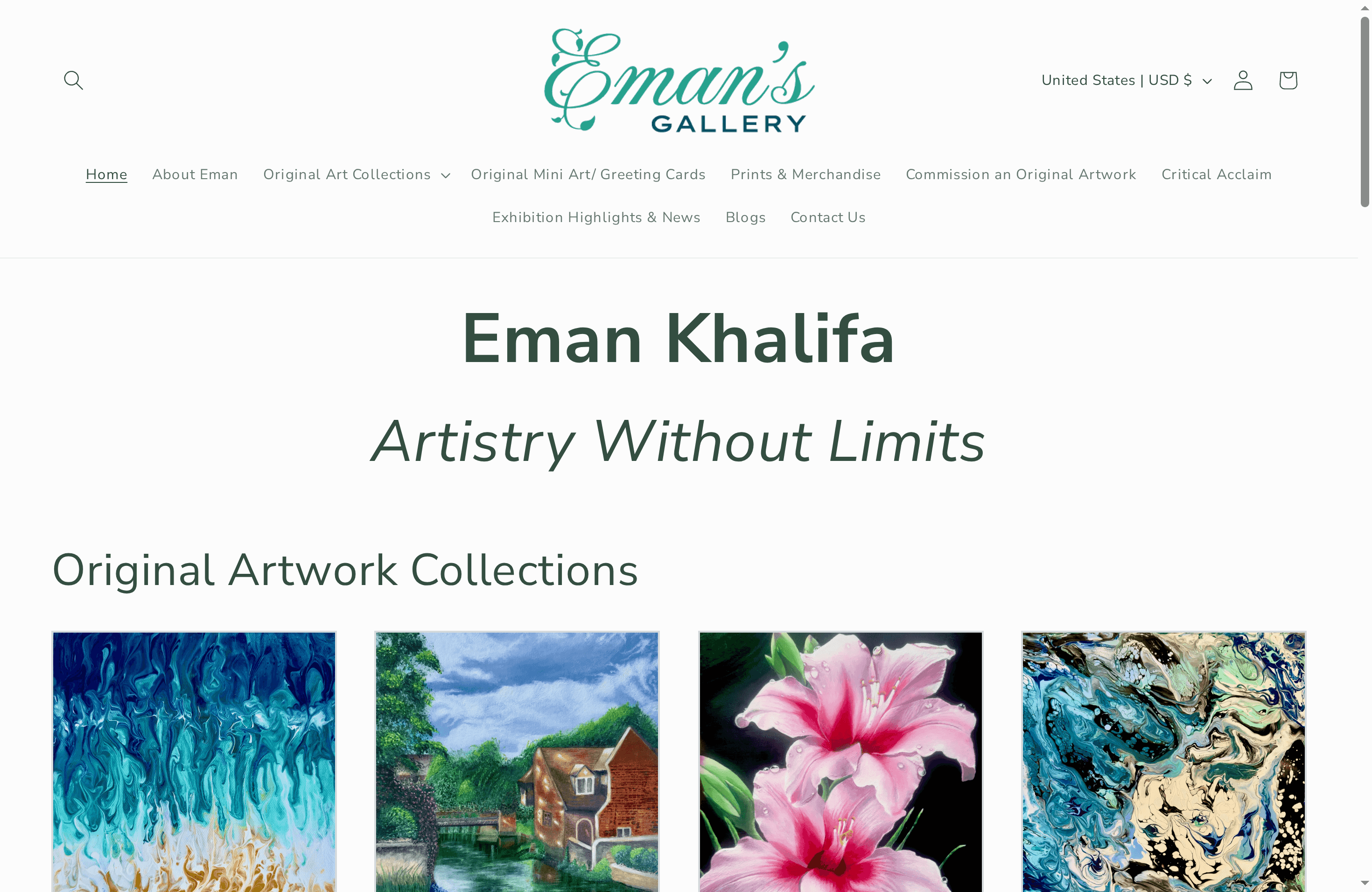
Browse available originals including Day Blazed, a tropical sunset landscape, or the Fragments of Memory abstract ink splash canvas print. For a geometric, design-focused option, City in Grids ships ready to hang. To commission a custom original, submit your brief, dimensions, and color references through the gallery’s contact page. Emansgallery ships from the US, UK, and multiple international fulfillment locations, with insured transit available on all orders. View the full collection and start your commission at emansgallery.com.
FAQ
What is the difference between a giclée print and a canvas print?
A giclée print uses archival pigment inks on heavyweight canvas or fine art paper, producing color accuracy and longevity comparable to museum standards. A standard canvas print typically uses dye-based inks on lighter canvas, which fades faster and is not suitable for long-term display.
How do you hang canvas art at the correct height?
Center the canvas at 57–60 inches from the floor to the middle of the piece, which is the museum and gallery standard for aligning with average eye level. Keep a gap of 6–8 inches above furniture and 2–3 inches between pieces in groupings.
How long does a custom canvas commission take?
From initial brief to delivery, allow several weeks: sketch approval takes a few days, painting can take several weeks, finishing requires additional time, and shipping depends on destination.
Does Emansgallery provide a certificate of authenticity?
Yes. Every original painting from Emansgallery ships with a signed certificate of authenticity confirming provenance, medium, and artist details.
What hardware do you need to hang a large canvas?
For large or heavy canvases, a French cleat system distributes weight and simplifies leveling. For standard-weight pieces, picture hooks or wall anchors matched to the canvas weight are sufficient, along with a tape measure, level, and stud finder.
Stay Connected
- ✨ Explore Eman Khalifa's original art, fine art prints and art-inspired merchandise.
- Follow Eman Khalifa's art journey on: Instagram @emans_gallery and Facebook
- Watch Eman Khalifa creating live art on: YouTube @emans_gallery
