


Abstract Paint Meaning: What Every Art Enthusiast Should Know
TL;DR:
- Abstract paint meaning results from deliberate formal choices that communicate ideas and emotions beyond realistic depiction.
- Understanding this visual language transforms how viewers experience abstract art, emphasizing color, shape, and composition over recognizable subjects.
Abstract paint meaning is the intentional use of form, color, line, and composition to express ideas and emotions beyond realistic depiction. Rather than showing a recognizable subject, abstract painting communicates through visual language alone. This approach, formally called nonrepresentational or nonobjective art, has shaped modern art since the early 20th century. Understanding it changes how you experience every abstract work you encounter, whether you are an art student, a hobby artist, or someone who simply wants to know why a painting moves you.
What is abstract paint meaning and how does it work?
Abstract paint meaning is a deliberate artistic strategy, not an accident. Abstract art removes recognizable subject matter to explore philosophical ideas that exist beyond the physical world. The artist replaces objects with shapes, colors, and marks that carry their own emotional weight. This is the core distinction between abstract and representational art: one shows the world, the other expresses a response to it.
The meaning of abstract art is built into every formal decision an artist makes. A deep blue field communicates differently from a jagged red line. A dense, compressed composition creates tension. An open, airy layout suggests calm. These are not accidental effects. They are the vocabulary of a disciplined visual language that requires as much skill and intention as any realistic portrait.
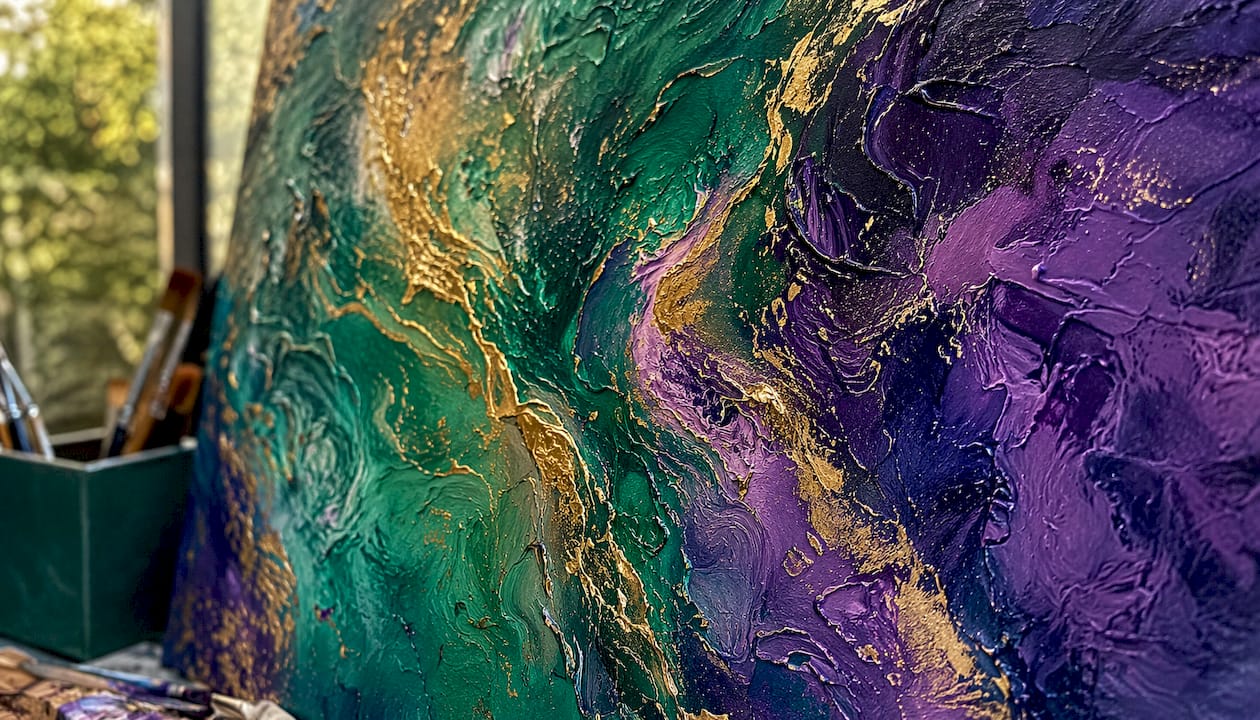
Emansgallery artist Eman Khalifa works within this tradition, using color relationships and fluid movement to build meaning without relying on literal subjects. The result is work that speaks directly to the viewer’s senses before the analytical mind can intervene.
How abstract art uses visual elements to communicate
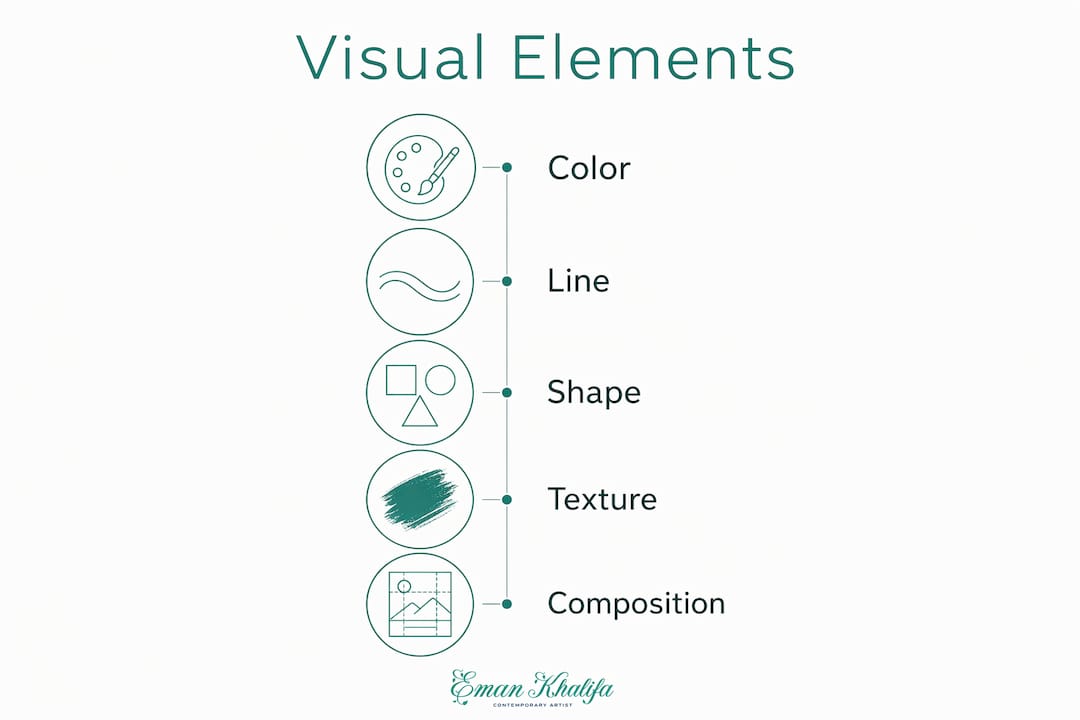
Abstract art communicates through a specific set of formal tools. Each element carries meaning on its own, and the combination of elements creates the full emotional and intellectual content of a painting.
The core visual elements include:
- Color: Warm colors like red and orange create urgency or energy. Cool colors like blue and violet suggest depth, calm, or melancholy.
- Line: Curved lines feel organic and flowing. Sharp, angular lines create tension or aggression.
- Shape: Geometric shapes suggest order and structure. Organic, irregular shapes feel natural or unpredictable.
- Composition: Where elements are placed determines balance, rhythm, and visual flow across the canvas.
- Texture: Physical or implied texture adds a tactile dimension that deepens emotional response.
Visual structure communicates concepts independent from literal reality, focusing on balance, harmony, and rhythm. This means the painting’s meaning lives in its formal construction, not in any story it tells. A viewer who understands this stops asking “What is this a picture of?” and starts asking “What does this make me feel?”
Pro Tip: When you stand in front of an abstract painting, notice your physical reaction first. Does your chest tighten? Does your breathing slow? That bodily response is the painting working exactly as intended.
What is the spectrum of abstraction?
Abstract art exists on a spectrum from partial abstraction to total nonrepresentational work. Understanding this spectrum is the single most useful tool for anyone new to the meaning of abstract art.
At one end sits derived abstraction, where the artist starts with a visible subject and simplifies or distorts it until the original reference becomes secondary. Cubism is the clearest example. Pablo Picasso and Georges Braque broke objects into geometric fragments, keeping a trace of the real world while pushing toward pure form. At the other end sits total abstraction, where no reference to visible reality exists at all. The forms are created entirely for their own intrinsic visual impact.
| Style | Relationship to reality | Key characteristic |
|---|---|---|
| Cubism | Derived from visible subjects | Fragmented, geometric distortion of real objects |
| Abstract Expressionism | Emotional response to reality | Gestural marks, large scale, raw feeling |
| Geometric abstraction | No reference to reality | Pure shapes, mathematical precision |
| Lyrical abstraction | No reference to reality | Fluid color fields, organic movement |
| Nonrepresentational art | Entirely self-referential | Forms exist for their own visual sake |
Seeing abstraction as a spectrum helps viewers stop feeling confused or excluded. A Cubist painting and a pure color field painting are both abstract, but they operate at different points on that continuum. Recognizing where a work sits on the spectrum gives you a framework for interpreting abstract paintings without needing to decode a hidden message.
Common misconceptions about abstract art and how to appreciate it
The most persistent misconception about abstract art is that it is random. Abstract art’s intentions are widely misunderstood as random or untalented efforts, but the opposite is true. Every mark, color choice, and compositional decision reflects a specific intention. The discipline required to build meaning from pure form is considerable.
A second misconception is that abstract art has no rules. In reality, the same principles that govern representational painting, including balance, contrast, proportion, and rhythm, apply just as strictly. The difference is that abstract artists use these principles to serve emotional and philosophical goals rather than descriptive ones.
Here are four practical ways to engage with abstract work more meaningfully:
- Abandon subject searching. Stop trying to identify objects. The painting is not hiding something from you.
- Spend more time. Most viewers spend under 30 seconds with a painting. Give it five minutes and your response will change.
- Notice color temperature. Is the palette warm or cool? Does it shift across the canvas? That shift carries emotional information.
- Read the edges. How a form meets the edge of the canvas tells you about tension, containment, and release.
New viewers often struggle because they seek narrative or object recognition, missing the intended experiential meaning. Shifting that habit is the single biggest step toward genuine appreciation.
Pro Tip: Avoid reading wall labels before you look. Form your own emotional response first, then check the title. You will often find the title confirms exactly what you already felt.
What are the historical and philosophical roots of abstract paint meaning?
Abstract art’s philosophical roots run deeper than most people realize. The movement did not emerge from a desire to be difficult or obscure. It emerged from a conviction that art could access truths that realistic depiction could not reach.
Wassily Kandinsky is the figure most associated with this conviction. Colors and forms carry inherent emotional and spiritual vibrations, a theory Kandinsky developed systematically in his 1911 text Concerning the Spiritual in Art. He associated specific colors with specific feelings: yellow with aggression, blue with depth and the spiritual, green with calm. His compositions were built to convey what he called “inner necessity,” the idea that form should arise from genuine emotional and spiritual need rather than external description.
Hilma af Klint worked in parallel, and her contribution is only now receiving the recognition it deserves. Af Klint created some of the earliest abstract works, emphasizing spiritual and mystical themes that predated Kandinsky’s published theories. Her large-scale nonrepresentational paintings were conceived as channels for higher guidance, and she stipulated that they not be shown publicly until 20 years after her death.
The philosophical stakes of early abstraction were high:
- Order: Abstract composition could model ideal harmony, free from the chaos of the visible world.
- Purity: Removing the subject removed the distraction of narrative, leaving only essential form.
- Spirituality: Both Kandinsky and af Klint believed abstract forms could communicate with dimensions of experience beyond rational thought.
Abstract art carries a moral charge representing virtues like order, purity, and spirituality. That charge did not disappear with the early modernists. It persists in contemporary abstract work, including the fluid, color-driven paintings at Emansgallery, where each composition is built to evoke a specific emotional and sensory state. For a deeper look at how these ideas connect to the types of abstract art practiced today, the distinctions between movements matter.
Key Takeaways
Abstract paint meaning is the product of deliberate formal choices, not chance, and understanding its visual language transforms how you experience every abstract work.
| Point | Details |
|---|---|
| Abstraction is intentional | Every color, line, and shape is a deliberate choice carrying specific emotional or philosophical meaning. |
| Visual language replaces subjects | Form, color, and composition communicate directly with the viewer’s senses without needing a recognizable subject. |
| Abstraction exists on a spectrum | Works range from partial abstraction like Cubism to total nonrepresentational art with no real-world reference. |
| Misconceptions block appreciation | Viewing abstract art as random prevents genuine engagement; it is a disciplined practice with clear compositional principles. |
| Historical roots run deep | Kandinsky and Hilma af Klint established abstraction as a vehicle for spiritual and philosophical meaning, not decoration. |
Why I think most people never fully connect with abstract art
Most viewers give abstract paintings less time than they give a restaurant menu. That is the real barrier, not complexity or lack of education. Abstract art asks you to slow down and let the formal elements register before your analytical mind takes over.
What I have found, both in my own practice and in watching others engage with abstract work, is that the breakthrough moment almost always comes from color. A specific combination of hues will suddenly feel familiar, or urgent, or deeply quiet, in a way that bypasses language entirely. That is the painting doing its job.
The philosophical tradition behind abstraction, from Kandinsky’s color theories to af Klint’s spiritual canvases, is genuinely fascinating once you know it exists. But you do not need to know the history to feel the work. The history just confirms what your senses already told you. I would encourage any art enthusiast to read about how to choose abstract art not as a buying guide, but as a way to understand what you are already responding to when a painting stops you in your tracks.
— Eman
Original abstract paintings that carry real meaning
Emansgallery offers original handmade abstract paintings and museum-quality canvas prints by artist Eman Khalifa, shipped worldwide from the UK, USA, Canada, Australia, and beyond.
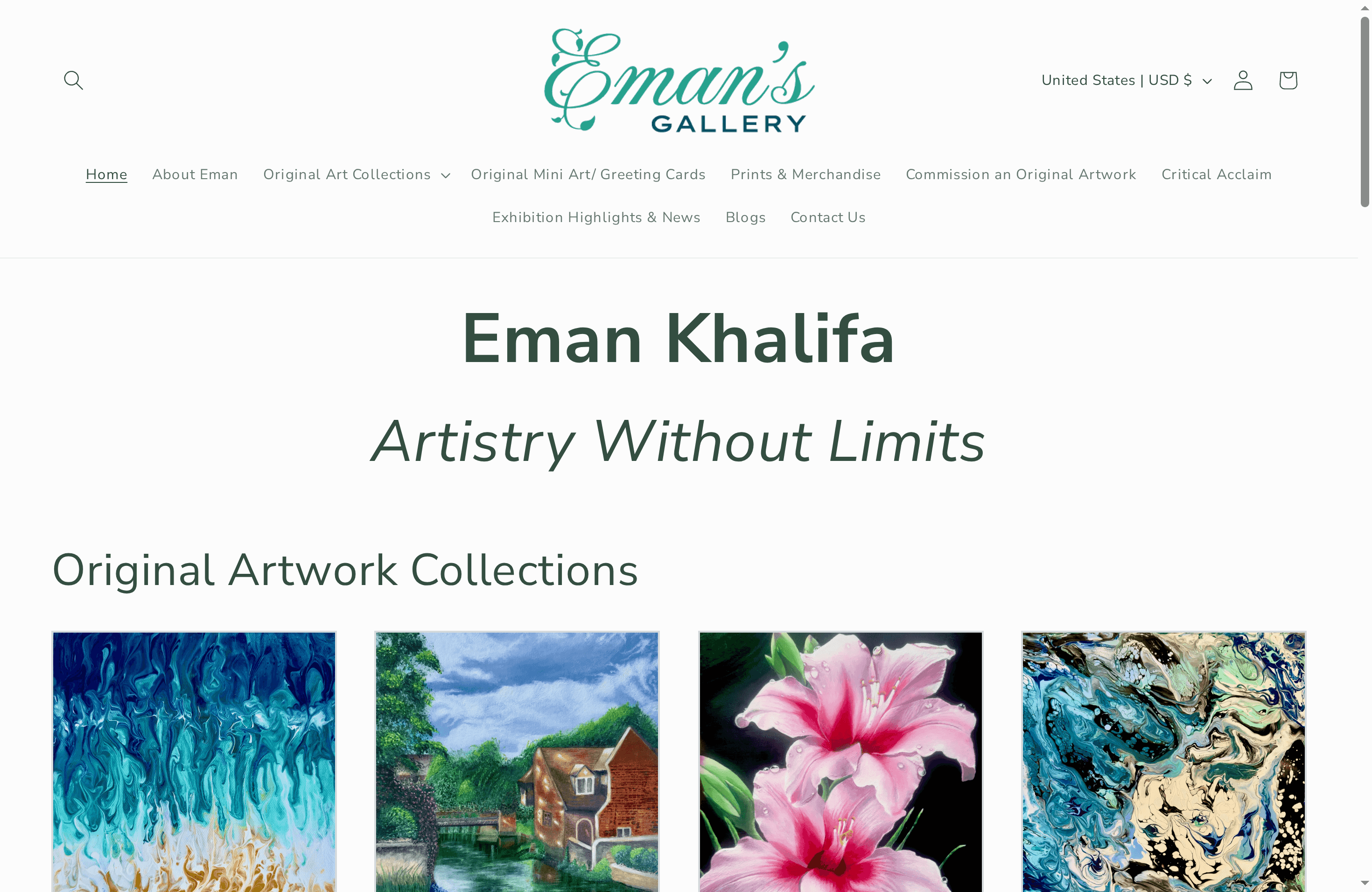
Each piece is built around the same principles discussed here: deliberate color relationships, considered composition, and emotional intention. The Good Tidings original painting uses fluid blue and gold to create a sense of expansive calm. The Mystic Sea original channels movement and depth through layered color fields. For collectors who want abstract art with genuine philosophical weight, the Fragments of Memory canvas print delivers ink-splash abstraction with striking visual tension. Every work is one of a kind.
FAQ
What does abstract paint meaning actually refer to?
Abstract paint meaning refers to the emotional, philosophical, or spiritual content an artist communicates through form, color, and composition rather than through recognizable subjects. The meaning lives in the formal elements themselves, not in any hidden narrative.
Is abstract art random or does it follow rules?
Abstract art follows the same compositional principles as representational art, including balance, rhythm, contrast, and proportion. The difference is that these principles serve emotional and philosophical goals rather than descriptive ones.
Who pioneered the idea that abstract forms carry meaning?
Wassily Kandinsky is the most recognized pioneer, arguing in Concerning the Spiritual in Art (1911) that colors and forms carry inherent emotional and spiritual vibrations. Hilma af Klint produced nonrepresentational spiritual paintings even earlier, though her work was not publicly shown until decades after her death.
How do I interpret an abstract painting if there is no subject?
Focus on your physical and emotional response to color temperature, line quality, and compositional balance rather than searching for objects. That visceral reaction is the intended meaning of the work.
What is the difference between abstract and nonrepresentational art?
Abstract art is a broad category that includes both derived abstraction (simplified from real subjects) and total nonrepresentational work (no real-world reference at all). Nonrepresentational art sits at the far end of the abstraction spectrum, where forms exist purely for their own visual impact.
Stay Connected
- ✨ Explore Eman Khalifa's original art, fine art prints and art-inspired merchandise.
- Follow Eman Khalifa's art journey on: Instagram @emans_gallery and Facebook
- Watch Eman Khalifa creating live art on: YouTube @emans_gallery
