


Best Place to Buy Cheap Art: Top Budget-Friendly Sites
TL;DR:
- Affordable art options include direct-from-artist galleries, curated print retailers, and open-edition platforms. Buyers should verify print quality, return policies, and proper sizing to ensure a satisfactory purchase. Eman’s Gallery offers original paintings and museum-quality prints with direct artist provenance and custom options.
The best places to buy cheap art right now are Eman’s Gallery (originals and museum-quality canvas prints direct from the artist), curated print retailers, open-edition print platforms, artist-direct marketplaces, and big-box home decor stores. Before you buy anywhere, check the return policy and confirm the print material or canvas spec — those two steps prevent most disappointing purchases.
- Eman’s Gallery — original paintings and canvas prints with direct artist provenance; commissions available
- Curated print retailers (Minted, 20×200, Sonic Editions, Pop Chart, Rifle Paper Co.) — consistent specs, framing options, and editorial curation
- Open-edition print platforms (Society6, Art.com, Great Big Canvas, Haus and Hues) — the widest price range, with prints starting around $20
- Artist-direct marketplaces (Etsy, Saatchi Art, Artfinder, Zatista, Tappan Collective, Uprise Art, ArtStar) — originals and prints sold by independent artists
- Big-box and decor retailers (West Elm, Anthropologie, Urban Outfitters, QVC, Drool) — ready-to-hang pieces at mass-market prices
Before you buy: confirm the return window (at least 14 days), the print substrate (giclée paper or canvas vs. standard inkjet poster), and the image resolution for anything larger than 16×20 inches.
Table of Contents
- Where to buy cheap art: a shortlist comparison
- How to choose cheap art that actually looks good
- How to pay less for art: practical saving tactics
- What “cheap art” actually means: prints, reproductions, and originals
- Where to find cheap art in person
- Why Eman’s Gallery works for budget-minded art buyers
- Key Takeaways
- Buying art on a budget: a perspective
- Eman’s Gallery: originals and prints for every budget
- Sources and further reading
- FAQ
Where to buy cheap art: a shortlist comparison
| Source | Best For | Typical Price Range | Style/Selection | Quality Options | Shipping & Returns | Customize/Commission |
|---|---|---|---|---|---|---|
| Eman’s Gallery | Originals + canvas prints | Prints from ~$40; originals vary | Abstract, seascape, floral, geometric | Museum-quality giclée canvas | Worldwide shipping; check site for returns | Commissions available |
| Curated print retailers | Framed prints, décor-focused | ~$30–$300+ | Editorially selected, cohesive | Giclée paper, archival inks | Varies by retailer; usually 30 days | Limited; some custom sizing |
| Artist-direct marketplaces | Unique originals + affordable prints | Prints from ~$20; originals usually $100 and up | Highly varied; artist-specific | Giclée, canvas, works on paper | Varies by seller; check each listing | Often yes — message the artist |
| Mass-retail decor hubs | Budget wall decor, ready-to-hang | $10–$150 | Trend-driven, broad | Standard inkjet, some canvas | Fast; easy returns | Rarely |
| Secondary/auction & resale | One-off originals, vintage finds | $5–$500+ | Unpredictable; potentially rare | Original media; condition varies | Varies; often final sale | No |
Eman’s Gallery
Eman’s Gallery sells original handmade paintings and museum-quality canvas prints directly from artist Eman Khalifa. Because there is no gallery middleman, buyers get direct provenance and can ask questions about the work before purchasing. Canvas prints are produced to museum-quality standards on archival materials. Commissions are available for buyers who want a specific size, palette, or subject. Worldwide shipping covers the U.S., UK, Canada, Australia, and more.
- Direct artist contact and verified provenance on every piece
- Commissions accepted for custom originals
- Educational blog content helps first-time buyers buy art online safely
Curated print retailers
Minted sources work from independent artists through design challenges, so every print has a named creator. 20×200 built its model around limited-edition prints at accessible price tiers — the same image in multiple sizes, with smaller editions costing less. Sonic Editions focuses on licensed photography prints. Pop Chart specializes in data-visualization art. Rifle Paper Co. offers illustrated prints with a distinctive botanical and vintage aesthetic. All of these retailers publish clear specs (paper weight, ink type, print process), which makes comparison straightforward.
- Consistent product specs and framing options across the catalog
- Named artists and edition details on most listings
- Framing add-ons available at checkout on most platforms
Artist-direct marketplaces
Etsy is the largest venue for independent artist prints and originals in the U.S., with millions of listings across every price point. Saatchi Art and Artfinder focus specifically on original works and vetted prints. Zatista and Tappan Collective curate a narrower selection of emerging and mid-career artists. Uprise Art (also known as Uprise Gallery) positions itself as a discovery platform for contemporary originals. ArtStar carries both prints and originals with a focus on accessible collector pricing.
On these platforms, buying originals requires checking each seller’s return policy individually — it varies widely. Read seller reviews and look for photos of the work in a real space before committing.
- Direct artist contact possible on most platforms
- Wide price range from under $20 for prints to thousands for originals
- Return policies and shipping timelines differ by seller; always check before purchasing
Mass-retail decor hubs
West Elm and Anthropologie carry curated wall art at mid-range prices, often with free shipping thresholds and easy in-store returns. Urban Outfitters skews toward poster-format prints and photographic art at lower price points. QVC sells framed art through time-limited offers, sometimes at significant discounts. Drool and Haus and Hues focus on affordable canvas and framed prints with fast U.S. fulfillment.
- Lowest average price point of any category
- Easy returns and fast domestic shipping
- Limited artist information; mass-produced rather than artist-verified
Secondary/auction and resale venues
1stDibs sits at the premium end of the resale market, with authenticated works and a buyer-protection program. Estate sales, local auctions, and platforms like Chairish or Facebook Marketplace can surface original works at well below gallery prices. Condition and provenance documentation vary significantly, so this route rewards buyers who know what to look for.
- Potential for genuine originals at low prices
- Condition and authenticity must be verified independently
- Returns are rarely available; inspect carefully before purchasing
How to choose cheap art that actually looks good
Follow this checklist before you finalize any purchase. Skipping even one step is how a $30 print ends up looking like a blurry poster.
- Measure your wall and apply the 2/3 rule. The artwork width should cover roughly two-thirds of the wall or furniture width it sits above. For a 72-inch sofa, aim for a piece 44–48 inches wide. For a 48-inch console, target 30–32 inches. For a 36-inch dresser, 22–24 inches works well.
- Check image resolution and DPI. For prints larger than 16×20 inches, the source file should be at least 300 DPI at print size. If the retailer does not publish resolution specs, ask before ordering — a low-resolution file printed large will show visible pixelation.
- Confirm the print substrate. Giclée on archival paper or canvas uses pigment-based inks rated for 75–100 years of display life. Standard inkjet posters use dye-based inks that can fade in 5–10 years, especially in direct light. The listing should state which process is used.
- Read the return policy before you pay. A minimum 14-day return window is a reasonable baseline. Some platforms (particularly artist-direct marketplaces) are final sale; others offer free returns. Know the policy before the piece ships.
- Check shipping timeline and packaging notes. Rolled prints in tubes are standard and generally safe. Framed pieces should ship in reinforced boxes with corner protection. Confirm estimated delivery and whether tracking is included.
Pro Tip: If you are deciding between a cheap original and a print at the same price, the original wins on provenance and long-term value — but only if the seller provides clear photos of the work in natural light and can confirm the medium and dimensions. A print from a reputable retailer with published specs is a safer buy than an original with no documentation.
How to pay less for art: practical saving tactics
Online art retailers run promotions regularly, and timing a purchase around those cycles can reduce the effective price meaningfully.
- Buy open-edition prints. Open editions have no artificial scarcity, so prices stay lower than numbered limited editions of the same image. The visual impact is identical.
- Sign up for retailer newsletters. Most curated print platforms and artist-direct marketplaces send first-purchase discount codes (typically 10–20% off) on signup. Minted, Society6, and Art.com all use this model.
- Shop seasonal sales. The strongest discount windows tend to fall around Black Friday, post-holiday January clearances, and spring home-refresh periods. Promo timing and coupon stacking can significantly affect the final price, particularly for framed pieces.
- Buy unframed. Framing adds $30–$150 or more to a print’s listed price. Buying unframed and sourcing a frame locally or from IKEA, Target, or a thrift store often costs less overall and gives you more control over the finish.
- Buy smaller sizes. Most print platforms tier pricing by size. The smallest edition of a print can cost a fraction of the largest, with the same image quality and artist credit.
- Negotiate at art fairs and open studios. Artists selling in person at local markets or open studio events often accept offers, especially late in the day. A polite, direct ask for 10–15% off is standard practice.
- Check the art merchandise category. Art-printed products (tote bags, throw pillows, mugs) from artist-run shops give you the artist’s imagery at a lower entry price than a framed print.
One trade-off worth noting: the cheapest prints often use dye-based inks on uncoated paper. These materials fade faster than archival giclée, especially in rooms with direct sunlight. If permanence matters, pay a small premium for pigment-based inks and UV-resistant coating — the difference in upfront cost is usually under $20.
What “cheap art” actually means: prints, reproductions, and originals
The word “affordable” covers a wide range of products with very different characteristics.
| Art Type | Durability | Perceived Value | Typical Price Band | Best Use |
|---|---|---|---|---|
| Open-edition print | Moderate (varies by ink/paper) | Decorative | $20–$80 | High-traffic rooms, renters, frequent redecorators |
| Limited-edition print | Good (archival specs common) | Collectible | $50–$500 | Gift, starter collection, statement wall |
| Giclée on paper | High (75–100 yr rated) | Collectible/fine art | $80–$600 | Long-term display, collector purchase |
| Canvas print | High (archival canvas) | Decorative/fine art | $40–$400 | Large walls, living rooms, offices |
| Mass-produced poster | Low (dye ink, uncoated) | Decorative only | $5–$40 | Temporary display, student spaces |
| Reproduction print | Moderate | Decorative | $20–$200 | Iconic works, educational display |
| Original artwork | Very high | Investment/personal | $100–$10,000 | Collectors, permanent spaces |
Open-edition prints are the same image printed on demand with no quantity limit. Limited-edition prints are numbered and signed, with a fixed run size. Giclée refers to a high-resolution inkjet process using archival pigment inks on fine art paper or canvas. Reproductions are printed copies of existing works, often from museums or estates. Originals are one-of-a-kind works made by the artist’s hand.
For types of home decor art that will stay on your wall for years, giclée prints and canvas prints offer the best balance of price and longevity. Mass-produced posters are fine for temporary spaces but will show fading within a few years in a sunny room.
When a cheap original is worth the risk: if the seller provides multiple photos in natural light, states the medium and dimensions clearly, and has verifiable reviews or a social media presence showing their work, the risk is manageable. Ask for a photo of the work next to a common object (a hand, a book) for scale confirmation.
Where to find cheap art in person
Offline venues can surface originals and prints at prices well below what the same quality costs online.
Best offline venues:
- Thrift stores (Goodwill, Salvation Army, local independents) — framed prints and occasional originals at $2–$30; condition varies
- Estate sales — one of the most reliable sources for original works at below-market prices; check EstateSales.net for local listings
- Art school and MFA graduate shows — student work is priced to sell, often $50–$300 for originals; quality is frequently high
- Flea markets and antique fairs — mix of reproductions and genuine vintage works; negotiation is expected
- Local artist markets and open studio events — direct from the artist, often with the best price-to-quality ratio of any in-person venue
How to shop in person effectively:
- Bring a tape measure and a photo of the wall you are buying for (with a piece of tape marking the target width on the wall at home before you leave).
- Use your phone to photograph the piece next to your hand or a standard object for scale reference.
- For originals, ask the seller for the title, medium, and year. A signed work with a clear title is the minimum documentation worth keeping.
- Negotiate politely. At estate sales and flea markets, 10–20% off the listed price is a reasonable opening ask.
- For any original purchased in person, request a receipt that includes the artist’s name, title, medium, and price paid. This is basic provenance documentation.
On authenticity: for works priced under $200, formal authentication is rarely practical. Focus on seller credibility: a named artist with a verifiable social media presence or website is a reasonable trust signal. For anything over $500, ask for a certificate of authenticity or provenance documentation before purchasing.
Why Eman’s Gallery works for budget-minded art buyers
Eman’s Gallery offers original handmade paintings and museum-quality canvas prints by artist Eman Khalifa, sold directly from the studio. For buyers who want provenance and artist connection at accessible price tiers, this direct model removes the gallery markup that typically adds 40–50% to an artwork’s retail price.
Eman Khalifa is a London-based British-Egyptian-American contemporary artist working in oil, acrylic, and mixed media. Her practice spans abstract nature, seascapes, landscapes, and florals, with a focus on atmosphere, movement, and light. She has been featured in FAD Magazine and Artlyst, and accepts commissions for custom original works.
What Eman’s Gallery offers buyers:
- Original one-of-a-kind paintings across abstract, geometric, floral, landscape, and seascape subjects
- Museum-quality canvas prints at lower price points than originals, produced on archival materials
- Art-printed merchandise (mugs, tote bags, throw pillows, apparel) as lower-cost entry points
- Worldwide shipping from fulfillment centers in the U.S., UK, Canada, Australia, and across Europe
- Educational blog content covering how to buy paintings online and what to check before purchasing
Canvas prints such as the Private Eye canvas print and the City in Grids canvas print represent the print range, while originals like Good Tidings and Nocturned show the scope of the painting practice. Shipping timelines and return details are listed on each product page.
Key Takeaways
For affordable art, open-edition prints and direct-artist canvas prints deliver the best visual impact per dollar; originals from verified artists offer provenance and lasting value that prints cannot match.
| Point | Details |
|---|---|
| Prints start at affordable prices | Open-edition prints from major platforms begin at accessible price points, making them the lowest-cost entry point. |
| Apply the 2/3 sizing rule | Artwork width should cover roughly two-thirds of the wall or furniture width it sits above. |
| Check print substrate | Giclée on archival paper or canvas is rated for 75–100 years; standard inkjet posters fade in 5–10 years. |
| Verify return policy first | A minimum 14-day return window is a reasonable baseline; artist-direct listings are often final sale. |
| Eman’s Gallery for originals | Eman’s Gallery offers direct-artist originals and museum-quality canvas prints with worldwide shipping and commissions available. |
Buying art on a budget: a perspective
Price is the wrong primary filter for art. A $25 poster from a mass-retail site and a $200 giclée print from an independent artist can occupy the same wall space, but only one of them carries a story, a named creator, and materials that will still look sharp in fifteen years. The most common regret buyers express is not spending too much — it is buying something cheap and generic that they stopped caring about within a year.
That said, accessible price points genuinely matter, and the best budget art purchases tend to share a few characteristics: a named artist, a clear material spec, and a return window. Those three checks cost nothing and filter out most of the purchases people regret.
For buyers who want an original but feel the price is out of reach, commissions are often more accessible than the sticker price on a finished gallery piece. An artist working directly with a buyer can adjust size, format, and complexity to fit a specific budget. That conversation is worth starting.
Eman’s Gallery: originals and prints for every budget
Eman’s Gallery is a direct alternative to browsing mass-retail sites for wall art. Instead of trend-driven prints with no artist context, you get original paintings and museum-quality canvas prints made by a single named artist, shipped worldwide from fulfillment centers in the U.S., UK, Canada, and Australia.
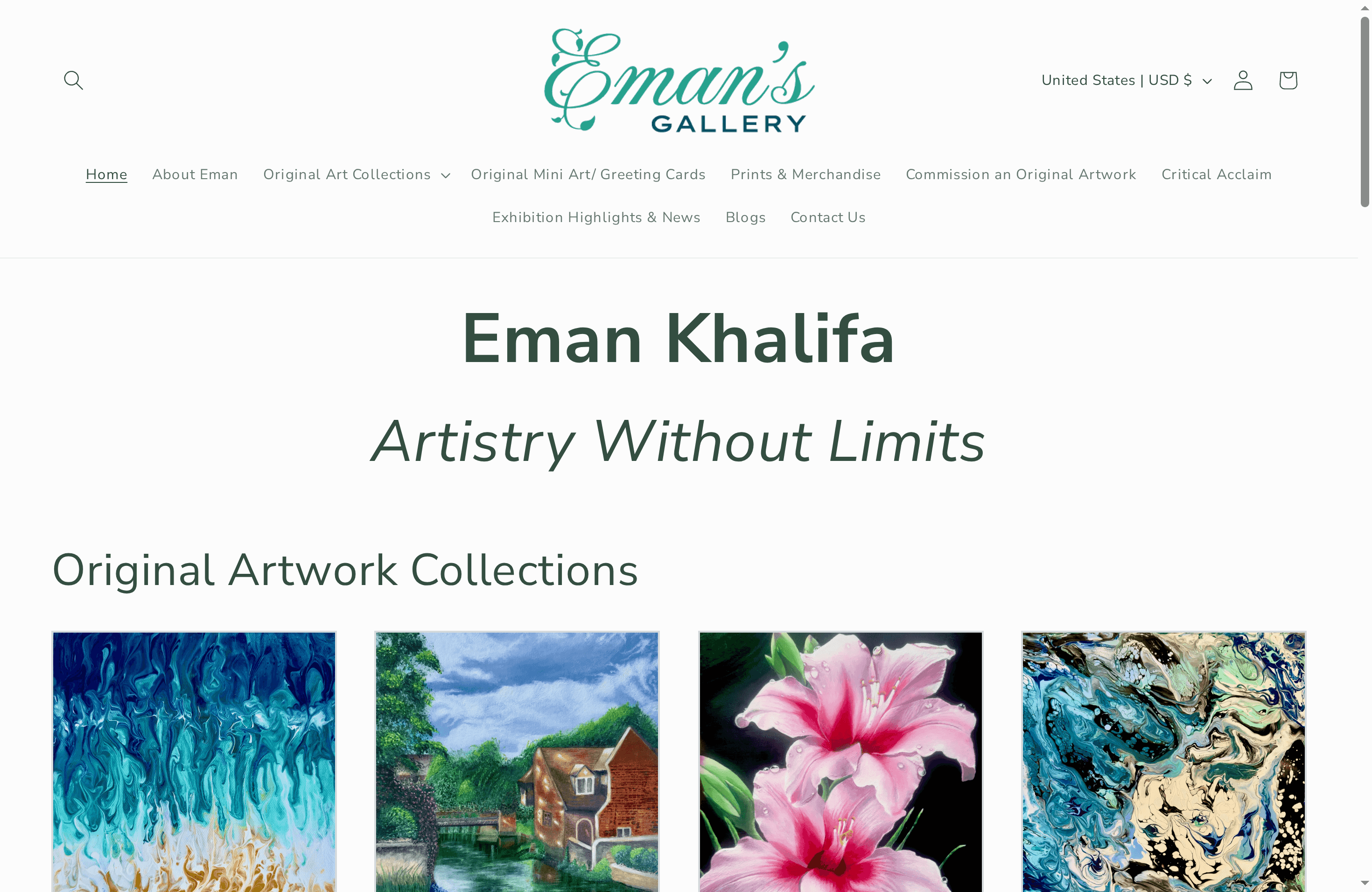
Canvas prints from the collection start at accessible price points and are produced on archival materials with pigment-based inks. Originals are one-of-a-kind works with full provenance. Commissions are available for buyers who want a specific size, color palette, or subject. Browse the Fragments of Memory canvas print or the Mystic Sea original painting to see the current range, or view the full signature art merchandise collection for lower-cost entry options. To start a commission or ask about sizing and shipping, contact the gallery directly through the product pages.
Sources and further reading
These are the primary references used to build this article. For current shipping rates, return windows, and pricing, always check the retailer’s own product pages directly.
- Where to Buy Affordable Art Online: 33 Best Stores to Shop | Architectural Digest — editorial roundup of 30+ retailers with price-range examples and product-type breakdowns
- The Best Sources for Affordable Art | Apartment Therapy — covers limited-edition prints and curated retailers as budget options
- Affordable ideas for quality wall art? | Reddit r/BuyItForLife — crowd-sourced recommendations for prints and works on paper
- The 2/3 rule for a perfect wall canvas | Oleka Canvas — step-by-step sizing guidance for applying the two-thirds rule
- Is Michaels cheaper than Hobby Lobby? | Quora — community discussion on promo cycles and coupon strategies for art and framing purchases
- Where to Buy Art Online With Confidence | Eman’s Gallery — buyer-education guide covering platform selection and trust signals
- Buying Art Online Safely: What to Check | Eman’s Gallery — practical checklist for verifying sellers, specs, and return policies before purchasing
- Where to Find Affordable Original Art | The Quality Edit — beginner-focused guide to sourcing originals at accessible prices
- Where do you buy your paintings and wall art? | Reddit r/interiordecorating — community recommendations for good places to buy artwork online and in person
FAQ
Where is the best place to buy cheap art online?
Open-edition print platforms (Society6, Art.com, Haus and Hues) offer the lowest starting prices for prints, beginning at approximately $20. For originals with artist provenance, Eman’s Gallery and artist-direct marketplaces like Etsy and Saatchi Art are strong options.
How do you buy real art on a budget?
Focus on open-edition prints from named artists, small-format originals from emerging artists on platforms like Artfinder or Etsy, or direct-artist galleries like Eman’s Gallery where the gallery markup is removed. Always confirm the medium, dimensions, and return policy before purchasing.
What is the 2/3 rule for wall art?
The 2/3 rule states that artwork width should cover roughly two-thirds of the wall or furniture width it hangs above. For a 72-inch sofa, that means a piece approximately 44–48 inches wide.
Is Michaels or Hobby Lobby cheaper for framing?
Pricing at both stores shifts significantly based on current coupons and promotional cycles. Both chains run regular 40–50% off coupons on custom framing; checking both stores’ current promotions before committing to either is the most reliable way to get the lower price.
What does “giclée” mean, and does it matter for cheap prints?
Giclée is a high-resolution inkjet printing process using archival pigment-based inks, typically rated for 75–100 years of display life. For prints you plan to keep long-term, giclée on archival paper or canvas is worth the modest price premium over standard inkjet posters.
Stay Connected
- ✨ Explore Eman Khalifa's original art, fine art prints and art-inspired merchandise.
- Follow Eman Khalifa's art journey on: Instagram @emans_gallery and Facebook
- Watch Eman Khalifa creating live art on: YouTube @emans_gallery
