


MoMA in New York: Starry Night, Visit Details, and Art at Home
MoMA stands for The Museum of Modern Art, a major institution in Midtown Manhattan devoted to modern and contemporary art across painting, sculpture, photography, film, and design. Its galleries hold world-famous works, including Vincent van Gogh’s The Starry Night, and the museum runs rotating exhibitions and public programs. A standard admission ticket covers the permanent collection and most special exhibitions on view.
TL;DR:
- Adult admission costs $30 as of 2026 and includes the permanent collection plus most special exhibitions; children 16 and under enter free.
- The collection spans more than 200,000 works across painting, photography, film, architecture, design, and electronic media, but rotating displays mean highlights may change.
- MoMA PS1, a separate Long Island City institution for experimental contemporary art, offers free admission to all visitors from January 1, 2026, for multiple years.
- Reserve timed tickets ahead, especially for weekends or peak tourist periods, and target a weekday opening to avoid heavier crowds; holiday hours can vary.
Table of Contents
- MoMA’s founding and mission: who started it, when, and why
- What the collection includes and how it’s organized
- Iconic works in the collection and the story behind The Starry Night
- MoMA PS1: what it is and how it differs from the main museum
- Planning a visit: address, hours, admission, and ticketing
- Accessibility options and visitor services to know before you go
- Practical tips for a first-time visit
- What a museum visit can teach you about collecting for your own home
- Bringing museum-quality art into your own space
- FAQ
- Sources
- Stay Connected
MoMA’s founding and mission: who started it, when, and why
MoMA was established in 1929 by three private citizens: Abby Aldrich Rockefeller, Lillie P. Bliss, and Mary Quinn Sullivan. These founders wanted to challenge the conservative acquisition policies of existing art museums and create a dedicated home for progressive, modern art, a mission stated directly on MoMA’s official history page.
Alfred H. Barr, Jr. became the museum’s first director. Under his leadership, MoMA set out to help the public understand and engage with the visual art of its own time rather than waiting decades for new movements to earn institutional acceptance. That approach shaped how the museum built its collection and organized its programs from the start.
A few milestones mark MoMA’s early growth:
- Opened in 1929 in rented space on Fifth Avenue, a modest start for what would become a defining cultural institution.
- Moved locations multiple times through the 1930s as the collection and public interest grew.
- Opened a custom-built flagship building in 1939, a structure designed specifically for modern art rather than adapted from an older model, as detailed in MoMA’s own timeline of the period.
- Began staging solo exhibitions of living artists early on, a practice that broke from the habits of older, more traditional museums.
MoMA’s mission has stayed consistent even as its footprint expanded: connect people to the art of their own era and support the experimentation that drives it forward.
What the collection includes and how it’s organized
MoMA’s collection is not limited to paintings on a wall. It spans the late 19th century to the present and includes more than 200,000 works across a wide range of media.
The collection categories include:
- Painting and sculpture, the core of the museum’s public identity.
- Photography and prints, covering more than a century of image-making.
- Film, architecture, and design, fields MoMA treats as equally central to modern visual culture.
- Drawing, artist’s books, and electronic media, which round out the contemporary side of the collection.
Galleries are organized loosely by period and discipline, so visitors moving through the building tend to encounter early modernism on some floors and contemporary and media-based work on others. This layout helps make sense of a collection this large: rather than wandering randomly, visitors can follow a rough chronology or pick a single medium, like photography or design, and trace it across decades.
Exhibitions and public programs are how the museum keeps the collection in motion. Works rotate in and out of view, and temporary shows pull pieces from storage or borrow from other institutions, meaning no two visits to MoMA look quite the same even if you’re mainly there to see the permanent collection highlights.
Iconic works in the collection and the story behind The Starry Night
Vincent van Gogh’s The Starry Night has belonged to MoMA’s collection since 1941, making it one of the longest-held and most recognized paintings in the building. Van Gogh created the work in June 1889 while he was a patient at the Saint-Paul asylum in Saint Rémy, painting the view from his window from memory and observation rather than from life in the moment.
The painting is a celebrated work in the museum, and visitors often come to see it in person. Its swirling sky and intense color have made it a touchstone for how expressive, emotionally charged brushwork can define a single image. The museum’s own collection record places the work in the Alfred H. Barr, Jr. Galleries, alongside other pillars of early modernism.
Beyond Van Gogh, visitors often head to MoMA looking for Cubist and early 20th-century painting, major photography holdings that trace the medium’s development, and Pop-era work that shaped how later generations saw consumer culture and mass imagery. These categories sit near each other on the collection floors, which makes it easy to move from one era to the next without doubling back.

MoMA PS1: what it is and how it differs from the main museum
MoMA PS1 is an affiliated institution, not a branch of the main Midtown building. Founded in 1976 inside a converted 19th-century public schoolhouse in Long Island City, PS1 has been affiliated with The Museum of Modern Art since 2000, while keeping its own identity and curatorial direction.
A few distinctions matter for visitors:
- PS1 focuses on experimental, contemporary art and site-specific installations rather than the historical survey found at the main museum.
- Its programming grew out of the 1970s alternative-space movement, with an emphasis on artist-driven work and community engagement.
- Beginning January 1, 2026, MoMA PS1 became free for all visitors for a multi-year period, funded by a philanthropic gift tied to the institution’s 50th anniversary.
This change makes PS1 one of the largest free contemporary art spaces in New York City, a notable shift from the ticketed model still used at the main MoMA building.
Planning a visit: address, hours, admission, and ticketing
MoMA sits at 11 West 53rd Street in Midtown Manhattan, with regular hours typically running from 10:30 a.m. to 5:30 p.m. and extended hours on Fridays. Checking the official visitor page before you go is worth it, since hours shift around holidays and special events.

General admission for adults is $30 as of 2026, and that price covers both the permanent collection and most special exhibitions on view that day. Discounted rates apply for seniors and students, and children 16 and under are admitted free, which makes MoMA a realistic stop for families without a separate ticket line to manage.
A few practical steps make the visit smoother:
- Reserve timed tickets online in advance, especially during peak tourist seasons or weekends.
- Arrive early or late in the day to avoid the longer lines that tend to build midmorning.
- Consider starting in the galleries with the core modern collection if that is your priority.
- Keep your ticket or confirmation accessible on your phone, since same-day reentry is typically allowed with proof of admission.
- Build in extra time if a major special exhibition is running, as those galleries can slow down gallery-to-gallery pacing considerably.
Rainy days and school holidays tend to bring heavier crowds, so a weekday morning right at opening is usually the quietest window.
Accessibility options and visitor services to know before you go
MoMA provides a range of accommodations for visitors who need them. Wheelchairs and rollators are available on a first-come, first-served basis, along with portable stools for anyone who needs to rest partway through a gallery.
A short list of what’s available on-site:
- Power-assist doors at the main entrances, making it easier to move in and out of the building independently.
- A designated Access-A-Ride stop directly at 11 West 53rd Street.
- Coat check and MoMA WiFi for visitors who want to travel light or stay connected inside the galleries.
- Audio guides accessible through your own device, with no separate equipment rental required.
Visitors who need specific accommodations can review the accessibility details on MoMA’s website ahead of time or ask staff directly upon arrival.
Practical tips for a first-time visit
A focused visit can take several hours if you start on the fifth floor and work down, following the collection’s rough chronology rather than crisscrossing floors. Mornings and rainy days tend to bring the longest lines, so plan around that when you can.
- Flash photography is restricted in most galleries, so switch it off before you start shooting.
- Keep conversations at a low volume and avoid touching any artwork, even sculptures that look sturdy.
- Hold onto your ticket for same-day reentry if you plan to step out for a break.
- Late Friday hours tend to be quieter than weekend afternoons, a good window if you want more room to move.
Pro Tip: Use the audio guide on your own phone instead of renting a device, and save the gift shop for after your gallery visit so you’re not carrying bags through crowded rooms.
What a museum visit can teach you about collecting for your own home
Standing in front of a painting at full scale, under proper lighting, changes how you think about size, color, and composition in a way photos never quite capture. That’s part of why collectors and interior designers return to museums like MoMA again and again: institutions like this one shape taste, and seeing how a large canvas commands a room offers real guidance for choosing art at home.
That instinct, to bring a piece of that scale and intention into your own space, is exactly what a bespoke commission can satisfy.
Bringing museum-quality art into your own space
A trip to MoMA often leaves you wanting more of that feeling at home: a piece with real presence, color that holds up in natural light, and a scale that fits the wall it’s meant for. At Eman’s Gallery, we offer original handmade paintings across abstract, geometric, floral, landscape, seascape, and still-life styles, alongside museum-quality canvas prints for anyone who wants that same visual weight without committing to a one-of-a-kind piece.
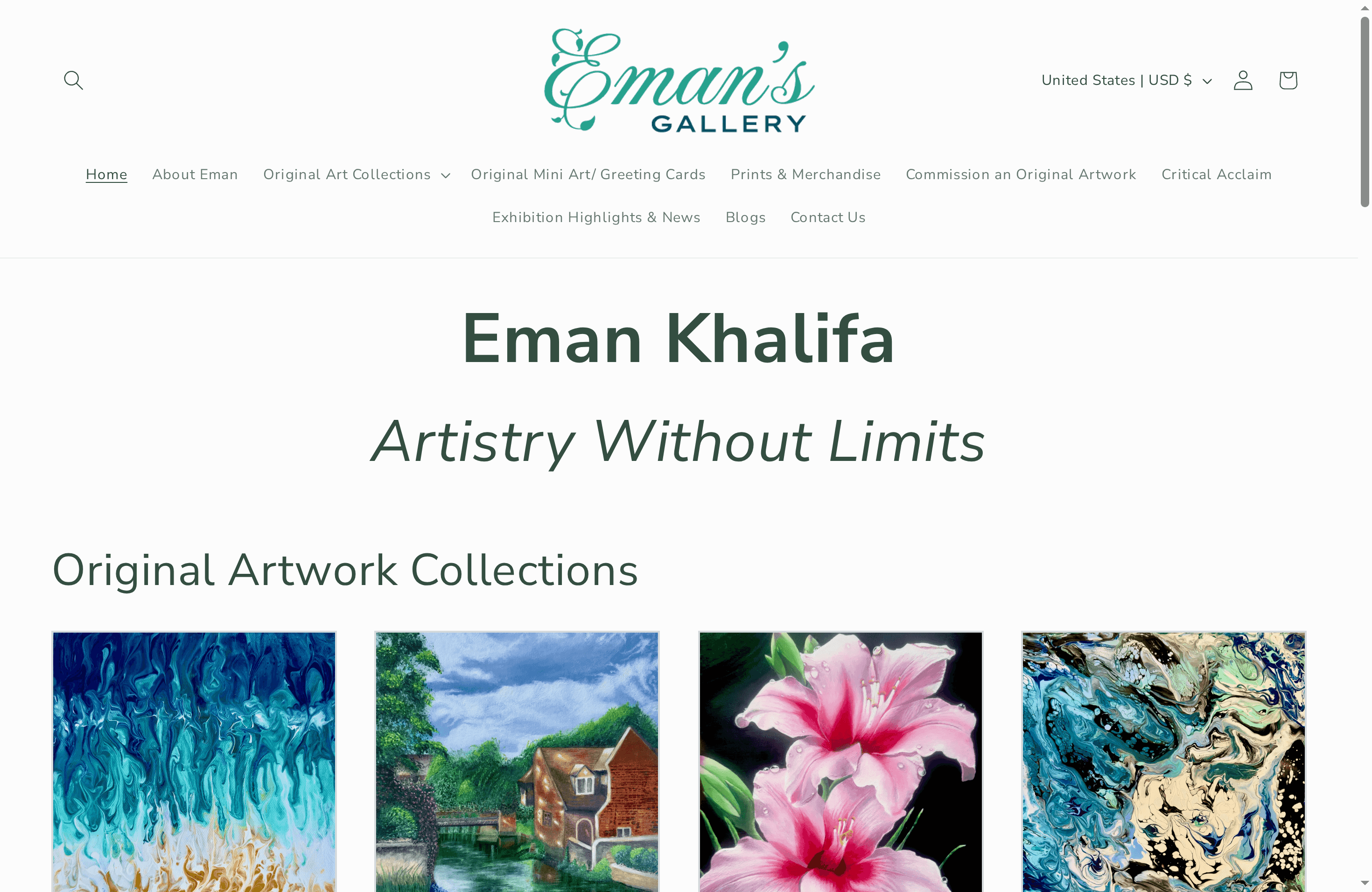
For readers inspired by a specific gallery or composition style, we also take bespoke commissions, where you specify the scale, palette, and mood you’re after, much like the works you’d pick out on a museum floor. If prints suit your space better, our canvas art prints collection offers a more accessible way to bring that same quality home. Browse the original paintings collection to see what’s currently available, or reach out about a custom piece built around your own walls.
FAQ
Is Starry Night at MoMA or the Met?
The Starry Night is at MoMA, not the Metropolitan Museum of Art. It has been part of MoMA’s collection since 1941 and is displayed on the fifth floor.
What does MoMA mean in Spanish?
MoMA is an English acronym for “The Museum of Modern Art” and functions the same way in Spanish-language contexts, typically kept as the proper name rather than translated. Spanish speakers commonly refer to it as “el MoMA” when discussing the museum.
What is a MoMA profile?
A MoMA profile generally refers to a personal account on MoMA’s website, used for managing museum membership, saving favorite artworks, or handling ticket purchases. Specific account features are best confirmed on MoMA’s own site, since functionality can change.
Is MoMA PS1 the same as MoMA?
No, MoMA PS1 is an affiliated but separate institution, founded in 1976 and formally affiliated with MoMA since 2000. PS1 focuses on experimental contemporary art in Long Island City and, starting January 1, 2026, offers free admission to all visitors.
How much does it cost to visit MoMA?
General admission for adults at MoMA is $30 as of 2026, and that price includes access to the permanent collection and most special exhibitions. Discounts apply for seniors and students, and children 16 and under are admitted free.
Stay Connected
- ✨ Explore Eman Khalifa's original art, fine art prints and art-inspired merchandise.
- Follow Eman Khalifa's art journey on: Instagram @emans_gallery and Facebook
- Watch Eman Khalifa creating live art on: YouTube @emans_gallery
— Eman
