


Rustic Wall Art for a Living Room, Done the Collector's Way
For a design-forward buyer, “rustic wall art for living room” spaces means one thing: an original painting or a museum-quality canvas print with texture, warmth, and a handmade sensibility, sized to command a wall. It does not mean mass-produced barnwood signs or distressed-frame prints sold by the crate. If you’re furnishing a living room that needs to feel collected rather than decorated, the standard is an original or a limited-edition print, sized to fill a large proportion of the available wall, on archival materials, with professional framing behind it.
- Choose originals or limited editions over open-edition decor for lasting value and presence.
- Size to the wall, not the furniture: two-thirds to three-quarters coverage is the rule designers use.
- Demand documentation: certificate of authenticity, edition number, and provenance history.
Quick fact: Above a sofa or console, the artwork should span about sixty per cent of the furniture’s width. Go narrower and the piece looks like an afterthought; go wider and it overwhelms the seating line.
Eman’s Gallery produces exactly this category of work. Eman Khalifa paints original abstract, landscape, and seascape pieces, and offers museum-quality canvas prints and commissions sized specifically for living-room walls.
Key Takeaways
Original paintings and museum-quality canvas prints, sized to fill two-thirds to three-quarters of a wall and properly documented, define credible rustic wall art for a living room.
| Point | Details |
|---|---|
| Size to the wall | Cover roughly two-thirds to three-quarters of the wall, or about 60% of sofa width above a sofa. |
| Center at eye level | Hang the piece so its center sits 57 to 60 inches from the floor, with 6 to 12 inches above furniture. |
| Verify before buying | Confirm medium, dimensions, provenance, certificate of authenticity, and returns policy in writing. |
| Protect the medium | Use UV glazing for paper, avoid direct sunlight, and light with warm dimmable LED or picture lights. |
| Source from Eman’s Gallery | Eman’s Gallery offers originals, museum-quality prints, and commissions sized for living-room walls worldwide. |
Table of Contents
- What Should You Check Before Buying Rustic Wall Art for Your Living Room?
- How Big Should Rustic Wall Art Be Above a Sofa?
- How Do You Protect an Original Painting or Print Long-Term?
- How Do You Style Rustic Wall Art With a Living Room’s Palette?
- What Should You Ask an Artist or Gallery Before You Buy?
- What Does “Rustic” Mean in an Original Painting?
- How Eman’s Gallery Delivers Museum-Quality Wall Art for Your Living Room
- Sources
- FAQ
What Should You Check Before Buying Rustic Wall Art for Your Living Room?
Buying art for a living room is not like buying a rug. You’re evaluating an object that has to hold visual weight for years, so the checklist starts before you fall in love with a piece.
- Define the room’s mood and function first. A media-heavy family room built for movie nights wants something moodier and lower-contrast than a formal sitting room used for entertaining. The art follows the room’s job, not the other way around.
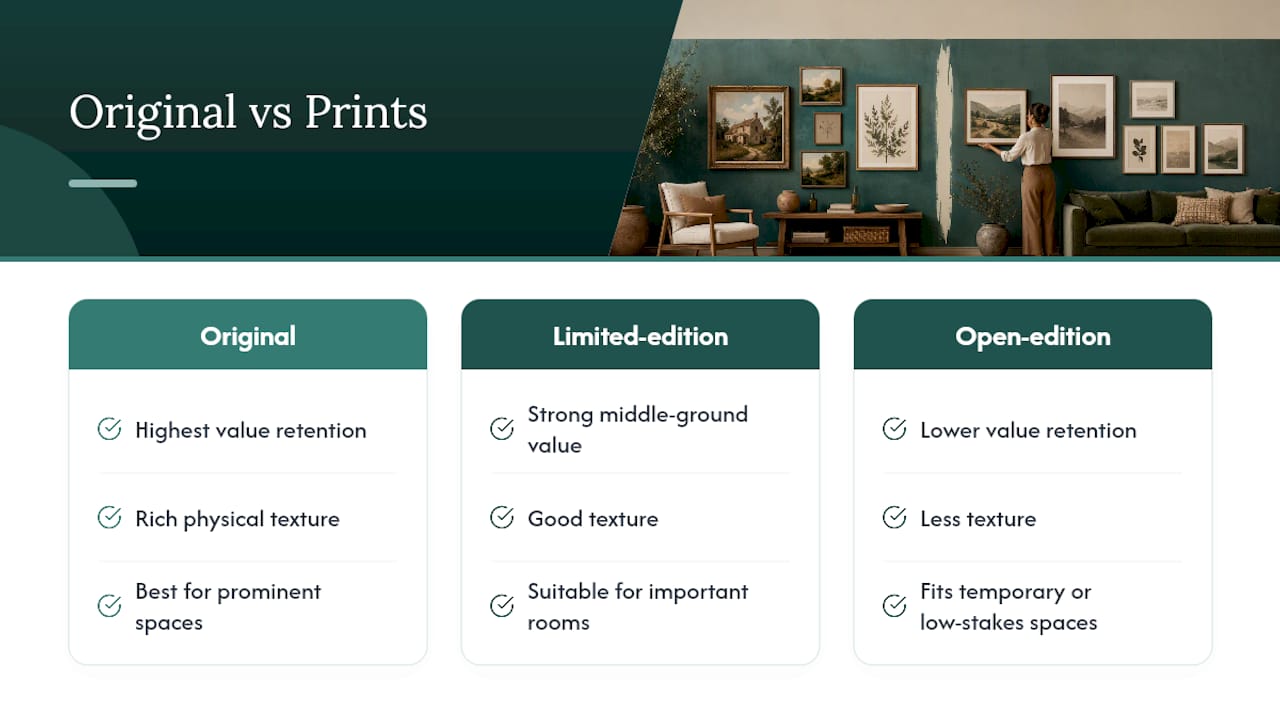
- Decide between an original, a limited edition, or an open-edition print. Originals carry the most value and the most texture, since brushwork and impasto catch light differently than any reproduction. Limited editions sit in between: numbered, finite, and still collectible. Open-edition prints are the least durable investment and the easiest to replace, which matters if you’re decorating a rental or a room you’ll redesign in a few years.
- Ask for provenance and documentation. A certificate of authenticity, exhibition history, and edition numbering protect resale value and confirm what you’re actually paying for.
- Calculate total cost of ownership, not just the sticker price. Framing, glazing, shipping, and insurance can add substantially to the base cost, and conservation-grade framing alone can approach the price of the artwork for works on paper.
Pro Tip: Pick the wall before you shop. Decide which wall the piece will live on and measure it first. Then, let that measurement filter your search. Buying the art first and hunting for a wall afterward is how collectors end up with pieces stacked in a closet.
How Big Should Rustic Wall Art Be Above a Sofa?
Scale is where most living-room art purchases go wrong, and it’s the easiest thing to get right with a tape measure.
- Wall coverage rule: the piece, or a grouped arrangement, should fill roughly two-thirds to three-quarters of the available wall space.
- Above-sofa rule: aim for about 60% of the sofa’s width. A 90-inch sofa wants a piece (or grouping) close to 54 inches wide.
- Center height: hang the piece so its center sits around standard eye level from the floor, and leave some breathing room above the sofa back.
- Test before you commit. Tape a paper mockup to the wall at the intended dimensions and live with it for a few days. View it from every seat in the room, not just standing in the doorway.
Pro Tip: Lay the mockup on the floor first to check proportions relative to nearby furniture before you tape anything to plaster. It saves you three rounds of painter’s tape and a wall full of pinholes. For a deeper breakdown of dimensions by wall type, see our guide on what size art works for living room walls.
How Do You Protect an Original Painting or Print Long-Term?
Museum-grade presentation isn’t a luxury add-on. It’s what separates a piece that still looks sharp in fifteen years from one that’s faded or warped in three.
- Know your medium’s tolerance. Oil and acrylic on canvas handle ambient light and humidity swings far better than works on paper, which are genuinely light-sensitive.
- Glaze anything on paper. The Canadian Conservation Institute’s guidance caps light exposure around 150 lux for many stable materials, lower for the most sensitive media, which is why UV-filtering glazing and archival backing matter for works on paper.
- Never hang art in direct sunlight. A south-facing window can fade pigment and yellow varnish within a single season of strong exposure.
- Light it correctly. Warm, dimmable LED, a picture light, or a narrow-beam spot flatters texture without cooking the surface. Avoid fixed halogen spots aimed directly at the canvas.
- Stretch rolled canvases professionally. A poorly tensioned canvas develops ripples that no amount of straightening fixes later.
Framing decisions should follow the medium: floating frames for canvas, conservation frames with spacers for paper, and always acid-free matting when paper is involved.
How Do You Style Rustic Wall Art With a Living Room’s Palette?
The strongest living rooms let the art set the mood, not chase it. Designers routinely pull accent colors from a painting rather than shopping for a piece that matches the sofa. A single ochre stroke in a landscape can become the throw pillow color; a cool gray seascape can push the whole room toward a calmer, more muted palette.
- Match mood before color. Decide if the room wants serene, dramatic, or cozy, then choose a piece whose atmosphere matches. A turbulent abstract seascape reads dramatic even in neutral tones.
- Weigh texture against your finishes. A heavily varnished or impasto surface catches light differently against matte plaster than against polished stone or brushed metal. Consider how the room’s existing textures will interact with the paint surface.
- Choose one statement piece for architectural anchoring, or compose a grouping when the wall is wide and irregular. A single large canvas centers attention; a multipart diptych or triptych can bridge an oddly proportioned wall that no single canvas fits well.
- Coordinate metal and wood finishes last, not first. Frame hardware and adjacent shelving should echo tones already present in the painting, not compete with them.
For structured color-pulling techniques, our piece on choosing color schemes to inspire an interior walks through the process room by room, and pairing wall color decisions with trim work benefits from the same logic covered in this guide to choosing interior door colors.
What Should You Ask an Artist or Gallery Before You Buy?
A confident buyer asks specific questions and gets specific answers. Vague replies are the biggest red flag in this category.
- Medium and surface: oil, acrylic, mixed media, canvas, or paper.
- Exact dimensions, framed and unframed.
- Year created and whether it’s part of a series.
- Exhibition history, if any, and whether a certificate of authenticity ships with the piece.
- Edition number, for prints, out of how many total.
- Shipping method and returns policy, especially for international orders.
Once the piece arrives, a short inspection routine protects your investment:
- Photograph the front and back before unpacking further, and keep all original packaging for at least 48 hours in case a return is needed.
- Inspect the canvas or paper under good light for shipping damage before signing off with the carrier.
- Have a professional stretch any rolled canvas rather than doing it yourself.
- Budget separately for framing, UV glazing, specialist wall fixings, and insurance, since these costs sit outside the artwork’s base price and can add up fast on larger commissions.
- Factor in customs duties on international shipments, which vary by destination country and are worth confirming with the seller before you order.
If you’re commissioning rather than buying finished work, clarify materials, timeline, revision policy, and framing expectations in writing before any paint hits canvas. Scope creep on commissions almost always traces back to an assumption nobody wrote down.
What Does “Rustic” Mean in an Original Painting?
Rustic, to me, has nothing to do with barnwood or distressing. It’s about texture that reads as handmade, palettes pulled from land and sea rather than a paint chip, and brushwork you can still feel with your eyes from across the room. That’s what survives in a living room for decades.
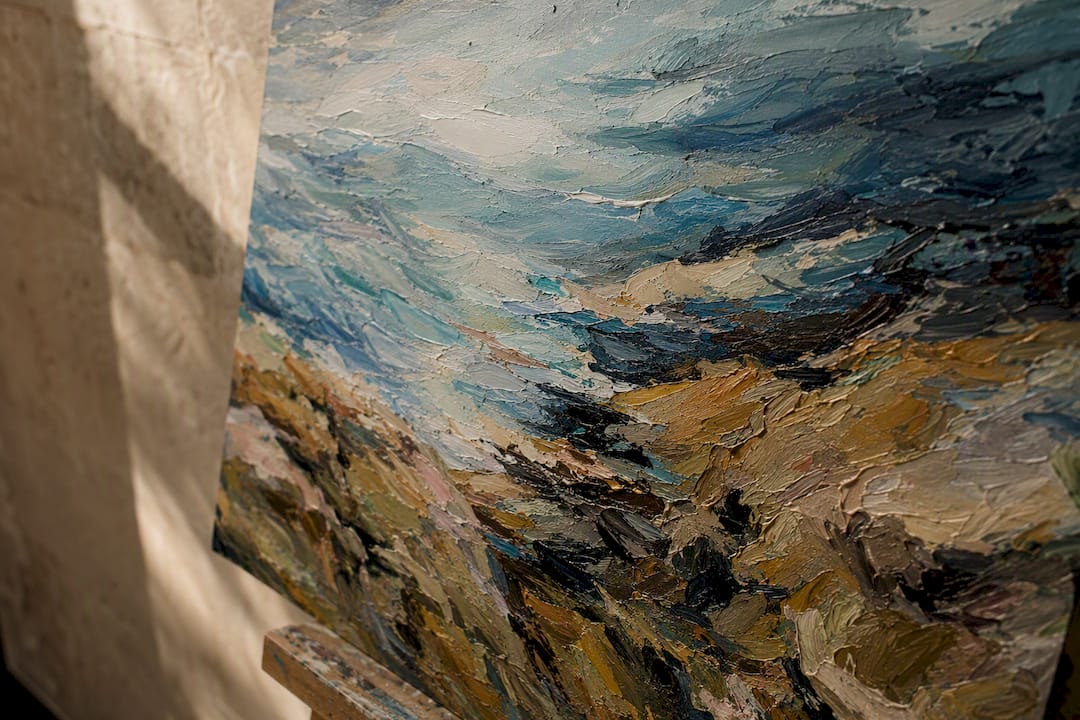
My honest tip: choose pieces with warm, earthy undertones even in cooler color families. They age better against changing furniture and light than anything chasing a trend.
How Eman’s Gallery Delivers Museum-Quality Wall Art for Your Living Room
If you’ve read this far, you already know what to look for: an original or limited-edition piece, correctly scaled, properly documented, and framed to last. That’s precisely the brief Eman’s Gallery is built to answer. Eman Khalifa paints one-of-a-kind contemporary realism and abstract originals alongside museum-quality canvas prints like Private Eye and the ink-splash abstract Fragments of Memory, each sized and finished for real living-room walls, not gallery storage.

Commissions are available for buyers who want a custom size or palette built around a specific wall, and every original ships with documentation covering provenance and edition details where applicable. Eman’s Gallery ships worldwide from the UK, USA, Canada, Australia, and across the EU, so a piece painted in London can reach a living room anywhere. Browse the contemporary realism collection to find a piece sized for your wall, or reach out about a commission if you already know the exact dimensions you need filled.
Sources
- How to Buy Art That Will Look Great in Your Home
- Original Art at Home: How to Choose Your First Piece
- What to Ask Before Buying Original Art
- How to Commission Art in 2026: A Guide by Industry-Leading Art Advisors
FAQ
What Counts as Rustic Wall Art for a Living Room?
An original painting or museum-quality canvas print with handmade texture and earthy or nature-inspired tones, sized to fill most of the wall, not mass-produced farmhouse decor.
How Big Should Art Be Above a Living Room Sofa?
Should I Buy an Original or a Print?
Originals hold the most value and texture; limited-edition prints are a strong middle ground, while open-edition prints suit temporary or lower-stakes spaces.
Does Eman’s Gallery Offer Custom Sizes for Living Rooms?
Yes. Eman’s Gallery accepts commissions and offers originals and canvas prints sized specifically for living-room walls, shipped worldwide.
How Do I Protect a Painting From Fading?
Keep it out of direct sunlight, use UV-filtering glazing for works on paper, and light it with warm, dimmable LEDs rather than direct halogen spots.
Stay Connected
- ✨ Explore Eman Khalifa's original art, fine art prints and art-inspired merchandise.
- Follow Eman Khalifa's art journey on: Instagram @emans_gallery and Facebook
- Watch Eman Khalifa creating live art on: YouTube @emans_gallery
