


Best Places to Buy Paintings: A Buyer's Channel Guide
The most reliable places to buy paintings fall into five channels: curated online galleries, open artist marketplaces, direct-artist shops, fine-art print platforms, and in-person venues (galleries, fairs, and auctions). Each serves a different buyer need. For collectors seeking provenance-backed originals, a direct-artist shop or curated gallery is the strongest choice. For décor-focused buyers, print platforms offer the widest selection at the lowest price points. Emansgallery is recommended as a direct-artist source for original handmade paintings and commissions.
Quick verdict by buyer need:
- Investment or collection: Curated galleries and auction houses. Provenance documentation and condition reports are standard.
- Commissioned originals: Direct-artist shops. You contact the artist, agree on scope, and receive a certificate of authenticity.
- Budget décor and prints: Fine-art print platforms. Wide selection, low prices, easy returns.
- Discovering emerging artists: Open online marketplaces. Broad variety, but verify seller credibility via independent review platforms like Trustpilot and check for B Corp certification where applicable.
Key Takeaways
The most reliable approach to buying paintings is to match your channel to your objective, verify provenance before paying, and use secure payment methods for any original above $200.
| Point | Details |
|---|---|
| Match channel to objective | Originals need curated galleries or direct-artist shops; prints suit dedicated print platforms. |
| Run three trust checks | Confirm certificate of authenticity, return policy, and insured shipping before every purchase. |
| Pay securely | Use credit card or PayPal for chargeback protection; avoid wire-only sellers. |
| In-person buying adds costs | Budget for buyer’s premiums at auctions and insured transport for gallery purchases. |
| Emansgallery for originals | Direct-artist shop offering one-of-a-kind originals, commissions, and worldwide shipping with certificates. |
Table of Contents
- What are the best places to buy paintings? A channel comparison
- How do you choose the right place to buy a painting?
- What do the main types of online art sites actually offer?
- Where can you buy paintings in person?
- How do you buy a painting online safely, step by step?
- Emansgallery: original paintings and commissions, direct from the artist
- What buyers often overlook when choosing where to buy art
- Sources
- FAQ
What are the best places to buy paintings? A channel comparison
The table below maps each channel to the buyer objectives, trust signals, and practical considerations that matter most.
| Channel | Best for | Selection type | Typical price range | Shipping & returns | Authentication | Commission options | Curation |
|---|---|---|---|---|---|---|---|
| Curated online gallery | Collectors, interior designers | Vetted originals, limited editions | $500–$10,000+ | Insured shipping; structured return windows | Certificate of authenticity standard | Often available | Editorial picks; strong filters |
| Open artist marketplace | Variety seekers, emerging-art buyers | Originals, prints, mixed | $50–$2,500 | Varies by seller; check per listing | Inconsistent; ask before buying | Varies by artist | Algorithmic + some editorial |
| Direct-artist shop | Commission buyers, provenance-focused | One-of-a-kind originals, prints | $200–$2,500 | Worldwide shipping; artist-managed | Artist-issued certificate; full provenance | Yes, direct | Artist-curated; personal access |
| Fine-art print platform | Décor buyers, budget-conscious | Prints, framed reproductions | $20–$500 | Standard retail returns; fast fulfillment | Limited; prints are reproductions | No | Large catalog; search-driven |
| Auction house | Investment buyers, rare works | Originals, estate works | Wide; lots vary | Buyer arranges or pays premium | Condition report + provenance standard | No | Expert-curated lots |
| Local art fair / studio | Personal connection, local discovery | Originals, prints, mixed | $100–$2,500 | Buyer typically arranges transport | Varies; ask for invoice and certificate | Often yes | Juried or open; browse in person |
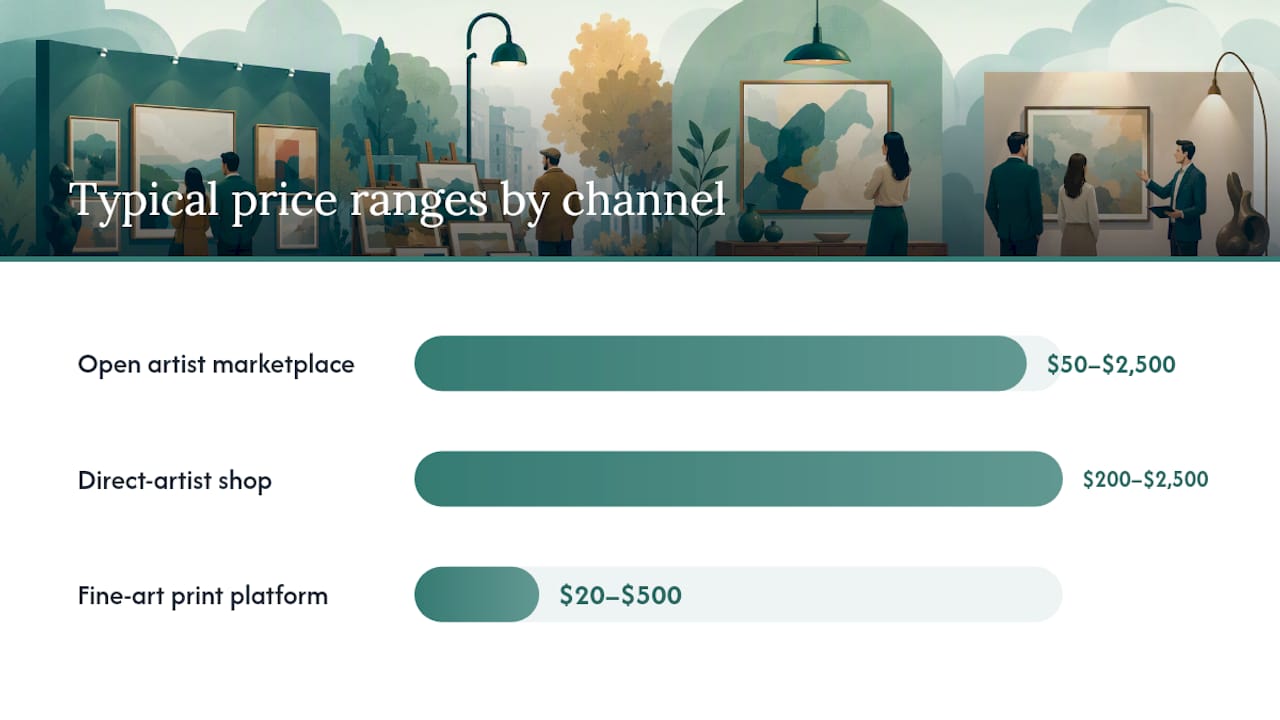
Key trust signals to check across all channels: certificate of authenticity or provenance documentation, a transparent return or exchange policy, insured shipping for originals, and independent buyer reviews. For direct-artist shops, Emansgallery provides artist-issued certificates and ships worldwide from multiple fulfillment locations.
How do you choose the right place to buy a painting?
Start with five criteria: authenticity and provenance, return and shipping terms, pricing transparency, direct access to the artist or curator, and payment security. Run through these before committing to any seller.
Decision checklist:
- Does the seller provide a certificate of authenticity or a provenance document?
- Is there a clearly stated return window, and who covers return shipping costs?
- Is the painting insured during transit, and is that cost included or added separately?
- Can you contact the artist or a gallery representative directly with questions?
- Are payment options secure (credit card, PayPal, or escrow) rather than wire-only?
- Are there independent buyer reviews on a third-party platform?
- Are condition notes or high-resolution photos available on request?
Red flags to avoid:
- Vague or absent provenance (“artist unknown,” no documentation offered)
- No condition report for originals priced above $500
- Pricing that is significantly below comparable works with no explanation
- Listings using only stock photography rather than actual artwork photos
- Inconsistent contact details or no physical address for in-person sellers
Pro Tip: When contacting any gallery or artist, ask one direct question: “Can you send me the provenance documentation and a high-resolution photo of the back of the canvas?” A credible seller answers promptly and completely. Hesitation or a vague reply is a reliable signal to look elsewhere.
Community forums like Reddit’s interior decorating community surface real buyer experiences, including common pitfalls, and are worth reading alongside official seller policies.
What do the main types of online art sites actually offer?
Choose a curated marketplace for vetted originals, an open marketplace for variety, a direct-artist shop for commissions and full provenance, and a print platform for budget-friendly décor. Here is what each delivers in practice.
Curated online galleries
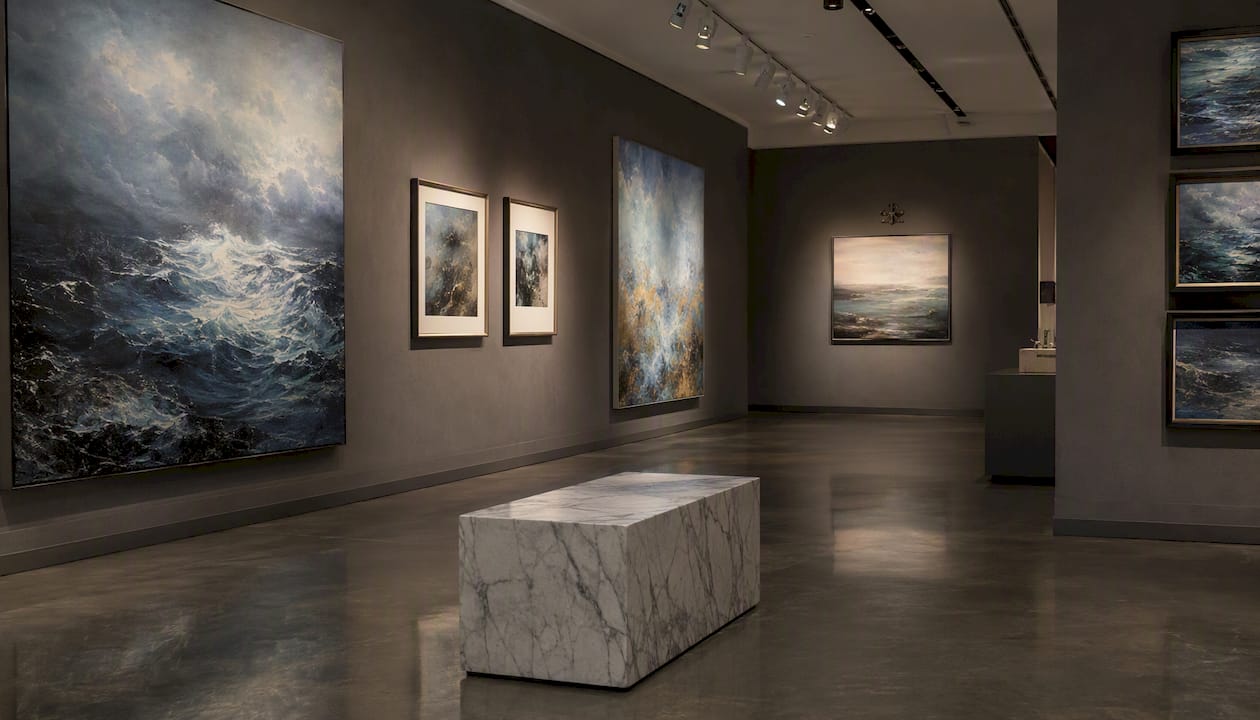
These sites vet artists before listing their work, which reduces discovery risk for buyers. Selection focuses on originals and limited editions. Price ranges typically start at moderate amounts and can extend to higher levels for gallery-represented names. Trust signals are generally strong: certificates of authenticity, structured return windows, and insured shipping are common. Search filters and editorial picks make browsing efficient. Architectural Digest’s curated list of affordable art online demonstrates that editorial curation continues to serve as a practical entry point for buyers navigating reputable vendors.
Open artist marketplaces
Platforms like Artfinder and Saatchi Art allow a broad range of artists to list work directly. Selection is wide, prices vary from under $100 to several thousand dollars, and the quality of trust signals depends heavily on the individual seller. Buyers should check independent reviews before purchasing. Some marketplaces hold B Corp certification, which signals a commitment to verified social and governance standards. Checking the B Corporation directory is one way to confirm whether a marketplace holds that credential. Mobile discovery is standard on major platforms, with dedicated apps making it easy to browse on a phone.
Direct-artist shops
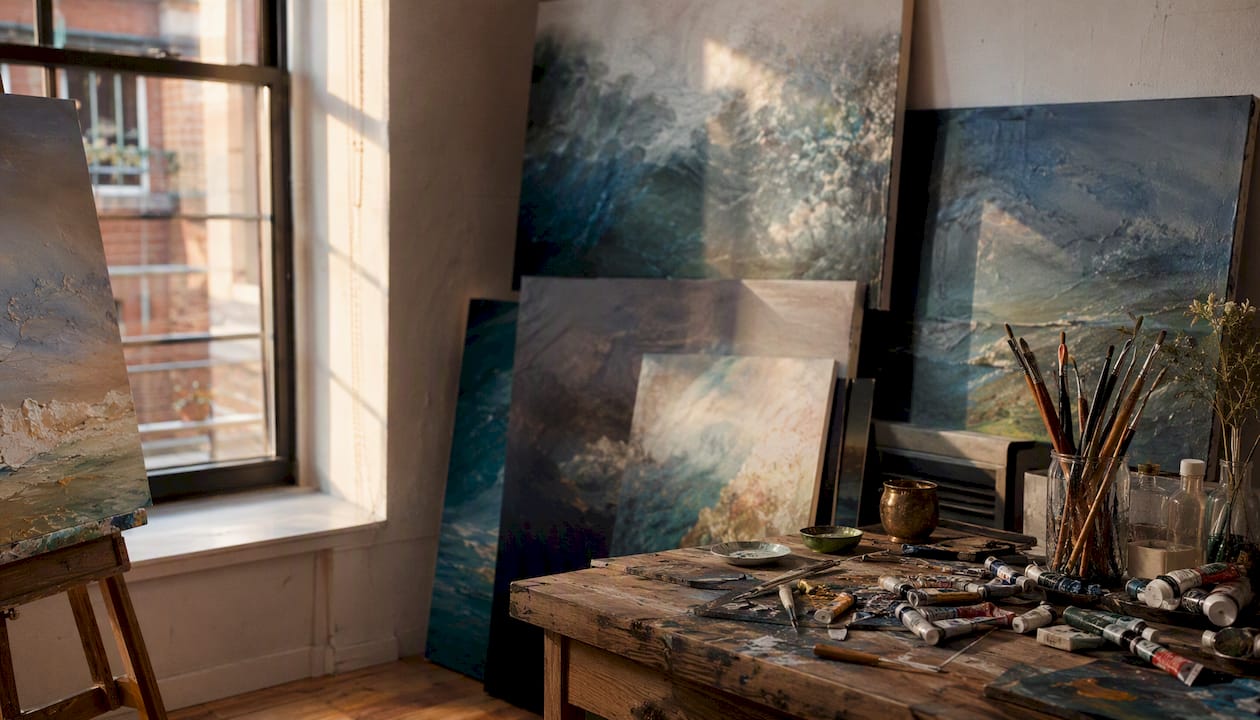
A direct-artist shop connects buyers to a single artist’s full body of work. Provenance is clearest here because the artist issues the certificate personally. Commissions are straightforward to arrange. Price bands for emerging artists typically start at modest levels for originals; established artists charge more. Emansgallery operates as a direct-artist shop, offering original contemporary paintings across abstract, seascape, floral, and landscape styles, with worldwide shipping and artist-direct communication.
Fine-art print platforms
Art.com is a representative example of this category: an extensive catalog of prints, framed reproductions, and canvas art aimed at décor buyers. Prices typically run in the lower range suitable for prints and reproductions. Returns are handled like standard retail. Authentication is not a relevant consideration here because prints are reproductions, not originals. For buyers who want the look of a painting without the price of an original, print platforms offer the widest selection and the fastest fulfillment.
Typical price bands by category:
- Fine-art prints and reproductions: $20–$500
- Emerging-artist originals (direct or open marketplace): $200–$2,500
- Gallery-represented originals: $1,000–$10,000+
- Auction lots: varies widely depending on artist, condition, and provenance
Buyers increasingly browse art on mobile devices, and major marketplaces have responded with dedicated apps. The practical implication: filters, zoom tools, and condition notes need to work on a small screen. Before purchasing a higher-priced original, switch to a desktop view to review full-resolution images and documentation.
Where can you buy paintings in person?
Galleries and art fairs are the strongest in-person options for vetted originals and provenance paperwork. Artist studios are best for commissions and direct conversation. Auctions suit investment-grade or rare buying.
In-person channel breakdown:
- Commercial galleries: Prices are typically non-negotiable at list price, though galleries sometimes offer payment plans for significant purchases. Provenance documentation and condition reports are standard. Delivery is usually arranged by the gallery and priced separately. Expect 2–6 weeks for framing and white-glove delivery on larger works.
- Art fairs: Regional and national fairs (such as those listed by local arts councils) bring multiple galleries and independent artists together. Prices range from $100 to well above $10,000. Negotiation is more common than in a gallery setting. Bring your own measurements and a photo of the intended wall.
- Artist studios: Direct studio visits allow buyers to see works in progress, discuss commissions in detail, and receive full provenance from the source. Timelines for commissioned works vary and depend on size and complexity, often taking several weeks to complete.
- Auction houses: Major houses provide detailed condition reports, provenance research, and buyer’s premiums, which add on top of the hammer price. Budget for that premium when setting a ceiling bid.
To find reputable galleries near you, use Google Maps to search by neighborhood, check business hours, confirm a physical address, and read recent visitor reviews. Google’s listing and privacy policies govern how business data is displayed, so hours and addresses shown are drawn from verified business profiles. Cross-reference any gallery you plan to visit against its own website and an independent review platform.
What to expect on arrival: Ask to see the invoice, any provenance paperwork, and the condition report before agreeing to purchase. Confirm whether sales tax applies to your transaction (it typically does for in-state purchases in the U.S.). Arrange insured shipping or white-glove transport for any original above $500 rather than transporting it yourself.
How do you buy a painting online safely, step by step?
Follow these steps from search to delivery: apply filters to narrow selection, verify provenance and documentation, confirm shipping and insurance terms, pay by secure method, and inspect the work on arrival.
Step-by-step buying checklist:
- Search with filters. Use medium, style, size, and price filters to narrow results. Broad searches return too many listings to evaluate carefully.
- Check provenance and documentation. Request the certificate of authenticity, the artist’s statement, and any exhibition history before paying.
- Request high-resolution photos. Ask for a full-front image, a detail shot, and a photo of the back of the canvas showing any labels or stamps.
- Confirm the return window. Most reputable sellers offer a defined return window for originals, often encompassing multiple weeks. Confirm who pays return shipping and whether the window applies to commissioned works.
- Verify shipping and insurance. Ask whether transit insurance is included or optional. For originals above $500, insured shipping is worth the added cost.
- Pay by secure method. Credit card or PayPal provides chargeback protection. Avoid wire-only sellers unless provenance is fully documented and independently verifiable.
- Inspect on arrival. Unpack carefully, photograph the work immediately, and compare it against the listing photos. Report any damage to the seller within 24–48 hours.
- File documentation. Keep the certificate of authenticity, the purchase invoice, and the shipping receipt together. These support resale value and insurance claims.
Pro Tip: For originals above $1,000, ask the seller to add a declared value to the shipping label that matches the purchase price. This ensures the carrier’s liability coverage is proportionate to the work’s value if damage occurs in transit.
For a detailed walkthrough of the full process, the buying art online safely guide covers payment methods, return procedures, and what to do if a work arrives damaged.
Framing and customization note: Custom framing typically adds $100–$400 and 1–3 weeks to the delivery timeline. Canvas prints ordered without a frame ship faster. Factor this into any deadline-sensitive purchase.
Emansgallery: original paintings and commissions, direct from the artist
Emansgallery is a direct-artist source for original handmade paintings and commissions, suited to collectors and interior projects that require a one-of-a-kind, emotionally crafted focal piece rather than a mass-produced print.
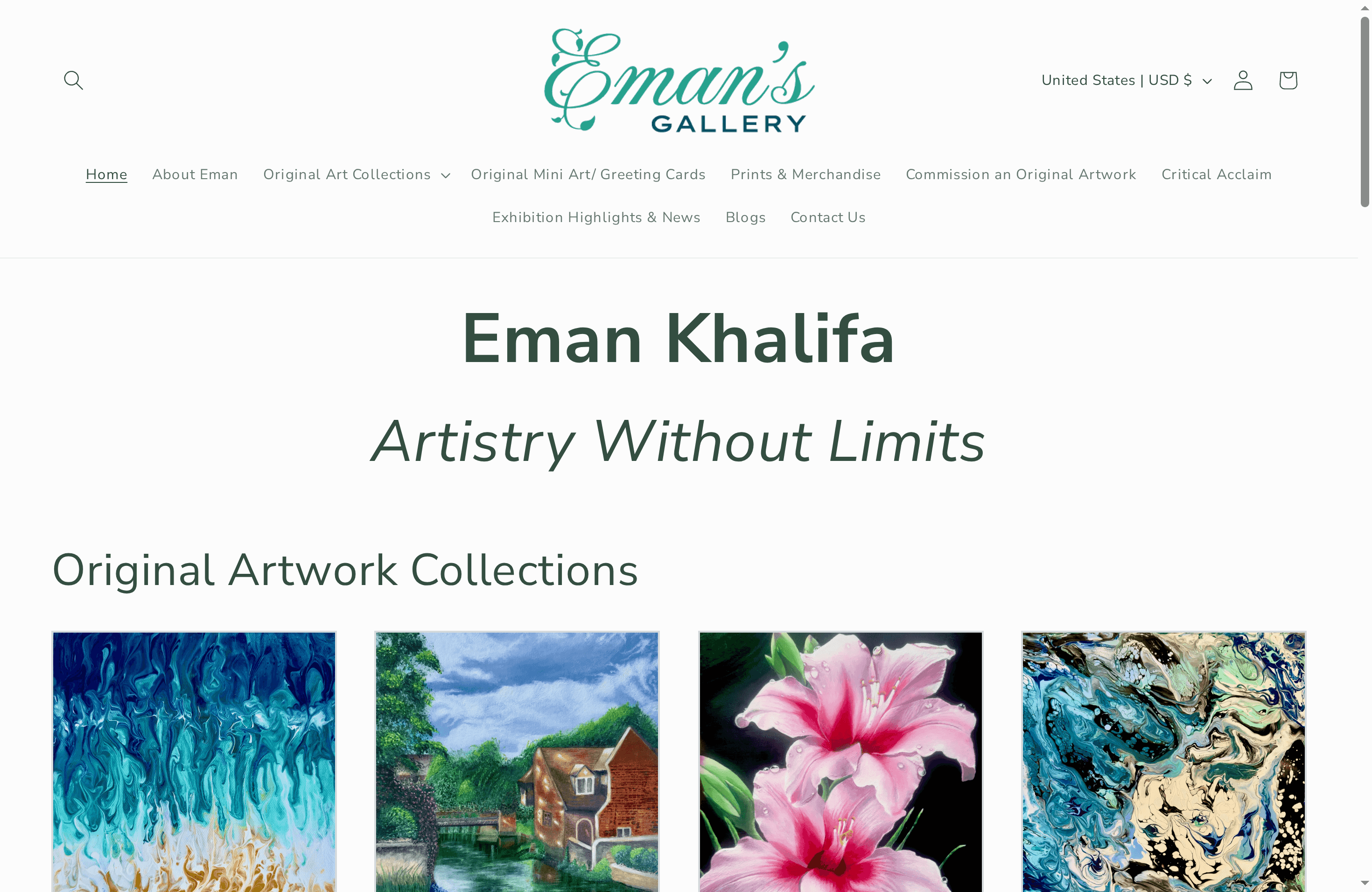
Every work is created by Eman Khalifa, a London-based British-Egyptian-American contemporary artist working in oil, acrylic, and mixed media across abstract, seascape, landscape, and floral styles. Buyers receive an artist-issued certificate of authenticity with each original. Worldwide shipping is available from fulfillment locations across the U.S., UK, Europe, and beyond.
What Emansgallery offers:
- One-of-a-kind original paintings in abstract, seascape, floral, landscape, and geometric styles
- Museum-quality canvas prints, including works like Fragments of Memory for décor-focused buyers
- Direct commission service: contact the artist to discuss scope, size, palette, and timeline
- Worldwide shipping with tracking; multiple fulfillment locations reduce transit time for U.S. buyers
To view available originals or request a commission, visit Emansgallery.
What buyers often overlook when choosing where to buy art
Provenance and artist access matter more than platform size. A marketplace with millions of listings is only as useful as its filtering tools and trust signals. A direct-artist shop with fifty works and a clear certificate process is often the more reliable purchase.
The conventional advice to “buy from a reputable gallery” is correct but incomplete. Reputation is verifiable: check independent reviews, confirm the return policy in writing, and ask for documentation before paying. A gallery’s size or age does not substitute for those checks. Buyers who skip provenance verification because a platform looks professional are the ones who later discover they own a reproduction sold as an original.
Print platforms serve a genuine need for décor-focused buyers, but they are a different product category from originals. Treating a high-quality canvas print as an investment asset is a category error. Buy prints for visual impact and originals for collection value. The distinction is straightforward, but many buyers conflate the two when browsing platforms that sell both.
For commissions, the most important variable is not price but communication. An artist who responds clearly to your brief, provides a timeline, and shares progress photos is demonstrably lower risk than one who does not, regardless of their listed price. Emansgallery accepts commissions with direct artist communication at every stage.
Sources
- Where to Buy Affordable Art Online: 50 Best Stores to Shop (2024)
- Corporate
- Policies
- Maps
- Where do you buy your Paintings and Wall Art? Cheap places to buy …
FAQ
What is the safest way to buy an original painting online?
Pay by credit card or PayPal, request a certificate of authenticity and high-resolution photos before purchasing, and confirm the return window in writing. Insured shipping is recommended for any original above $500.
What is the 2/3 rule for wall art?
The 2/3 rule states that wall art should cover roughly two-thirds of the available wall width above a piece of furniture, meaning artwork size varies depending on the furniture’s dimensions and wall space.
What is the 1/3 rule in painting?
The 1/3 rule (also called the rule of thirds) divides a composition into a 3x3 grid and places the focal point at one of the four intersection points rather than the center. It is a compositional guideline used by artists to create visual balance and interest.
Where can I find reputable galleries near me?
Search Google Maps using terms like “art gallery” plus your city or neighborhood. Check business hours, read recent visitor reviews, and cross-reference the gallery’s own website before visiting. Local arts councils and regional art fair listings are additional sources for vetted venues.
Does Emansgallery ship to the United States?
Yes. Emansgallery ships worldwide, with fulfillment locations in the U.S., UK, and across Europe. Original paintings come with an artist-issued certificate of authenticity, and tracking is provided on all orders.
Stay Connected
- ✨ Explore Eman Khalifa's original art, fine art prints and art-inspired merchandise.
- Follow Eman Khalifa's art journey on: Instagram @emans_gallery and Facebook
- Watch Eman Khalifa creating live art on: YouTube @emans_gallery
