


Interior Decor Painting: Styles, Ideas, and Buying Guide
Interior decor painting is the practice of using painted artworks and decorative wall painting techniques to establish mood, anchor a room’s color palette, and define scale. The fastest path forward: measure your wall, identify one dominant visual idea (abstract, landscape, floral), and decide whether you are buying a ready-made piece or commissioning something original.
Quick first steps:
- Measure the wall or furniture anchor (sofa, console, bed) before browsing any artwork.
- Pick one dominant style or mood — calm and tonal, bold and graphic, or soft and organic.
- Set a realistic budget: prints start affordably, while original paintings can vary significantly in price depending on size and artist profile.
Original works appeal to collectors and homeowners seeking unique pieces; prints can be a practical choice for renters or spaces with frequent changes.
Key Takeaways
Original paintings and quality prints both work for interior decor, but scale, undertone matching, and lighting placement determine whether a piece succeeds in a room.
| Point | Details |
|---|---|
| Measure before buying | Artwork width should be 50–75% of the furniture anchor’s width. |
| Match undertones, not colors | Warm-toned art on a cool wall creates visual tension; align undertones first. |
| Apply the 60-30-10 rule | Artwork typically functions as the 10% accent, not the dominant color. |
| Plan lighting deliberately | Use CRI 90+ LED bulbs at a 30-degree angle; avoid direct window reflection. |
| Emansgallery for originals | Eman Khalifa accepts commissions and ships originals and prints to U.S. buyers. |
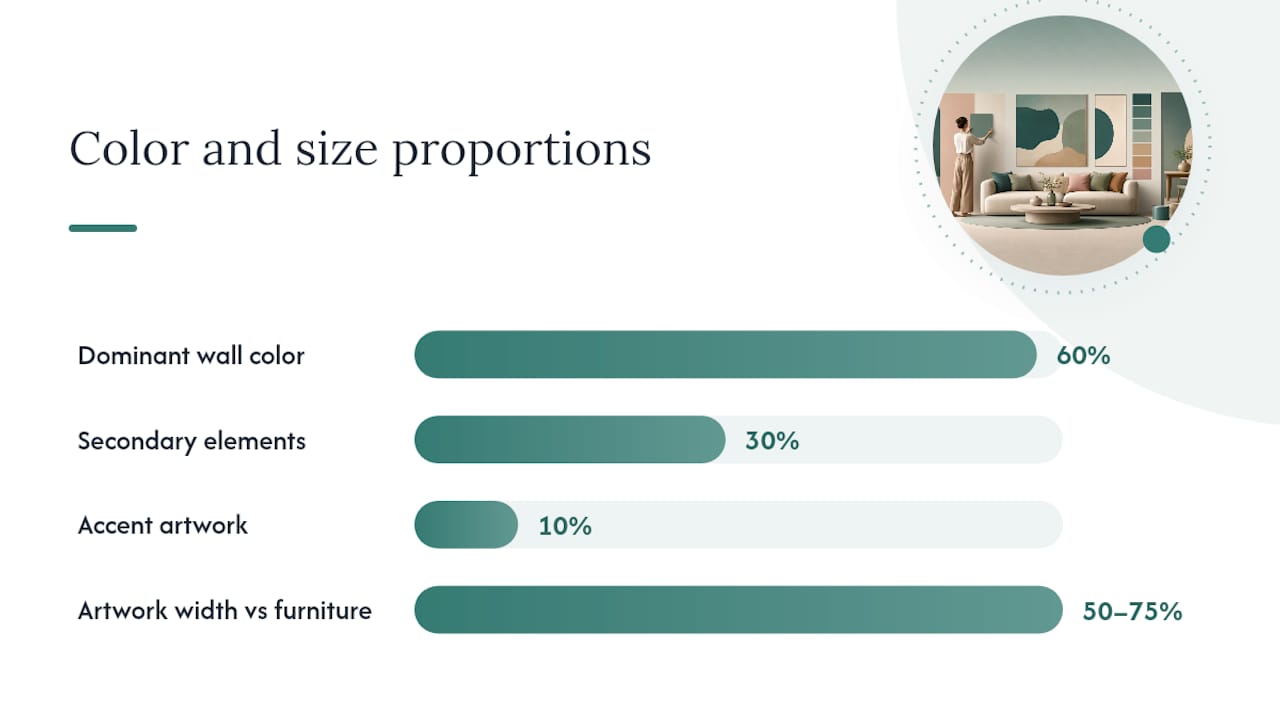
Table of Contents
- Painting styles that work in real rooms
- How to pick the right painting for your room
- Originals, prints, canvas, and mixed media: what to buy
- Where to buy artwork and how commissioning works
- Hanging, hardware, lighting, and care
- Current U.S. color trends and how art fits them
- What choosing original work from Eman’s Gallery looks like
- Common mistakes to avoid when selecting decorative paintings
- Budget planning for purchasing or commissioning interior decor paintings
- Scale and light are the two decisions that matter most
- Original art and prints from Eman’s Gallery
- Sources
- FAQ
Painting styles that work in real rooms
Eight styles cover most of what U.S. homeowners actually hang. Each one has a natural room fit, and scale matters as much as subject matter.
- Abstract fluid art. Swirling pigment, organic movement, and layered color. Best in living rooms and primary bedrooms where a large-format piece can anchor the space. Works well at 36 inches wide or larger above a sofa.
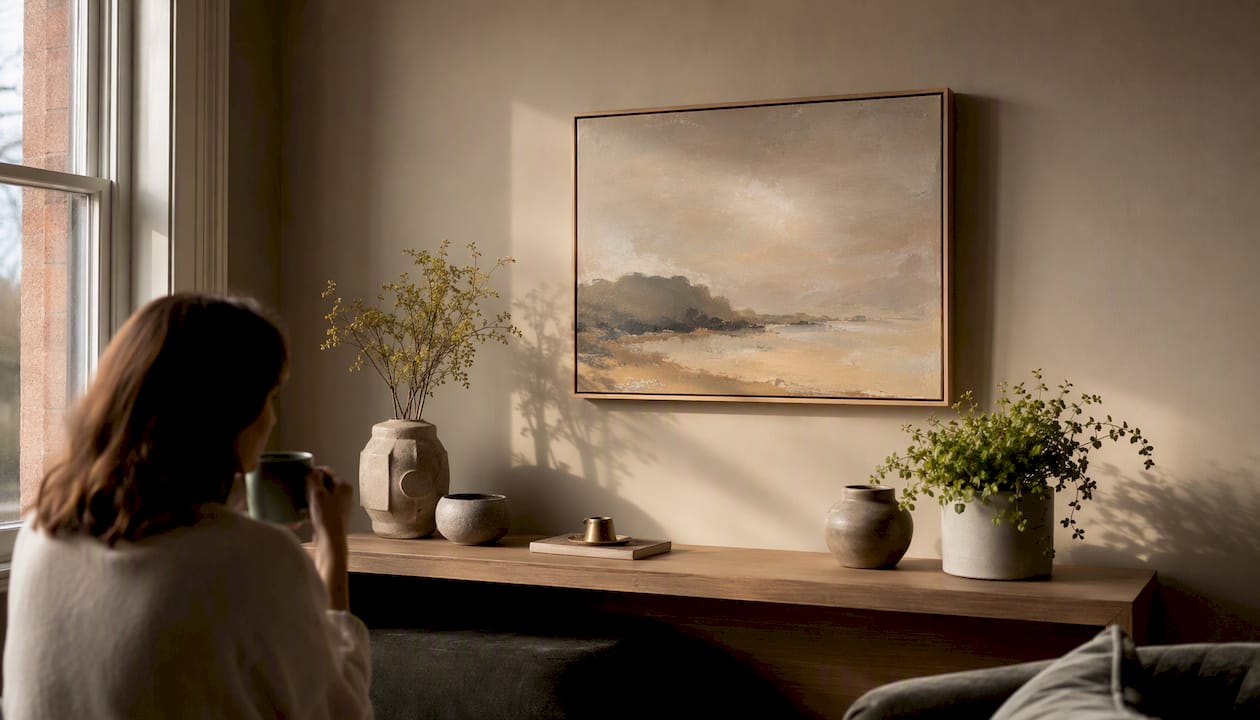
- Tonal landscapes. Muted, atmospheric scenes with soft horizon lines. Ideal for hallways, studies, and dining rooms. A narrow horizontal format (24 × 12 inches) suits a console or sideboard. See room-by-room painting advice for pairing specifics.
- Seascapes. Ocean scenes with light, wave movement, and horizon depth. Strong in bathrooms, coastal-style living rooms, and stairwells. A vertical format adds height to low-ceilinged rooms.
- Floral paintings. From loose impressionistic blooms to tight botanical studies. Kitchens, bedrooms, and powder rooms are natural fits. Choosing floral paintings for home covers scale and color matching in detail.
- Geometric and graphic work. Hard edges, repeating forms, color-blocked shapes. Suits modern and minimalist interiors — home offices, entryways, and open-plan living areas. A geometric abstract canvas print is a low-commitment way to test the style.
- Minimal line art. Single-color line drawings on a neutral ground. Works in almost any room and pairs well with warm-white or greige walls trending in 2026.
- Murals and large-scale commissions. A single painted wall treated as one continuous artwork. Best for dining rooms, children’s rooms, and statement entryways. Requires professional installation planning.
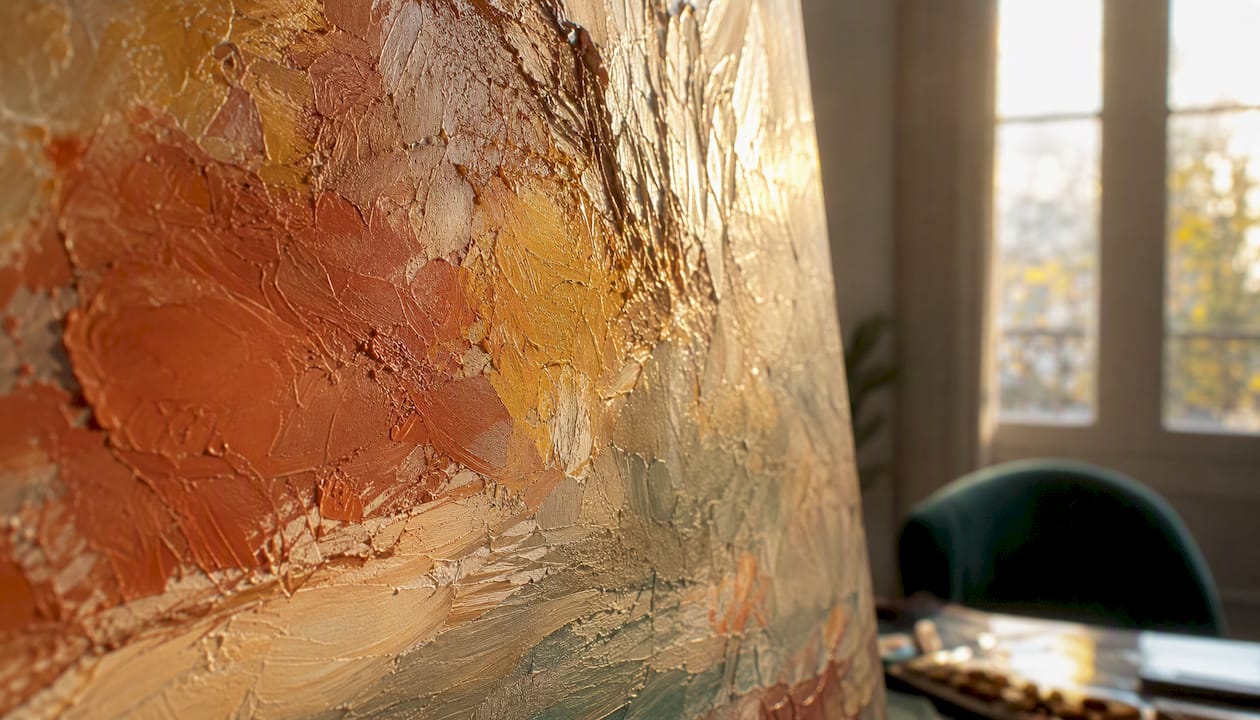
- Mixed-media texture panels. Canvas or board with layered paint, resin, or collage elements. The physical texture reads differently under directional light — hang these where a picture light or track spot can graze the surface.
Scale is the most underestimated variable in decorative wall painting. A piece that looks bold in a gallery photograph can disappear on a 10-foot wall, and a piece that looks modest online can overwhelm a narrow hallway. Always confirm dimensions against your wall measurement before purchasing.
Pro Tip: Print a scaled paper template at the artwork’s exact dimensions and tape it to the wall for 24 hours before buying. It costs nothing and prevents the single most common sizing mistake.
How to pick the right painting for your room
Scale, color, and placement each require a separate decision. Conflating them is where most homeowners go wrong.
Measure first
- Measure the width of the furniture anchor (sofa, bed, console). Artwork width should fall between 50% and 75% of that anchor’s width — the 2:3 rule in practice.
- For a 90-inch sofa, target artwork between 45 and 60 inches wide.
- For a grouping (gallery wall), treat the entire arrangement as one unit and apply the same 50–75% rule to the combined width.
- Hang the center of the artwork at 57–60 inches from the floor — standard gallery eye level.
Match undertones, not surface colors
Whole-house color schemes from Benjamin Moore note that lighting alters how paint and pigment read, so always sample colors in the actual room. A painting with warm amber undertones will clash against a wall with cool blue-gray undertones even when both look “neutral” in a catalog.
The 60-30-10 rule gives a reliable proportion framework: 60% dominant wall color, 30% secondary (furniture, rugs), 10% accent. For color schemes for interior that go deeper on undertone matching, the Emansgallery blog covers the full process.
Pro Tip: When a room already has a strong dominant color, a neutral or tonal painting often reads more powerfully than a colorful one. Full-room color saturation — a trend experts note for 2026 — works best when the artwork provides contrast, not competition.
Originals, prints, canvas, and mixed media: what to buy
The format affects durability, visual weight, price, and long-term value. Here is a direct comparison:
| Format | Visual texture | Durability | Resale value | Typical U.S. price range |
|---|---|---|---|---|
| Original painting | High (brushwork, impasto) | High with proper care | Appreciates with artist | $400–$15,000+ |
| Giclée canvas print | Moderate (texture coating) | High | Low | $50–$500 |
| Framed fine art print | Flat | Moderate (UV glass helps) | Very low | $30–$200 |
| Limited edition print | Flat to moderate | Moderate | Moderate | $100–$1,500 |
| Mixed-media panel | Very high (layered) | High | Moderate to high | $500–$5,000+ |
Buying checklist:
- Confirm the medium (oil, acrylic, watercolor, mixed) — oil on canvas is among the most durable traditional painting mediums for interior display.
- Ask whether the work is varnished; unvarnished originals need protection before hanging in high-humidity rooms.
- For prints, confirm the paper or canvas weight and whether the edition is numbered and signed.
- Check art mediums for interiors for a fuller breakdown of surface and medium options.
Price drivers beyond format: artist experience and market profile, physical size, framing quality, and shipping or crating costs for large originals.
Where to buy artwork and how commissioning works
Buying channels
- Online galleries and artist shops (such as Emansgallery): direct access to originals and prints, often with commission options and worldwide shipping.
- Local galleries: useful for seeing scale and texture in person before buying.
- Art fairs: good for meeting artists and negotiating directly, though selection is seasonal.
- Interior-designer-sourced commissions: designers often have artist relationships and can manage the full brief-to-installation process.
- Print marketplaces: wide selection, low price points, limited originality and no resale value.
For designer-focused selection criteria, choosing art for clients covers the professional workflow in detail.
Commissioning steps
- Gather your brief. Photograph the room, note the wall dimensions, identify the dominant wall color, and set a budget range.
- Contact the artist. Send room photos, desired dimensions, preferred palette, and any reference images.
- Review the sketch or color study. Most artists provide a preliminary study for approval before full production.
- Agree on a payment schedule. A typical structure is 50% deposit at brief approval, 50% on completion.
- Production and updates. Expect 4–12 weeks for a mid-size original, depending on medium and complexity.
- Delivery and installation. Confirm crating, shipping method, and whether installation is included or quoted separately.
Typical U.S. price ranges: small prints ($30–$200), mid-size originals ($400–$3,000), large commissioned pieces ($2,000–$15,000+). Ranges vary significantly by artist profile, size, and medium.
Hanging, hardware, lighting, and care
Hanging basics
- Use a stud finder for works over 15 lbs; drywall anchors rated for the artwork’s weight for lighter pieces.
- Gallery walls: keep spacing consistent at 2–3 inches between frames for a tight, curated look; 4–6 inches for a looser arrangement.
- Single large works: center on the wall horizontally unless anchoring above furniture, in which case center over the furniture piece.
Lighting
- Track lighting or adjustable picture lights work best. Aim the beam at a 30-degree angle from the wall to minimize glare on varnished surfaces.
- Use bulbs with a Color Rendering Index (CRI) of 90 or above to show pigment colors accurately.
- Keep wattage low for works on paper — heat and UV from incandescent bulbs cause fading over time. LED picture lights are the safer choice.
Pro Tip: Avoid hanging original paintings directly opposite a window. Reflected UV light is the fastest way to fade pigment, even on oil paintings with UV-resistant varnish.
Care and maintenance
- Dust canvas surfaces with a soft, dry brush — never a damp cloth.
- Keep originals away from exterior walls in cold climates; temperature fluctuation causes canvas to expand and contract, which stresses paint layers.
- Ideal humidity range for painted works: 45–55% relative humidity.
- For significant cleaning, flaking paint, or restoration, contact a professional conservator rather than attempting DIY repairs.
Current U.S. color trends and how art fits them
U.S. interior paint trends for 2026 are moving away from cool grays and stark whites toward warmer earth tones: warm greige, soft tans, mushroom neutrals, and nature-inspired greens. Behr’s 2026 palette guidance recommends building around a central undertone that flows between rooms rather than matching exact colors room to room.
Three palette examples with art pairings:
- Warm greige + olive accent: pair with abstract fluid art in amber, ochre, or forest green tones. Avoid cool-toned blues, which will read as foreign against warm walls.
- Soft tan + dusty plum accent: floral paintings with muted burgundy, mauve, or blush tones work well. A tonal landscape in warm gray also fits.
- Muted blue + warm white trim: seascapes and coastal abstracts are the obvious fit, but geometric work in navy and cream also reads well against this palette.
For door and trim color coordination with these palettes, interior door color guidance from One Day Doors & Closets covers how trim choices affect the overall room tone.
Color influences perceived room size and mood; testing paint on poster board at different times of day remains the most reliable way to confirm a palette before committing. The same principle applies to artwork: live with a print or a scaled photo of the piece on the wall for a few days before finalizing.
What choosing original work from Eman’s Gallery looks like
Eman Khalifa is a London-based British-Egyptian-American contemporary artist working in oil, acrylic, and mixed media. Her practice covers abstract fluid art, seascapes, landscapes, florals, and geometric work, and she accepts commissions. Press recognition includes FAD Magazine and Artlyst.
What buyers receive:
- Original handmade paintings in a range of sizes, from small studies to large-scale statement works.
- Museum-quality canvas prints for buyers who prefer a print at a lower price point.
- Bespoke color matching for commissions — buyers can specify palette, dimensions, and mood.
- Worldwide shipping from fulfillment locations in the U.S., UK, and several European countries.
- A commissioning process that includes a brief review, color study approval, and phased payment.
For an initial commission inquiry, include: a photograph of the room, the wall dimensions, your dominant wall color (paint name or swatch), preferred size, and a budget range. The more specific the brief, the more accurate the color study.
Pro Tip: Ask to see the artist’s work photographed in a real interior, not just on a white studio wall. Scale and color read very differently in a lived-in room, and most artists are happy to share installation photos on request.
Common mistakes to avoid when selecting decorative paintings
- Buying without measuring. The most frequent error. A piece that looks right in a product photo can be completely wrong for the wall.
- Matching colors too literally. Artwork that picks up every color in the room tends to disappear. A painting that introduces one new tone creates more visual interest.
- Ignoring undertones. A warm-toned painting on a cool-gray wall creates a subtle but persistent visual tension most people notice without being able to name.
- Choosing scale too small. A single small painting on a large wall reads as an afterthought. When in doubt, go larger.
- Buying for the frame, not the work. Frames can be changed; the painting cannot. Evaluate the artwork first.
- Skipping the lighting plan. A painting hung in a dark corner without a dedicated light source loses most of its visual impact.
- Rushing a commission. Commissioning an original takes time. Build 8–12 weeks into your project timeline for a mid-size piece.
Budget planning for purchasing or commissioning interior decor paintings
Set a total art budget before browsing, not after. For a $10,000 living room, that is $500–$1,000 — enough for a strong mid-size print or a small original.
Budget tiers:
- Under $200: quality giclée canvas prints, framed fine art prints, limited-run digital prints. Good for rentals, staging, and secondary rooms.
- $200–$1,000: small-to-mid originals from emerging artists, limited edition prints from established artists, framed canvas prints.
- $1,000–$5,000: mid-size originals, large canvas prints, entry-level commissions. The range where most serious home collectors start.
- $5,000 and above: large originals, complex commissions, works by artists with exhibition and press history.
Scale and light are the two decisions that matter most
Most homeowners spend the most time on subject matter and color, which are actually the easiest variables to adjust. Scale and light are harder to fix after the fact and have the largest impact on whether a painting works in a room.
Scale and lighting critically affect how artwork performs in a room; a piece that is too small or poorly lit tends to underperform visually regardless of quality
Testing color and placement before committing is not optional. Pin a scaled paper template to the wall. Live with a print of the image for a few days. Sampling paint colors in real room light is the same principle applied to walls. Both reduce the risk of a costly mistake.
Original art and prints from Eman’s Gallery
Emansgallery offers original handmade paintings, museum-quality canvas prints, and bespoke commissions by Eman Khalifa, shipped directly to U.S. buyers. Whether you are looking for a statement seascape like Good Tidings or a fluid abstract ocean piece like Mystic Sea, the gallery carries works across the styles covered in this guide.
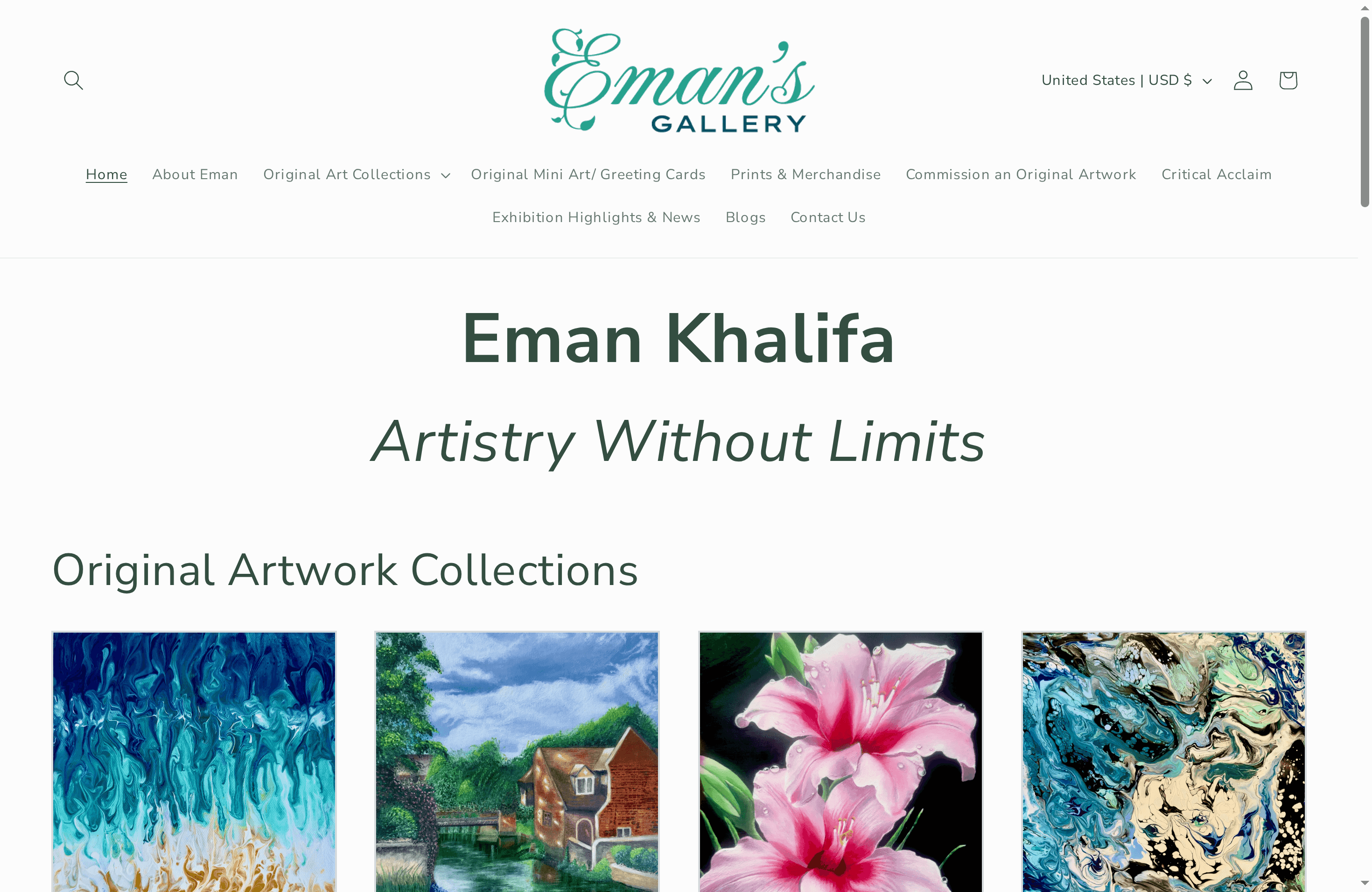
For buyers who prefer prints, the canvas print range includes abstract, geometric, and conceptual works at accessible price points. Commission inquiries are welcome: send your room photos, dimensions, and palette to start the process. Browse the full collection at Emansgallery.
Sources
- Top paint trends everyone is following for their 2026 home makeovers | Angi
- BEHR® 2026 Color Trends | Most Popular Paint Colors for 2026 | Trending Interior Color Palette
- 2026 Paint Color Trends by Room (According to Experts) | BobVila
- Whole-house color schemes | Benjamin Moore
- Deqor
FAQ
What is the 2:3 rule for wall art?
The 2:3 rule states that artwork width should be roughly two-thirds of the width of the furniture it hangs above. For a 90-inch sofa, target a piece between 45 and 60 inches wide.
What wall art styles are popular in 2026?
Abstract fluid art, tonal landscapes, and organic floral paintings are widely used in 2026 U.S. interiors, aligning with the shift toward warmer earth tones and nature-inspired palettes noted by Angi and Behr.
Are gallery walls still in style in 2025 and 2026?
Gallery walls remain popular, particularly in hallways and stairwells. The current preference leans toward tighter spacing (2–3 inches between frames) and a cohesive palette rather than a maximalist mix of unrelated styles.
What are the main styles of decorative wall painting?
The four broad categories are representational (landscapes, florals, figurative), abstract (fluid, geometric, expressionist), mixed media (texture panels, collage), and mural or site-specific work. Each suits different room types and interior design themes.
How do I match a painting to my room’s color palette?
Identify your wall’s undertone (warm or cool), then select artwork that shares or complements that undertone.
Stay Connected
- ✨ Explore Eman Khalifa's original art, fine art prints and art-inspired merchandise.
- Follow Eman Khalifa's art journey on: Instagram @emans_gallery and Facebook
- Watch Eman Khalifa creating live art on: YouTube @emans_gallery
