


4 Proofs of Museum Quality Giclée That Collectors Should Demand
A giclée (pronounced zhee-KLAY) is a high-resolution, archival inkjet fine-art print made with pigment-based inks on museum-grade substrates, managed through a calibrated color workflow. The term was coined by printmaker Jack Duganne, originally tied to the Iris printer. Three things separate a true giclée from an ordinary inkjet print: pigment inks instead of dye, archival paper or canvas, and color management that keeps the print faithful to the original.
TL;DR:
- True giclée prints use pigment inks and archival substrates like cotton rag or canvas, ensuring long-term color fidelity and resistance to fading.
- A high-quality giclée requires a calibrated color workflow, proofing with ICC profiles, and proper outgassing and curing to achieve durability.
- Price and authenticity rely heavily on the specific ink type, substrate brand, proofing process, and signed or numbered editions, not just on the term “giclée.”
- Many so-called “giclée” prints offered by sellers may be marketing rather than archival-quality products if they lack detailed material information.
- Giclée is ideal for reproductions and digitally created art but may not be suitable for hand-pulled or traditional printmaking techniques.
Table of Contents
- Origins and etymology: who coined the term and how it evolved
- How giclée prints are made: from file to finished piece
- Inks, substrates, and what makes a print truly archival
- How to evaluate or buy a giclée print with confidence
- Common uses for giclée prints and the originality question
- How an artist-led gallery produces museum-quality giclée prints
- When giclée makes sense and when it does not
- See museum-quality prints and originals at Eman’s Gallery
- FAQ
- Sources
- Stay Connected
Origins and etymology: who coined the term and how it evolved
The word comes from the French verb “gicler,” meaning to spray or squirt, a reference to the fine mist of ink the process deposits onto paper or canvas. Jack Duganne coined “giclée” around 1991 to describe fine-art output from modified Iris printers, machines originally built for commercial color proofing in the late 1980s. Printmakers at the time adapted these Iris units to produce continuous-tone prints with a smoothness dye-sublimation and early inkjet methods could not match.
The name stuck, and as inkjet technology advanced beyond the Iris, the term widened to cover archival prints from any professional large-format pigment printer. We use the word today the same way collectors and galleries have used it for three decades: as shorthand for a print built to last, not just to look good on day one.
How giclée prints are made: from file to finished piece
The process starts well before a printer touches paper. Here is the typical workflow:
- High-resolution capture. A painting or photograph is scanned or photographed under controlled lighting, often with color targets, to preserve texture and true hue.
- Color management. The file is checked against an ICC profile, viewed on a calibrated monitor, and soft-proofed to predict how it will look once printed.
- Printing. A wide-format inkjet printer lays down pigment ink from multiple cartridges in extremely fine droplets, building up color with far more precision than a standard desktop printer.
- Outgassing and curing. Freshly printed sheets need a short rest period so the ink fully bonds to the substrate, a step the World of Printmaking guide flags as routine but frequently skipped by rushed print shops.
- Finishing. Depending on the piece, a print may receive a protective varnish, then be mounted, stretched over a frame, or matted for framing.
Capture quality often matters more than the printer itself. Professional photography or drum scanning under proper lighting is a specialized skill, and a casual phone photo or flatbed scan will usually fail to reproduce brushwork and subtle color shifts accurately, according to the Historic New Orleans Collection.
Pro Tip: Ask to see a soft proof before final printing. It catches color shifts that are hard to fix once ink is on paper.
Inks, substrates, and what makes a print truly archival
Pigment inks sit on top of the substrate as tiny solid particles, which makes them far more resistant to fading from light exposure than dye inks, whose color molecules dissolve into the paper and break down faster under UV light. The Historic New Orleans Collection notes that pigment-based prints also hold up better against water damage.
Substrate choice matters just as much as ink: see this practical guide to substrate material for details.
- Cotton rag paper, prized for its acid-free, long-lasting fiber base.
- Baryta paper, which mimics the look of traditional photographic prints.
- Archival canvas, often coated to accept pigment ink without cracking.
Pigment inks on archival substrates are the baseline requirement for a museum-quality giclée, according to the World of Printmaking, which ties print permanence directly to ink chemistry and paper quality rather than to the printer brand alone. For storage, keep finished prints away from direct sunlight and humidity, and use UV-filtering glass when framing to extend their working life.
How to evaluate or buy a giclée print with confidence
Before paying for a giclée, whether from a printer, gallery, or artist, ask these questions:
- What ink and substrate are used? Pigment ink on cotton rag, baryta, or archival canvas is the standard to look for.
- Is there a color-managed workflow? A shop that mentions ICC profiles and soft-proofing is taking fidelity seriously.
- Was a proof made before the final run? Proofing catches color problems early.
- How is the edition numbered and signed? This affects both authenticity and resale value.
For sizing, a common rule of thumb is to capture or scan at roughly 300 PPI for the final print size, which keeps detail sharp at close viewing distance. Watch for red flags: a seller who uses the word “giclée” but cannot name the ink type or paper brand, skips proofing entirely, or relies only on dye-based consumer printers is not delivering archival quality. Price typically reflects materials, proofing time, and editioning work rather than the printer alone.
Pro Tip: If a seller cannot tell you the substrate brand or ink type, treat the word “giclée” as marketing, not a guarantee.
Common uses for giclée prints and the originality question
Giclée prints show up as limited-edition gallery reproductions, museum-authorized reproductions of historic works, and increasingly as the primary output of digitally created art. Whether a giclée counts as an “original” depends on where the work began: a print of a physical painting is a reproduction, while a piece created natively as a digital file and printed as its first physical form is closer to an original, according to the World of Printmaking. Signatures, edition numbers, and the artist’s direct involvement in approving the print all shape how collectors and the market interpret its value.
How an artist-led gallery produces museum-quality giclée prints
We handle every giclée print with care to meet high standards: high-resolution capture of original paintings, color-managed proofing, and archival canvas or paper substrates, paired with careful editioning. Alongside museum-quality canvas and paper prints, we offer original handmade paintings and art-printed merchandise, shipped worldwide.

When giclée makes sense and when it does not
Giclée wins on color fidelity and archival life, which makes it the right call for reproductions and digitally originated work. Hand-pulled methods like lithography or screen printing still hold unique value where the physical matrix itself, not just the image, is part of what collectors are paying for.
— Eman
See museum-quality prints and originals at Eman’s Gallery
We offer original handmade paintings, museum-quality canvas and framed paper prints, plus art-printed merchandise for everyday use. Every print reflects the same archival standards covered above: pigment inks, proper substrates, and careful color matching to the original work.
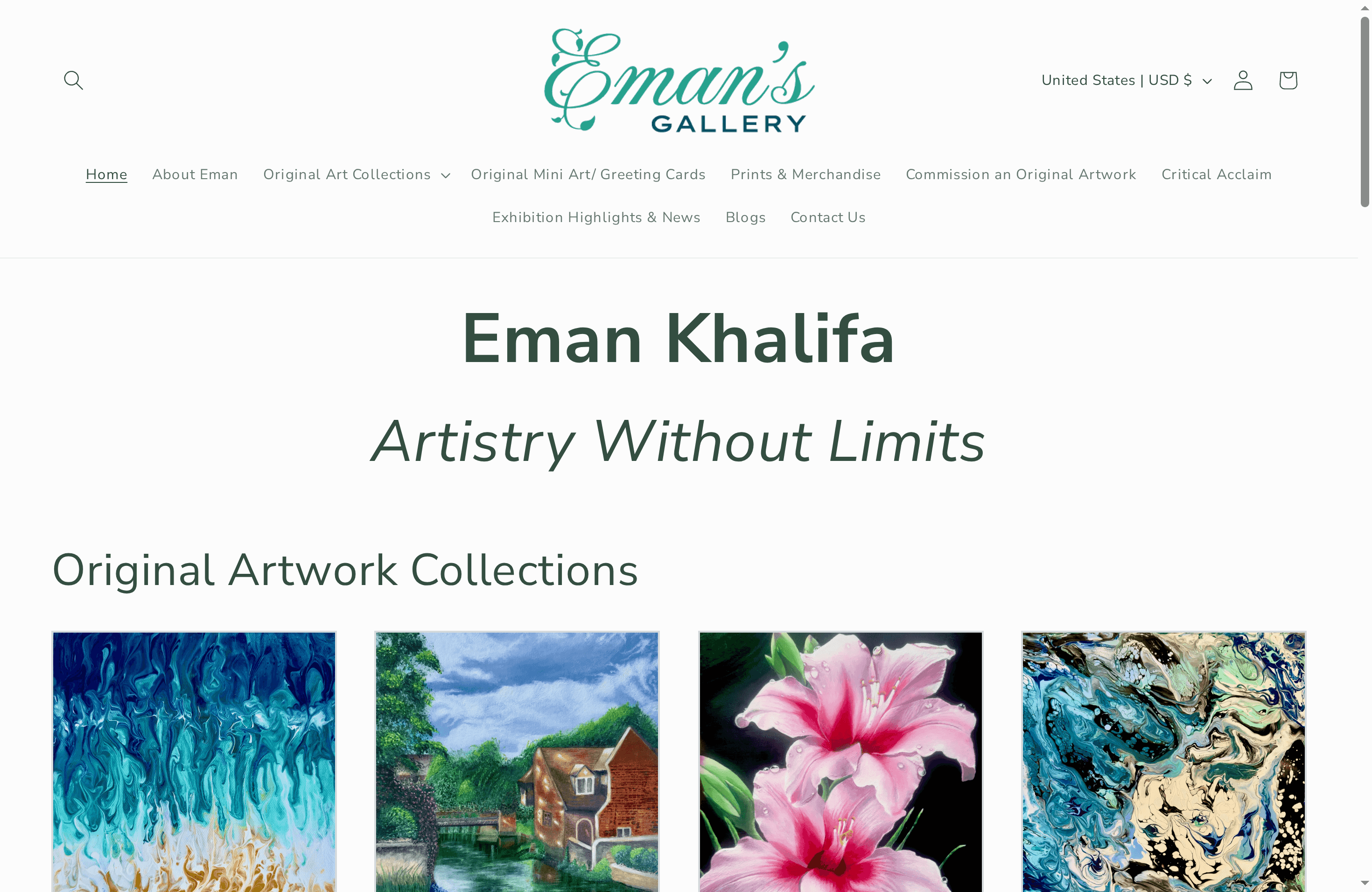
Browse our wall art prints collection or reach out about a bespoke commission through our homepage to start a conversation about scale, palette, and finish.
FAQ
Are giclée prints considered original artwork?
A giclée is generally considered a reproduction when it reproduces an existing physical painting, since the original artwork already exists in another form. When the digital file itself is the primary creative work, with no separate physical original, the printed piece is often treated closer to an original, particularly when it is signed and part of a numbered edition.
What does “giclée” actually mean?
Giclée comes from the French word “gicler,” meaning to spray, a reference to how ink is deposited in fine droplets during printing. Jack Duganne coined the term around 1991 to describe archival inkjet fine-art prints.
How is a giclée print different from a regular inkjet print?
A true giclée uses pigment-based inks and archival substrates like cotton rag paper or canvas, along with a color-managed workflow, while a regular inkjet print often relies on dye inks and standard paper that fade faster. The Historic New Orleans Collection notes pigment inks resist light and water damage better than dye-based alternatives.
What resolution do I need for a giclée print?
A widely used guideline is to capture or scan your image at around 300 PPI for the final print size, which keeps fine detail sharp. Lower resolution files can still print but may lose crispness at larger sizes or close viewing distances.
Does Eman’s Gallery offer giclée prints?
We offer canvas and framed paper prints produced with archival materials and color-managed workflows. Pricing for prints and original paintings is available on request through our wall art prints page.
Sources
- Giclée - Wikipedia
- Giclée Printing: Process, Materials & History Explained | World of Printmaking
- Inkjet/Giclée print process: late 1900s–today | Historic New Orleans Collection
Stay Connected
- ✨ Explore Eman Khalifa's original art, fine art prints and art-inspired merchandise.
- Follow Eman Khalifa's art journey on: Instagram @emans_gallery and Facebook
- Watch Eman Khalifa creating live art on: YouTube @emans_gallery
