


8–12 Color Channels: 3 Checks Collectors Must Verify on Giclée Prints
A giclée printer is a professional-grade, wide-format inkjet device built specifically for fine art reproduction, using pigment-based inks across 8 to 12 color channels instead of the standard four. That expanded channel count delivers a wider color gamut and finer tonal gradation than an ordinary desktop printer can touch. Paired with archival substrates like cotton rag or baryta paper, it produces reproductions that hold their color and structure for decades under the right conditions.
TL;DR:
- Giclée printing requires pigment-based inks, archival substrates, and a documented color-managed workflow to ensure longevity and high-quality reproduction.
- Proper outgassing time and custom ICC profiles are essential to prevent flaws such as smudging, uneven gloss, or color mismatches.
- Giclée printers feature 8 to 12 ink channels with wider color gamuts and higher resolution standards compared to standard dye-based consumer inkjet printers.
- The rated lifespan of well-made giclée prints exceeds 100 years under controlled indoor conditions, but exposure to sunlight and humidity can significantly reduce durability.
- Buyers should verify proofing and sample approval processes, as the term “giclée” alone does not guarantee high-quality production or longevity.
Table of Contents
- What Does “Giclée” Actually Mean?
- How the Giclée Printing Process Actually Works
- Giclée vs. Standard Inkjet: What Actually Separates Them
- Choosing the Right Substrate and Finish
- How Long Do Giclée Prints Actually Last?
- Who Actually Needs Giclée Printing?
- The Gallery Standard: What Eman’s Gallery Verifies Before Approving a Print
- What Collectors Get Wrong About Giclée Quality
- Ready to Bring a Museum-Quality Print Into Your Space?
- Sources
- FAQ
What Does “Giclée” Actually Mean?
The word “giclée” comes from the French verb gicler, meaning “to spray” or “to squirt,” a nod to the fine mist of ink an inkjet head lays down. Printmaker Jack Duganne coined the term in the early 1990s to describe early Iris inkjet reproductions of fine art, giving the process a more elegant name than “inkjet print,” which at the time carried connotations of cheap office output.
The term has since broadened well beyond its original technical meaning. Today it gets applied to almost any archival digital pigment print, regardless of the exact printer or workflow used to make it.
That drift matters for buyers. The word “giclée” carries no formal regulation or certification, so a seller can print with dye-based consumer ink on copy paper and still market it as a giclée. Before paying a premium, verify these specifics rather than trusting the label alone:
- Pigment-based inks, not dye-based
- An archival substrate rated for longevity (cotton rag, baryta, or archival canvas)
- A documented color-managed workflow using ICC profiles
How the Giclée Printing Process Actually Works
Producing a museum-quality reproduction is a sequence, not a single button press. Each stage compounds on the one before it, and skipping any step shows up as a visible flaw in the final print.
- High-resolution capture. The artwork or photograph is scanned or photographed at a high resolution suitable for fine detail, typically in the range standard for professional fine art reproduction, with fine detail work or large-format originals often pushed toward the higher end of that range.
- Color management. The file is matched to the printer, ink set, and paper through an ICC profile, built using a calibrated monitor and a spectrophotometer that measures actual color output rather than relying on generic factory settings.
- Printing. The image is laid down using multi-channel pigment ink sets, where the extra channels smooth transitions between shades that a 4-color printer would render as visible banding.
- Outgassing and inspection. The wet print rests so solvents can fully evaporate, then a technician inspects it under controlled light before trimming and finishing.
Custom ICC profiling built per ink and substrate combination is what separates a professional studio’s output from a well-equipped hobbyist setup, since a generic profile rarely accounts for how a specific paper absorbs a specific ink.
Pro Tip: Never rush a fresh print into a frame. Skipping the outgassing period is a common cause of smudging and uneven gloss, because trapped solvents haven’t finished bonding to the paper or canvas fibers yet.
Giclée vs. Standard Inkjet: What Actually Separates Them
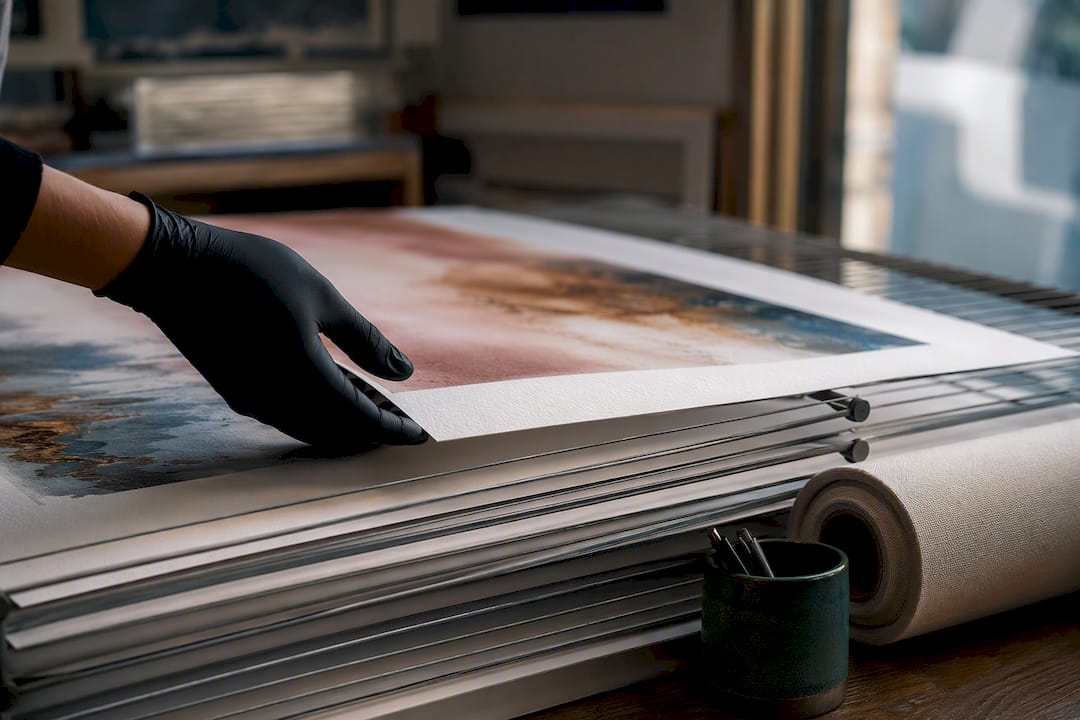
The gap between a giclée printer and the inkjet sitting on a home office desk isn’t marketing spin. It comes down to ink chemistry, hardware, and resolution standards that are genuinely different.
- Ink type. Standard printers use dye-based inks, which produce vivid colors initially but fade faster and smear when exposed to moisture. Giclée printers use pigment-based inks, where color particles sit on the surface rather than soaking into it, resisting both fading and water damage far better.
- Channel count. A consumer printer runs four colors (CMYK). A giclée printer runs 8 to 12 channels, adding extra shades of cyan, magenta, and gray to expand the color gamut and eliminate banding in gradients like skies or skin tones.
- Build and maintenance. Giclée-grade machines from manufacturers like Epson, Canon, and HP use wider print heads and require routine profiling and nozzle checks that a consumer device never demands.
A quick number to anchor this: giclée workflows standardize on a high resolution suitable for fine detail, typically in the range standard for professional fine art reproduction for capture and output, a range chosen because it resolves fine brushwork and photographic detail without producing files so large they become unworkable.
Choosing the Right Substrate and Finish
The surface a print lands on changes both how it looks and how long it survives. Cotton rag paper gives a soft, matte texture close to traditional printmaking paper, and it’s the standard choice for fine art reproductions meant to be matted and framed under glass. Baryta paper adds a thin baryta coating that produces deep blacks and a subtle sheen, closer to a traditional darkroom photographic print, making it a favorite for photographers. Archival-coated canvas skips the frame entirely, often gallery-wrapped over a wood stretcher bar for a gallery-ready look with visible texture.
Finish decisions matter just as much as the base material:
- Matte finishes reduce glare but slightly soften color depth
- Satin and gloss finishes deepen saturation and contrast but show fingerprints and reflections more easily
- Textured substrates mimic canvas or watercolor paper; smooth substrates favor photographic subjects
Canvas prints generally skip glazing and rely on a protective topcoat, while paper prints need UV-filtering glass and acid-free mats to prevent warping and yellowing over time.
How Long Do Giclée Prints Actually Last?
Properly produced giclée prints are rated to last over 100 years when made with pigment inks and archival substrates, but that number comes with fine print collectors often overlook. The rating assumes controlled indoor display conditions, typically modeled at 450 lux for 12 hours a day, which is closer to gallery lighting than a sunlit living room window.
Direct sunlight, high humidity, and non-archival framing materials all shorten that lifespan considerably, sometimes to a fraction of the rated figure. A few habits protect the investment:
- Use UV-filtering glazing on framed paper prints
- Choose acid-free mats and backing boards
- Avoid hanging prints in kitchens, bathrooms, or direct sun exposure
Pro Tip: If you’re deciding between two display spots, pick the one with the least direct light exposure over the course of a day, even if it means sacrificing a more prominent wall. Long-term preservation habits like these are covered in more depth in this guide to archival print care.
Who Actually Needs Giclée Printing?
Giclée printing earns its cost for a specific set of buyers: artists reproducing original paintings for sale, photographers producing limited editions, and galleries or collectors building a permanent collection meant to hold value and appearance over decades. If you need a poster for a dorm room or a short-term event display, a standard print will do the job for a fraction of the price.
The math shifts with volume, too. Building a home giclée setup only pays off once you’re printing at a high enough volume to justify the printer, pigment ink, and calibration equipment costs, which means most individual artists are better served by a print studio.
Before committing, ask any studio these questions:
- What ink type do you use, and is it pigment-based?
- What substrate options do you offer, and which is archival-rated?
- Do you build a custom ICC profile for my specific paper and ink combination?
- Can I see a physical proof before you print the full edition?
The Gallery Standard: What Eman’s Gallery Verifies Before Approving a Print
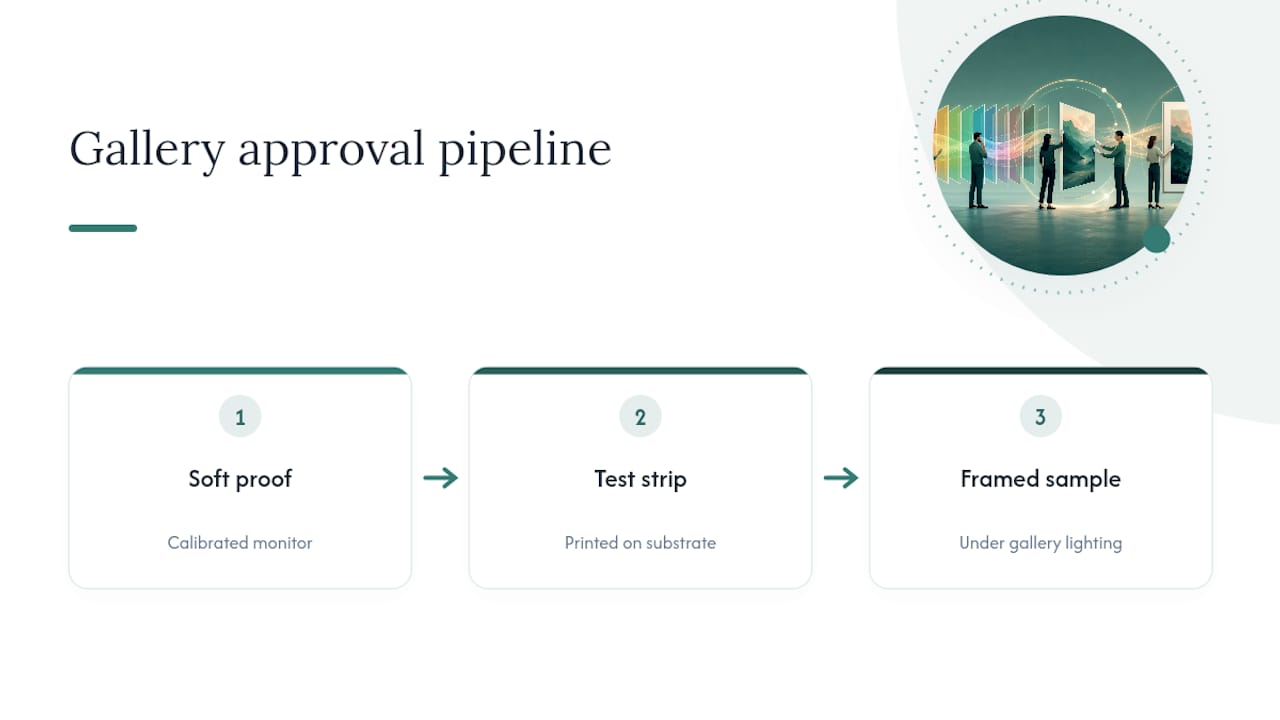
Fine art reproduction lives or dies on the details most buyers never see. At Eman’s Gallery, every giclée edition of Eman Khalifa’s original paintings goes through a soft proof review on a calibrated monitor, followed by a physical test strip printed on the actual substrate under consideration, whether that’s cotton rag or archival canvas.
A framed proof is often the final checkpoint, since color and texture read differently under glass and gallery lighting than they do on a bare sheet. A gallery’s quality pipeline typically includes at least one proof round and a framed sample before a collector ever sees the finished edition, and that step is where mismatched color temperature or substrate texture gets caught before it becomes a permanent problem. Substrate and framing choices follow the same logic covered in this collector’s guide to giclée prints.
What Collectors Get Wrong About Giclée Quality
Most advice on giclée printing treats the word itself as a quality guarantee, and that’s backwards. The label tells you nothing about ink chemistry or substrate choice, both of which matter more to a print’s longevity than anything printed on the certificate of authenticity.
Collectors also tend to fixate on DPI numbers, assuming higher always means better. In practice, a well-profiled 300 DPI print on baryta paper will outperform a poorly color-managed 600 DPI print on cheap stock every time, because resolution without ICC profiling just means more detail rendered in the wrong colors.
If there’s one thing worth prioritizing over everything else in this article, it’s asking to see the proofing process before approving an edition. Ink type and substrate can be described on a spec sheet. Whether a studio actually catches color drift before it reaches your wall only shows up in how they handle proofing.
— Eman
Ready to Bring a Museum-Quality Print Into Your Space?
Eman’s Gallery builds every canvas and fine art print around the same proofing standard described above, so what arrives at your door matches what was approved on the test strip, not a generic factory setting. That’s the practical difference between ordering from a print-on-demand service and ordering from a studio that profiles each substrate for the specific artwork.
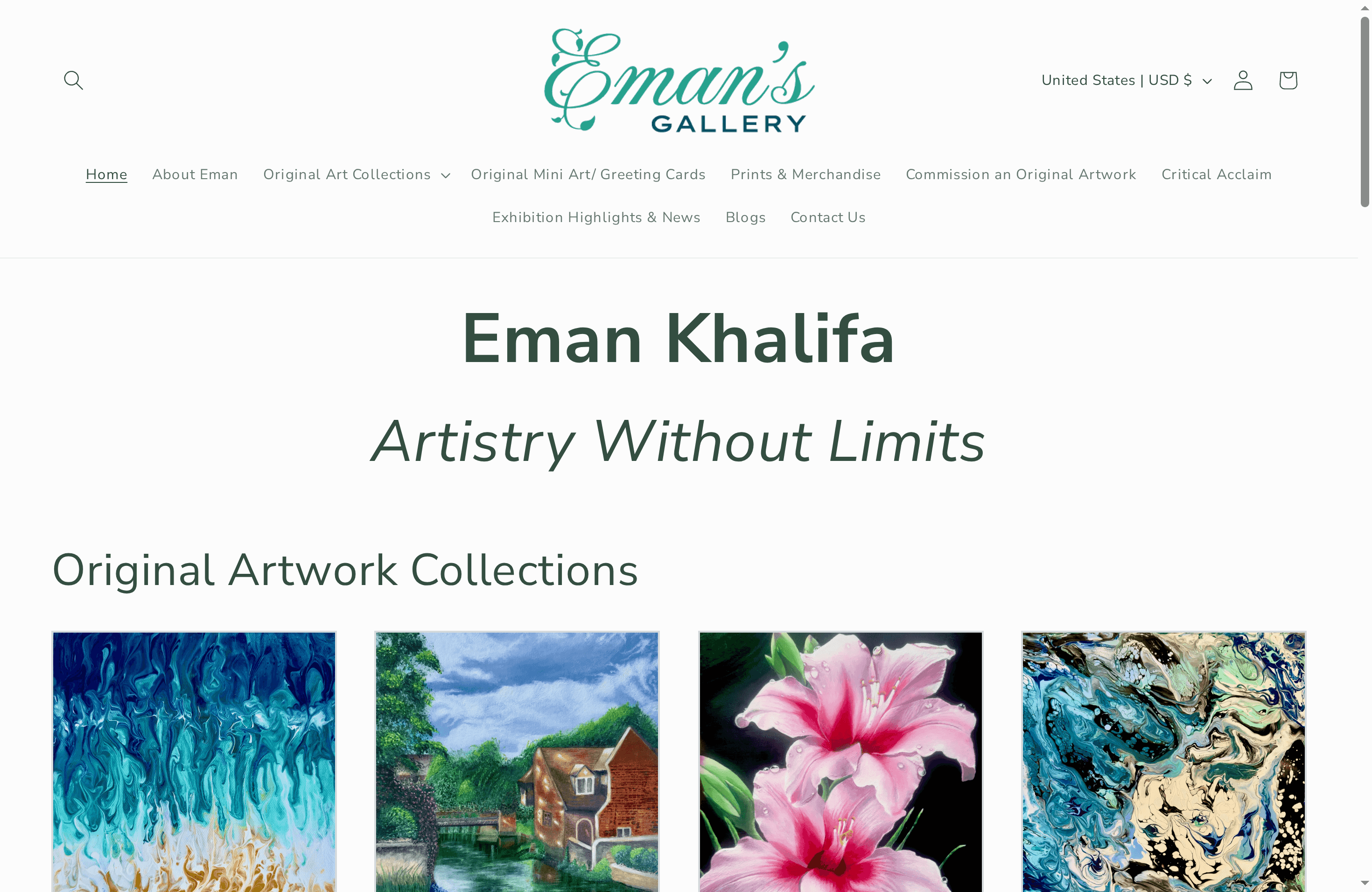
If you’re weighing paper against canvas, browse the Private Eye canvas print or the Fragments of Memory canvas print to see how gallery-wrapped canvas reads in different palettes. For collectors who want to see the finish before committing to a large-scale piece, request a framing sample or proof ahead of your final order. It’s the same step Eman Khalifa’s own editions go through before approval, and it costs you nothing but a short wait.
Sources
The technical claims above draw on specialized printmaking and materials research, not general printing guides:
- What is a Giclée Printer? A Guide for Artists and Photographers
- Giclée printing process — World of Printmaking
- How long do giclée prints really last? What museums and science actually say
Always confirm exact handling and framing recommendations with your substrate manufacturer, since archival ratings vary by product line.
FAQ
What’s the difference between a giclée print and a standard print?
A giclée print uses pigment-based inks on archival substrates through a color-managed workflow, while a standard print typically uses dye-based inks on regular paper without ICC profiling, making the giclée version far more resistant to fading and moisture damage.
Are giclée prints actually high quality?
Yes, when produced correctly with pigment inks, archival substrates, and proper ICC color profiling, giclée prints are rated to last over 100 years under controlled indoor display conditions, though quality varies widely since the term itself isn’t regulated.
What’s the difference between giclée and regular inkjet printers?
Giclée printers use 8 to 12 pigment-based ink channels compared to the 4 dye-based channels in a standard inkjet, giving them a wider color gamut, smoother gradients, and far better resistance to fading and water damage.
Can I get giclée-quality results from a home printer?
Only with a significant investment in a pigment-ink printer, a custom ICC profile per substrate, and a spectrophotometer for accurate color, which is why DIY giclée printing only becomes cost-effective at high production volumes.
Does canvas or paper last longer as a giclée print?
Both can last over 100 years if made with pigment inks and archival substrates, but paper needs UV-filtering glazing and acid-free mats for protection, while canvas uses a protective topcoat and typically does not require glass.
Stay Connected
- ✨ Explore Eman Khalifa's original art, fine art prints and art-inspired merchandise.
- Follow Eman Khalifa's art journey on: Instagram @emans_gallery and Facebook
- Watch Eman Khalifa creating live art on: YouTube @emans_gallery
