


Small Space Decorating Ideas That Make Rooms Feel Bigger
Five moves consistently make small spaces feel and function bigger: right-sizing furniture with clear sightlines, choosing multifunctional pieces, building storage vertically, using color and light to erase visual boundaries, and anchoring the room with one large piece of art instead of scattered small decor. Each targets a different failure point that shrinks a room on paper and in person.
- Scale and layout — clear floor visibility reads as space, even when square footage doesn’t change.
- Multifunctional furniture — a sofa bed or storage ottoman earns its footprint twice over.
- Vertical storage — walls hold what floors can’t spare.
- Color and light tricks — a single palette and a well-placed mirror erase visual stops.
- Statement art — one large focal piece calms a room that ten small ones would clutter.
Pro Tip: Before buying anything new, stand in the doorway of the room and count how much bare floor you can see. That number, not the square footage, predicts how big the room will feel.
Get these five right and the rest of small space decorating is mostly styling.
| Point | Details |
|---|---|
| Prioritize visible floor | Choose leggy furniture and float pieces off the walls to keep sightlines open. |
| Make furniture multitask | Sofa beds, storage ottomans, and extendable tables reclaim space single-purpose pieces waste. |
| Build up, not out | Vertical shelving and built-ins add storage without shrinking the room’s usable footprint. |
Key Takeaways
The single most effective small space decorating strategy combines right-sized, multifunctional furniture with one large focal art piece and a unified color palette.
| Point | Details |
|---|---|
| Float furniture, don’t shrink it | Leave 18 to 24 inches of clearance behind seating to create depth and walking room. |
| Choose furniture that transforms | Sofa beds, storage ottomans, and hydraulic storage beds recover space single-function pieces waste. |
| Unify your palette | Paint walls, trim, and ceiling the same color to remove visual boundaries between surfaces. |
| Raise the ceiling with curtains | Mount rods 6 to 12 inches above the window and extend 5 to 10 inches past each side. |
| Anchor with one large piece | A single oversized painting or print from Emansgallery reads calmer and bigger than several small frames. |
Table of Contents
- Five Core Design Moves for Small Space Decorating
- How Do You Choose Furniture for a Small Room?
- Storage Tactics That Actually Reclaim Floor Space
- What Color and Light Tricks Make a Room Look Bigger?
- Room-by-Room Small Space Decorating Tips
- Using Art to Add Depth and Anchor a Small Room
- The Curtain Height Trick for Raising Perceived Ceilings
- Reflective and Translucent Materials That Expand a Room Visually
- Adding Greenery Without Adding Clutter
- Smart Technology That Makes Small Spaces Work Harder
- Why Small Spaces Reward Intentional Design
- Let a Single Piece of Art Anchor Your Small Room
- Sources
- FAQ
Five Core Design Moves for Small Space Decorating
Small rooms don’t feel small because of square footage alone. They feel small because of interrupted sightlines, competing colors, and flat lighting. Fix those three things and the room reads larger before you move a single piece of furniture.
Clear sightlines. Keep a direct line of sight from the entry to the far wall. Floating furniture instead of pushing it against walls actually creates depth by letting light and shadow fall between pieces rather than flattening against a wall.
One consistent palette. Painting walls, trim, and ceiling in a single color removes the visual stops that chop a room into smaller apparent sections.
Layered lighting. Combine ambient, task, and accent light instead of relying on one overhead fixture, and pull curtains back fully during the day to maximize daylight.
One large focal piece. A single oversized mirror or artwork does more visual work than five small frames.
Vertical emphasis. Tall, narrow shelving draws the eye up, which makes ceilings feel higher, a tactic HGTV recommends alongside minimalist editing for tiny apartments.
Pro Tip: Paint the ceiling the same color as the walls, one shade lighter in sheen only. It’s the single fastest way to make a low ceiling disappear visually.
| Move | Immediate effect |
|---|---|
| Float furniture off walls | Creates depth and shadow layering |
| Unify wall/trim/ceiling color | Removes visual boundaries |
| Layer three light sources | Eliminates flat, cave-like feel |
How Do You Choose Furniture for a Small Room?
Furniture sizing in a small room isn’t about buying the smallest thing available. Undersized pieces create what designers call the dollhouse effect, where everything looks proportioned for a dollhouse rather than an adult living space. The fix is right-sizing: pick full-scale pieces that actually fit your body and your storage needs, then edit the quantity, not the dimensions.
Leave about 18 to 24 inches of clearance behind sofas and chairs so people can walk through without squeezing past furniture. That same clearance also creates the light-and-shadow layering that makes a room feel deeper than it is. For area rugs, size up rather than down. All furniture legs should sit on the rug, not floating off the edge.
Furniture that earns its footprint:
- Sofa beds for studios that double as guest rooms
- Extendable dining tables that expand only when needed
- Storage ottomans that replace a coffee table and a closet shelf at once
Quick layout fixes by room type:
- Studio apartments: anchor the sleeping zone with a rug, keep the sofa floating with its back to the bed zone
- Narrow living rooms: run furniture parallel to the long wall, not perpendicular
- Small bedrooms: choose a bed frame on legs instead of a solid platform base
Do small rooms need small furniture?
No. Small rooms need fewer, correctly scaled pieces. A single full-size sofa almost always reads better than two undersized loveseats.
Storage Tactics That Actually Reclaim Floor Space
Not all storage solutions deliver equal value. Vertical systems and floor-to-ceiling built-ins consistently outperform floor-based storage because they use wall space that would otherwise sit empty. Floating shelves, tall bookcases, and full-height cabinetry all keep the floor plan open while adding real capacity.
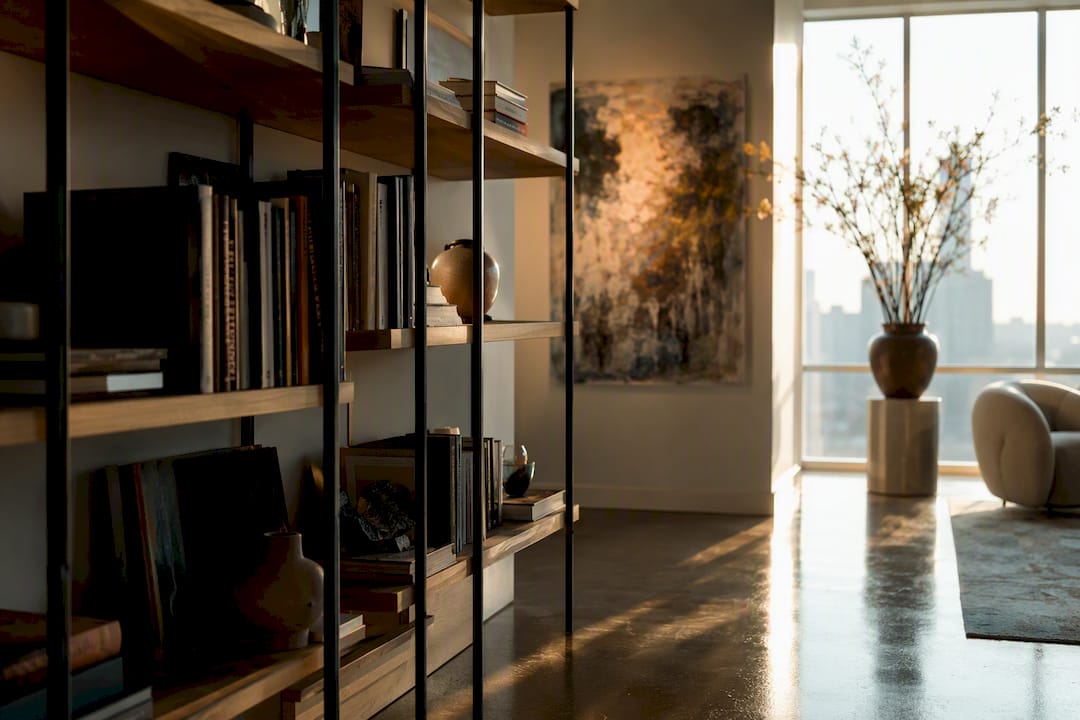
Transform-and-store furniture is the other half of the equation. Hydraulic storage beds, storage ottomans, and nesting tables all serve double duty. The metric that matters is function count, not physical size. A small ottoman that only holds decorative books isn’t really storage furniture.
Renter-friendly upgrades that don’t require drilling:
- Tension rods inside closets for a second hanging tier
- Over-door organizers for shoes, cleaning supplies, or pantry items
- Adhesive hooks and rails for kitchen tools or bathroom essentials
- Freestanding vertical shelving units that need zero wall anchoring
Pro Tip: Measure your closet’s unused vertical inches above the existing rod before buying anything. Most closets waste 12 to 18 inches of dead air space at the top.
Renters weighing a more permanent system eventually should look at floor-to-ceiling cabinetry options once they’ve maxed out temporary fixes.
What Color and Light Tricks Make a Room Look Bigger?
Color and light do more to change perceived room size than any furniture swap. Three techniques deliver outsized results for minimal cost:
- Color drenching. Paint walls, trim, and ceiling in the same unified color to eliminate the seams that visually cut a room into smaller chunks. Use matte or eggshell on flat surfaces and satin on trim so detail stays readable.
- Mirror placement. Hang an oversized mirror across from a window, not beside it, so it reflects daylight back into the room instead of just doubling wall space.
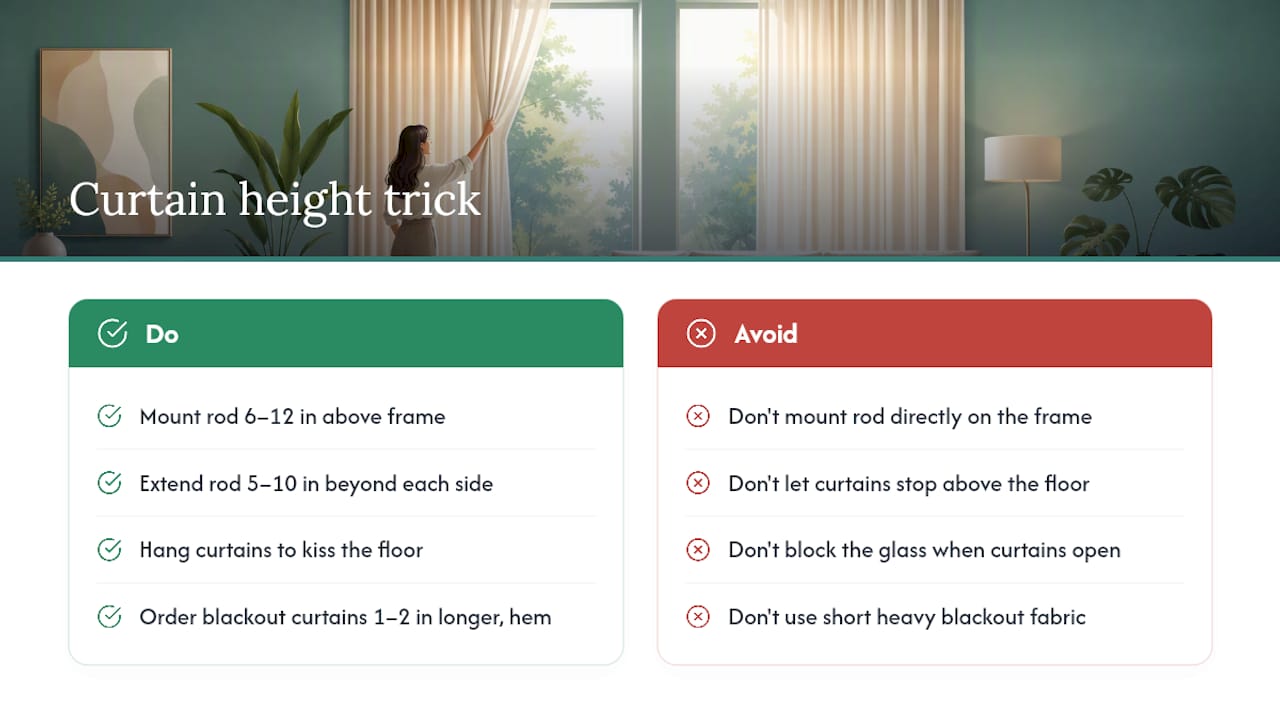
- Curtain height. Mount rods 6 to 12 inches above the window frame and extend the rod 5 to 10 inches past each side. Curtains that “kiss the floor” complete the illusion of a taller window.
Layer three types of light rather than relying on one ceiling fixture: ambient for overall glow, task lighting for reading or cooking, and accent lighting to highlight art or architecture.
- Swap solid cabinet doors for glass-front ones to add visual depth
- Choose glossy or satin paint finishes on trim to bounce light
- Add a floor lamp with an upward-facing shade to wash light across the ceiling
Pro Tip: Buy the largest mirror your budget allows for the main living wall. A too-small mirror barely registers; an oversized one changes the whole room’s light behavior.
Room-by-Room Small Space Decorating Tips
Different rooms have different constraints, and the highest-value fix in a bedroom rarely applies in a kitchen. Here’s what to prioritize in each.
Bedroom: Use under-bed storage bins for off-season items, choose a right-sized mattress instead of maxing out the frame, and mount bedside lighting on the wall to free up nightstand surface.
Living room: One large area rug under all seating, leggy furniture that shows floor beneath it, a storage ottoman instead of a coffee table, and media consoles raised off the floor on slim legs.
Kitchen: Install rail systems for hanging utensils, choose an extendable dining surface, keep counters clear of small appliances, and add floating shelves above counter height.
Bathroom: Pedestal or floating sinks open up floor space instantly, over-toilet shelving adds storage in dead space, and slim vanities beat bulky cabinet units in a tight footprint.
Entry: Wall-mounted hooks replace a coat closet, a slim bench with under-seat storage handles shoes, and a mirror by the door doubles perceived square footage the moment you walk in.
- Pick the one room that bothers you most
- Apply the two highest-impact tips from that room’s list
- Reassess before moving to the next room
Which room benefits most from small space decorating tricks?
Living rooms typically show the biggest visible improvement because they combine seating scale, rug sizing, and lighting all in one space people see daily.
Using Art to Add Depth and Anchor a Small Room
One large statement painting almost always reads calmer and bigger than a gallery wall of small frames. Southern Living notes that fewer, larger pieces reduce the visual stops that make a room feel busy, the same principle behind unified paint colors.
Hang art so the center sits at eye level, roughly 57 to 60 inches from the floor, and scale the piece to at least two thirds the width of the furniture it hangs above. Placed behind a floating sofa, a large canvas becomes a depth anchor that finishes the sightline created by pulling furniture off the wall. Renters can lean an oversized canvas print against the wall instead of hanging it, which adds height and personality with zero holes in the drywall.
- Choose one dominant piece over several small ones
- Match the art’s undertone to your wall color for cohesion
- Lean, don’t always hang, in rental units
Pro Tip: Vertical compositions pull the eye upward faster than horizontal ones, which is exactly what a low ceiling needs.
Choosing scale is really choosing how a room breathes. A painting with depth and movement, rather than a flat pattern, gives a small room somewhere for the eye to travel instead of stopping at the nearest wall.
Low-Cost, Renter-Safe Upgrades With Outsized Impact
Peel-and-stick wallpaper, Command-strip picture lighting, plug-in wall sconces, large leaning mirrors, and secondhand statement furniture all deliver visible change without violating a lease.
- Spend real money on what you touch daily: your mattress, your seating, your task lighting
- Save on decorative swaps like throw pillows or seasonal accents
- Shopping checklist: one large mirror, one statement art print, adhesive hooks, a plug-in sconce, and a secondhand accent chair
Pro Tip: Thrift the bones, buy new for the finish layer. A worn secondhand credenza plus a fresh coat of paint often beats a budget new piece.
Small Space Decorating Mistakes to Avoid
Too many small items scattered across shelves create the dollhouse effect: swap five trinkets for one larger object instead.
- Shrinking furniture instead of choosing multifunctional pieces — pick a sofa bed, not a loveseat that does nothing extra
- Blocking sightlines with tall furniture near the entry — keep the tallest pieces along the back wall
- Undersized rugs — furniture legs should sit on the rug, not around it
- Crowding the floor with single-use furniture — a plant stand that only holds one plant rarely earns its space
A too-small rug is one of the most common errors that makes an otherwise well-planned room feel disjointed rather than pulled together.
The Curtain Height Trick for Raising Perceived Ceilings
Curtains are one of the cheapest fixes in this entire list, and one of the most underused. The trick has two parts: height and width, and both matter equally.
Mount the curtain rod 6 to 12 inches above the actual window frame, not directly on top of it. That gap tricks the eye into reading the window as taller than it physically is, which pulls the whole wall upward visually. Then extend the rod 5 to 10 inches beyond each side of the window frame. This widens the perceived opening and, when curtains are open, lets in more visible daylight since the fabric stacks outside the glass rather than blocking part of it.
Length matters just as much as placement. Curtains that stop a few inches above the floor cut the wall visually and make the ceiling feel lower. Curtains that “kiss the floor” create one continuous vertical line from ceiling to floor, which reads as height rather than interruption.
Fabric choice plays a role too. Lightweight linen or cotton blends drape closer to the floor without pooling awkwardly, while heavier blackout fabric can look stiff if cut even slightly short. In a bedroom where blackout is non-negotiable, order curtains an inch or two longer than the standard measurement and have them hemmed once installed.
This single change costs the price of a curtain rod and a pair of panels, yet it’s one of the highest-return fixes in small space decorating. Pair it with a wall color that continues unbroken above the window and the ceiling height illusion becomes even stronger.
Reflective and Translucent Materials That Expand a Room Visually
Glass, mirrored surfaces, and glossy finishes all work the same way: they bounce or pass light through a space instead of absorbing it, which keeps a small room from feeling like a sealed box.
Glass-front cabinets in a kitchen or living room let the eye see through to what’s behind, adding depth without adding visual weight. A glass coffee table takes up the same floor footprint as a solid wood one, but because it’s transparent, the floor beneath it still reads as visible space. The same principle applies to acrylic side tables and lucite shelving, both of which hold real function while staying nearly invisible in a sightline.
Mirrored furniture, like a mirrored dresser front or a mirrored closet door, multiplies light sources in a room that only has one window. Position the largest mirror in the room across from that window rather than perpendicular to it, so it reflects daylight directly back into the space rather than just reflecting a wall.
Glossy paint finishes on trim, doors, and even ceilings bounce ambient light around a room far more than flat or matte finishes do. Satin and semi-gloss sheens on baseboards and door frames create subtle highlights that flat paint simply absorbs.
Metallic accents, brushed brass hardware, chrome lamp bases, or a metallic-threaded throw pillow, add small pops of reflected light without requiring a full mirrored wall. Used sparingly, these details keep a small room feeling bright and layered rather than flat and matte throughout.
Adding Greenery Without Adding Clutter
Plants solve a problem that furniture and paint can’t: they add life and softness to a room without eating into floor storage, as long as you choose the right varieties and placement.
Tall, narrow plants like snake plants, fiddle leaf figs, or dracaena work better in small rooms than wide, bushy varieties because they occupy vertical space instead of spreading across the floor. A six-foot snake plant in a corner adds height and greenery while claiming less than a square foot of actual footprint.
Hanging plants and wall-mounted planters keep greenery off surfaces entirely. Pothos or string of pearls in a hanging macrame holder near a window adds movement and color without competing for counter or shelf space that’s already scarce in a small kitchen or bathroom.
Windowsill herb gardens in a kitchen do double duty: they’re functional and decorative, and they don’t require dedicated floor or counter real estate beyond the sill itself. A small grouping of three terra cotta pots on a sunny sill covers both needs at once.
The key discipline with plants in small spaces is the same as with decor objects generally: choose fewer, larger specimens over many small ones scattered across every surface. One well-placed fiddle leaf fig reads as intentional. Eight small succulents crowding a windowsill reads as clutter, regardless of how healthy the plants are.
Smart Technology That Makes Small Spaces Work Harder
Small-space living rewards technology that removes physical clutter rather than adding another gadget to the counter. The most useful smart home additions in tight spaces are the ones that replace multiple objects with one compact system.
Smart plugs and app-controlled outlets let you tuck lamps and appliances into awkward corners, since you no longer need a wall switch within reach to turn them on. This matters most in studio apartments where the only outlet near a reading chair might be behind furniture.
Voice-controlled or app-based lighting systems support the layered lighting approach covered earlier without requiring extra switches on the wall. Dimmable smart bulbs let you shift a room from bright task lighting to soft ambient lighting with a single command, covering two lighting layers with one fixture.
Compact smart speakers replace what used to require a stereo system and a stack of shelving. A single unit tucked on a floating shelf handles music, timers, and voice control for other smart devices, all in a footprint smaller than a coffee mug.
Robot vacuums matter more in small spaces than large ones, since floor visibility is central to making a room feel bigger. Automating the one task that keeps visible floor clean frees up time and keeps the room’s biggest visual asset, its open floor, looking the way it should.
The rule with smart technology in a small home mirrors the rule with furniture: each device should replace something bulkier, not just add another object to manage.
Why Small Spaces Reward Intentional Design
Small rooms punish indecision. Every object either earns its place or steals space from something better. That’s what makes a single strong painting so effective. In one tiny studio, a large abstract canvas behind a floating sofa did more to finish the room than three additional furniture pieces would have.
Let a Single Piece of Art Anchor Your Small Room
A room doesn’t need more furniture to feel finished. It often just needs one piece strong enough to hold the eye’s attention, which is exactly what a large statement painting does in a space where every other object is small by necessity.

Eman Khalifa’s original paintings work as focal-depth anchors precisely because they’re built with movement and atmosphere, not flat pattern, so the eye has somewhere to travel even in a compact room. For renters or tighter budgets, large-format canvas prints deliver the same scale and color cohesion without the cost or commitment of an original, and they lean against a wall just as effectively as they hang. Smaller surfaces like shelves or entry tables also benefit from art-inspired merchandise, which adds personality without adding footprint. Browse the current collection and find the piece that gives your smallest room the biggest visual return.
Sources
- 5 clever design tricks to make a small home look bigger — NPR
- Small rooms look bigger — Southern Living
- Types of space saving furniture: what actually works — WoodenStreet
- How to embrace minimalism in your tiny apartment — HGTV
- Small apartment decorating ideas: a room-by-room guide — TuckedNook
FAQ
What is the 3 4 5 rule in interior design?
The 3-5 rule refers to using odd-numbered groupings, typically three or five elements, when styling shelves or vignettes, since asymmetrical groupings tend to read as more visually interesting than paired or even-numbered arrangements.
How do you style a small space?
Start with visible floor and the largest functional pieces, then layer in vertical storage, a unified color palette, and one large focal piece like a statement painting rather than many small decor items.
What is the dollhouse effect and how do I avoid it?
The dollhouse effect happens when a room is filled with too many undersized furniture pieces and small decor items, making the space look proportioned for miniatures rather than adults. Avoid it by choosing fewer, correctly scaled pieces.
How high should I hang curtains in a small room?
Mount the rod 6 to 12 inches above the window frame and extend it 5 to 10 inches beyond each side, letting curtains fall to the floor for the tallest possible visual line.
Does art really make a small room look bigger?
Yes. One large statement piece reduces the visual clutter that many small frames create, and hanging or leaning it as a focal point behind floating furniture adds depth to the whole sightline.
Stay Connected
- ✨ Explore Eman Khalifa's original art, fine art prints and art-inspired merchandise.
- Follow Eman Khalifa's art journey on: Instagram @emans_gallery and Facebook
- Watch Eman Khalifa creating live art on: YouTube @emans_gallery
